


Ornamental gingers are the quickest way to make a warm Australian garden look lush, and the most misunderstood plants in it. People buy a shell ginger for the flowers, cut every cane to the ground each winter, and then wonder why it never blooms: most Alpinia gingers flower on canes in their second year. People plant a Siam tulip in a shady bed, watch it vanish in May, and dig it up as dead: it is dormant, and it will be back in November. This guide sorts the gingers we sell by what they do, shows which ones take shade, wet feet, frost or a pot, and sets out the one pruning rule that decides whether you get flowers.
Quick facts
| Detail | Ornamental gingers |
|---|---|
| Types | Alpinia (shell gingers), Curcuma (Siam tulips and turmeric), Zingiber (edible and shampoo gingers), plus a few look-alikes from other families |
| Size | 60 cm for the Siam tulips to 2 m for the big shell gingers |
| Position | Morning sun or dappled shade; most scorch in full afternoon sun |
| Soil | Rich, moist, well-drained; several tolerate wet feet |
| Climate | Tropical, subtropical and sheltered warm temperate gardens; frost tender, though the deciduous ones sleep through a cold winter underground |
| Growth habit | All the gingers we sell are clumping, not running: they thicken where you plant them |
| Flowering | Spring to autumn depending on the type; shell gingers flower on second-year canes |
| Pets | The true gingers are not toxic to cats or dogs |
Choosing the right ginger
| Ginger | Height x width | What it does | Choose it for |
|---|---|---|---|
| Variegated shell ginger | 2 m x 1.5 m | Gold-striped paddle leaves all year, shell flowers on older canes | The fast tropical screen; colour without flowers |
| Red back ginger | 2 m x 1.5 m | Australian rainforest native; leaves red beneath, white flowers, blue edible berries | Dry shade under trees; a bush food |
| False cardamom | 1.5 m x 1 m | Cardamom-scented leaves, nodding white and pink flowers | Beside a path or doorway, damp corners |
| Pink Perfection | 1.8 m x 1.2 m | Upright green clump with pink flower cones through the warm months | A flowering screen at fence height |
| Darcyi shampoo ginger | 1.5 m x 1.2 m | Cream-striped arching leaves, red cones at the base in summer; deciduous | Lighting up a shaded tropical bed |
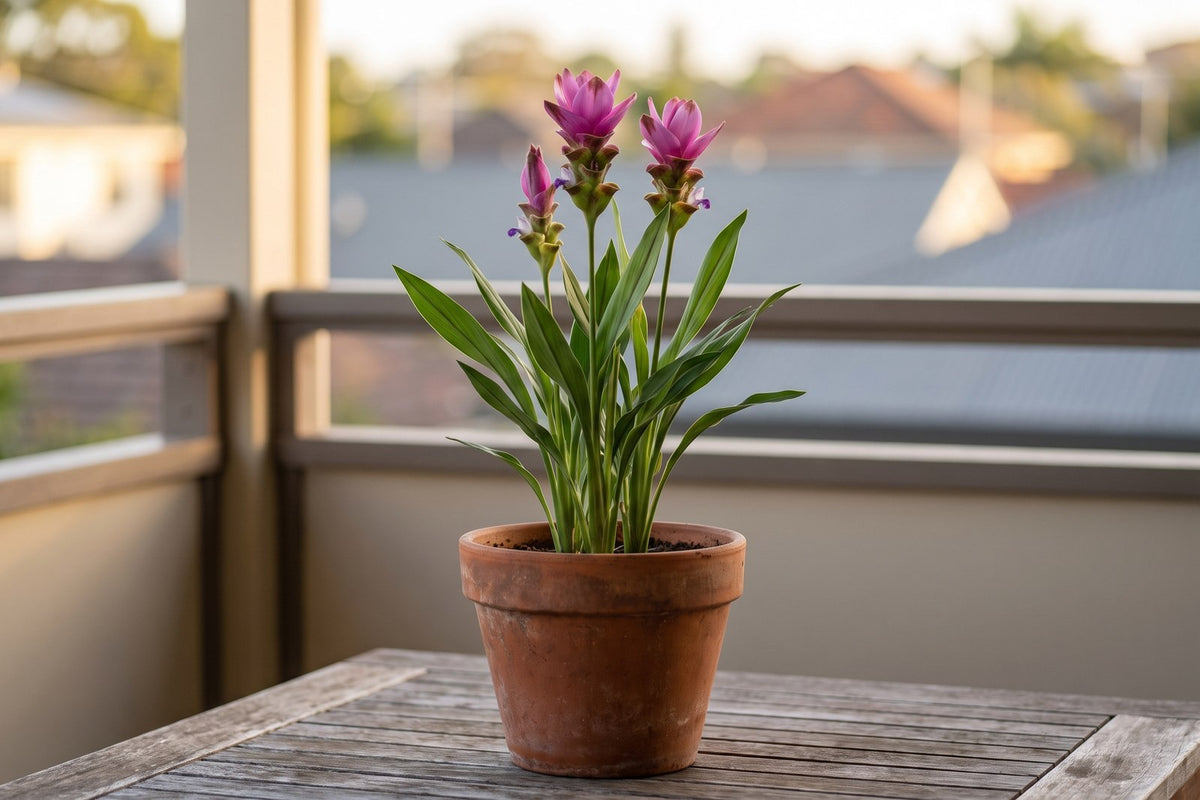
| Siam tulips (Siam Sublime, Siam Swing, Siam Sunrise) | 60 cm x 40 cm | Pink, purple or white bracts that hold for weeks in summer; dormant in winter | Pots, balconies, the front of a bed |
| Black turmeric | 1.2 m x 80 cm | Broad leaves with a maroon central stripe; edible rhizome; deciduous | Dramatic foliage in a damp spot |
| Edible ginger and turmeric | 1 to 1.2 m x 80 cm | The culinary rhizomes, grown as handsome seasonal clumps | A warm shaded bed or a large pot by the kitchen |
| Blue ginger | 1.8 m x 1 m | Not a ginger at all; violet-blue flower spikes in late summer and autumn | True blue in part shade |
Two groups behave differently enough to matter. The shell gingers (Alpinia) are evergreen in a warm climate, hold their canes for years and make permanent structure: a hedge, a screen, a backdrop. The curcumas and the shampoo ginger are deciduous: they die to the ground in late autumn, sit as a rhizome through winter, and reshoot when the soil warms in late spring. Plant them where a bare patch in winter will not matter, or in pots you can move. The ginger collection has the full range, and our guide to designing a tropical garden shows how to layer them with heliconias and cordylines so something is always in leaf.
How to plant
Position. Morning sun with afternoon shade, or dappled light under a high canopy, suits every ginger in the table. Variegated shell ginger and Pink Perfection take more sun than the rest if they are never short of water; the Siam tulips and the shampoo ginger burn in a hot west aspect. Red back ginger is the one for genuine shade, including the dry shade under established trees that defeats most plants.
Soil. Gingers are hungry, thirsty plants from rainforest floors. Dig compost and well-rotted manure through the bed to a spade's depth, and mulch 75 mm thick with something that rots down, such as sugar cane or lucerne. On heavy clay, raise the bed 150 mm; several gingers tolerate wet feet, but none tolerate a stagnant bathtub.
Spacing. A metre apart for the shell gingers as a screen, 60 cm for the smaller Alpinia, 30 to 40 cm for Siam tulips. They thicken quickly, so under-planting beats over-planting.
Timing. Spring and early summer, once the soil is warm, so the clump makes a full season of growth before its first winter. In the tropics, any month outside the heaviest wet. Dormant curcuma rhizomes go in during spring, pointed end up, 50 mm deep.
In pots. The Siam tulips, false cardamom, edible ginger and turmeric all suit a 300 mm or larger pot in a premium mix. Water daily in summer and let the deciduous ones dry off completely in winter; our guide to choosing the right pot size covers the sizes.
Ongoing care
Watering
Plenty in the growing season. A shell ginger wants the soil moist all summer and will roll its leaves and brown at the edges when it is dry. Deciduous gingers want the same from spring to autumn and almost nothing once the foliage has died down.
Feeding
Feed heavily: a complete fertiliser or pelletised manure in early spring and again in midsummer, plus the mulch breaking down underneath. A starved shell ginger turns pale and stops flowering.
Pruning, and the flowering rule
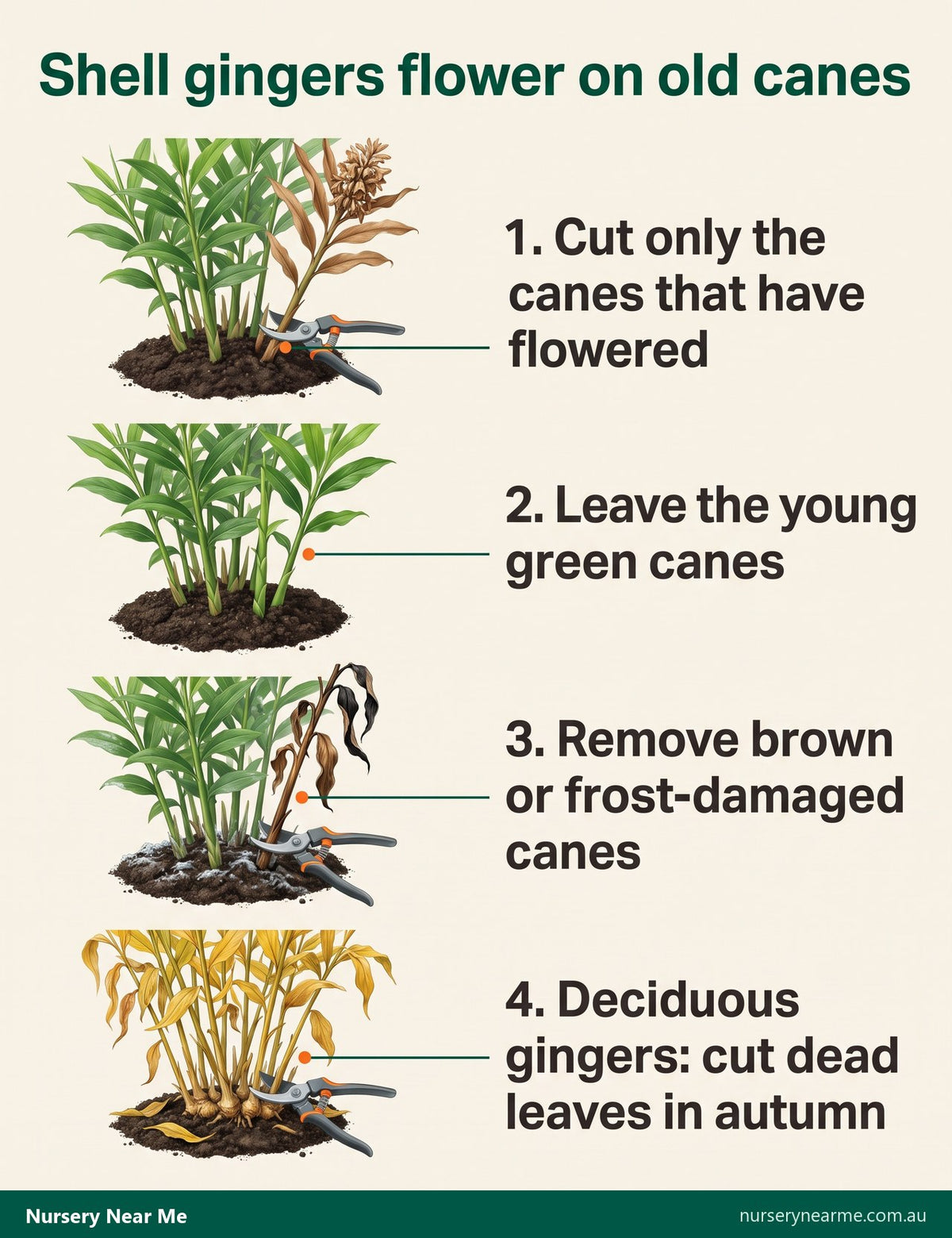
Shell gingers flower from the tips of canes that grew the previous year. Cut every cane to the ground each winter and you remove next summer's flowers with them. Instead, remove only the canes that have flowered, cutting them at the base after the flowers fade, and leave the young green canes standing to flower next season. Take out any cane that has gone brown, tatty or frost-damaged at the same time. The deciduous gingers are simpler: cut the dead foliage to the ground once it has yellowed in late autumn.
Dividing
Every three or four years, lift and divide a clump that has become crowded or bare in the centre, in spring as growth starts. Replant the outer, younger sections with two or three canes each and discard the woody core.
Common problems and fixes
No flowers on a shell ginger. The canes were cut too young, or the plant is in deep shade or starved. Leave the second-year canes, feed in spring, and give it more light.
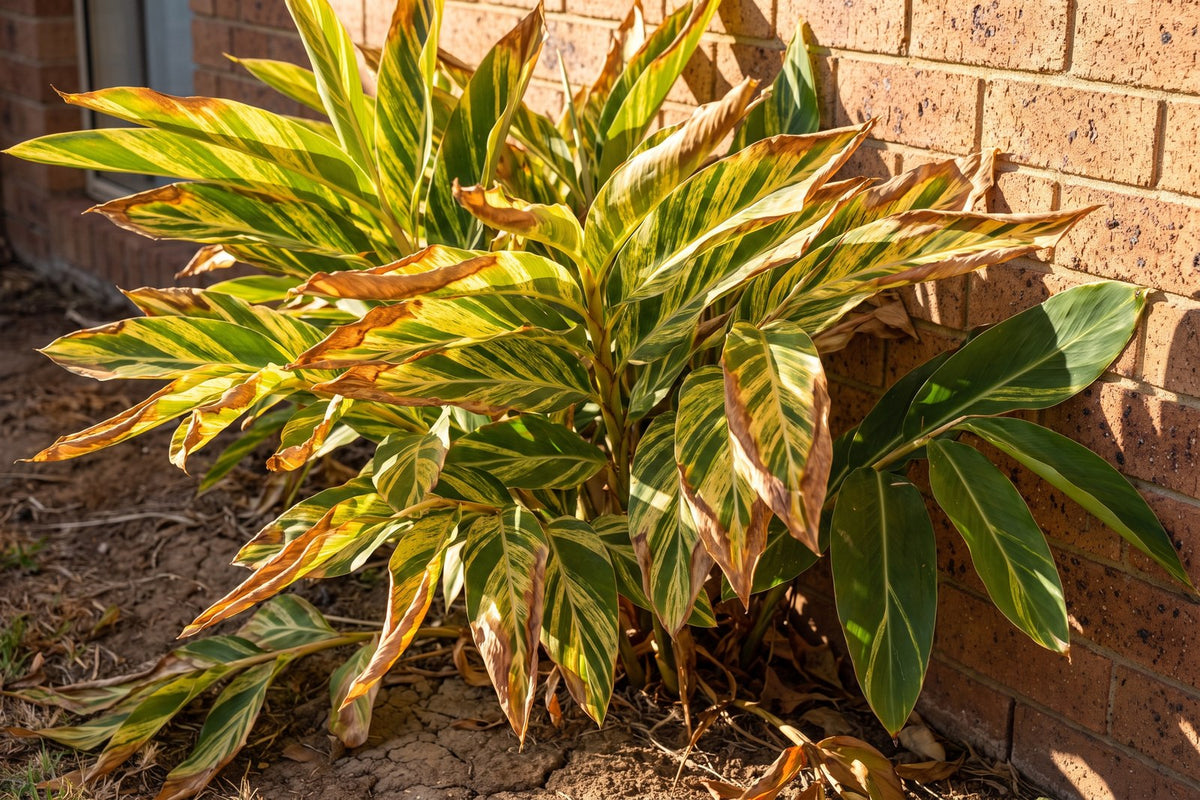
Brown, scorched leaf edges. Too much afternoon sun, hot wind or dry soil. Move it, shelter it, mulch and water more deeply. Variegated forms scorch first.
The plant disappeared in winter. If it is a curcuma, a turmeric, an edible ginger or the shampoo ginger, it is dormant, not dead. Mark the spot, keep the bed almost dry, and wait for late spring.
Frost damage. Blackened leaves after a cold night on an evergreen ginger. Leave the damage on until spring, which shelters the growth beneath, then cut the ruined canes at the base. In frosty districts grow gingers against a north-facing wall or in pots moved under cover.
Holes in new leaves. Snails and slugs on the soft new shoots in spring, or grasshoppers in summer. Pick them off at night; the plant outgrows the damage.
Fine webbing and pale, stippled leaves in dry weather. Spider mite, usually on a ginger in a hot, dry spot. Hose the undersides of the leaves, mulch, and water more often.
Frequently asked questions
Do gingers grow in Sydney, Perth or Melbourne?
Sydney, yes: shell gingers and the deciduous curcumas grow well in sheltered, frost-free gardens with summer water. Perth, yes in a shaded, well-mulched bed with plenty of water through the dry summer. Melbourne is marginal: variegated shell ginger survives against a warm north wall and the deciduous types come through winter underground, but none thrive in a cold, exposed bed.
Why does my shell ginger not flower?
Almost always because the canes are cut down each year. Shell gingers flower on canes in their second summer. Remove only the canes that have flowered, leave the young ones, feed in spring, and the next season's canes will bloom.
Are gingers invasive?
Not the ones in this guide. Every ginger we sell is a clumping type that thickens from the crown rather than running. The running gingers that have escaped into bushland in Queensland and New South Wales are a different group, the Hedychium ginger lilies, and we do not sell them.
Can I eat the ginger from an ornamental plant?
Eat only the plants grown for it: edible ginger (Zingiber officinale) and turmeric (Curcuma longa) from this range, plus the blue berries and young stem bases of the native red back ginger. The rhizomes of the ornamental shell gingers and Siam tulips are not for the kitchen.
Which ginger suits a pot on a balcony?
The Siam tulips, at 60 cm, in a 300 mm pot with morning sun; they flower for weeks in summer and sleep in winter. False cardamom at 1.5 m suits a larger pot by a door, where brushing past it releases the scent. Both need daily summer water on a balcony.
Ready to plant?
The ginger collection holds every plant in this guide, mostly in tubes and packs for mass planting. Pair them with the heliconias and the rest of the tropical plants range for a layered bed, and if the spot is shaded, read our guide to shade gardening for what goes beside them. Our heliconia care guide covers the gingers' closest companions.


