


A west-facing wall is the harshest planting position on an Australian block. It bakes from early afternoon until sunset in midsummer, when the sun sits low enough to strike foliage face-on, and the brickwork keeps radiating heat long after dark. Add the rain shadow cast by the eaves and you have a strip of soil hotter and drier than anything else in the garden. Choose plants built for that, set them far enough off the wall, and the same aspect becomes your best flowering position.
Quick facts
| Plant | Mature size | Position | Soil | Water | Climate zones |
|---|---|---|---|---|---|
| Bougainvillea | 3-5 m trained | Full sun | Free-draining, poor soil fine | Low | Frost-free: Brisbane, Perth, coastal Sydney |
| Coastal rosemary (Westringia fruticosa) | 1.5 m x 1.5 m | Full sun | Sand to loam, must drain | Low | All mainland capitals, salt hardy |
| Star jasmine | 3-6 m climbing, 300 mm as groundcover | Sun to part shade | Most soils with drainage | Moderate for two years | Subtropical to cool temperate |
| Blue Glow agave | 0.4-0.6 m x 0.6 m | Full sun | Gritty, sharply drained | Very low | Perth, Adelaide, light frost |
| Firesticks euphorbia | 1.5-2 m x 1 m | Full sun | Sandy, sharply drained | Very low | Frost tender, warm zones |
| Olive | 4-6 m x 4 m, prunable to 3 m | Full sun | Free-draining, tolerates poor soil | Low | Mediterranean and temperate |
Choosing the right plants for reflected heat
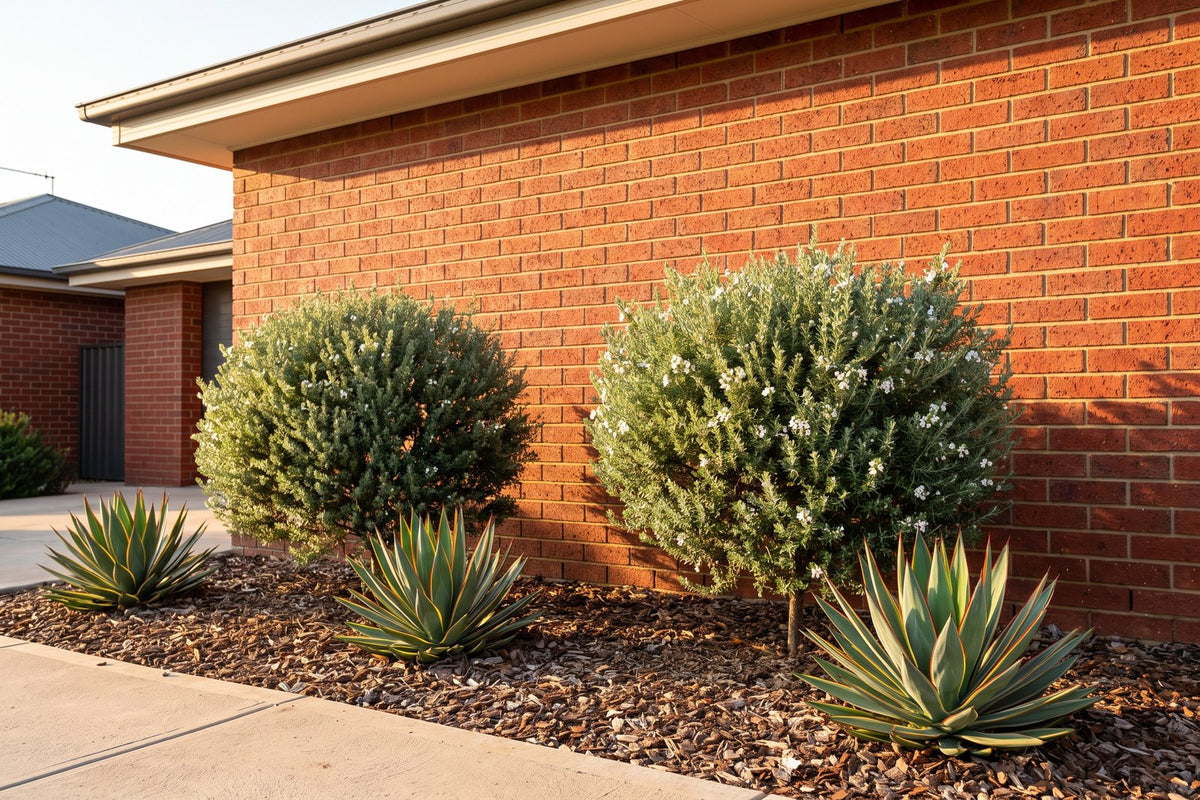
Two things separate a west wall from ordinary full sun. The first is radiant heat: a dark rendered or painted masonry wall can pass 50 degrees on a 35-degree day, and the air within 300 mm of it stays several degrees above ambient into the evening. The second is drought. Eaves keep rain off the base of the wall, footings shed water outwards, and paving adds more reflected energy, so that strip is usually the driest soil on the property even in a wet summer.
The plants that thrive there share recognisable traits. Grey, silver or waxy foliage reflects light instead of absorbing it, which is why westringia, rosemary and olive cope so well. Small, thick or needle-like leaves lose less water, and succulent tissue in agave and euphorbia stores it. Bougainvillea goes further again, flowering better under heat and mild water stress than in a comfortable position.
Avoid anything with large, thin, soft leaves. Hydrangeas, ferns, most camellias and young Japanese maples scorch within a fortnight, and glossy dark foliage absorbs more heat than it sheds. Mediterranean herbs are the exception worth planting deliberately: rosemary, oregano, thyme, sage and bay all thrive on reflected heat, as do olives, figs and pomegranates. Our roundup of low-maintenance full sun plants is a useful cross-check.
How to plant
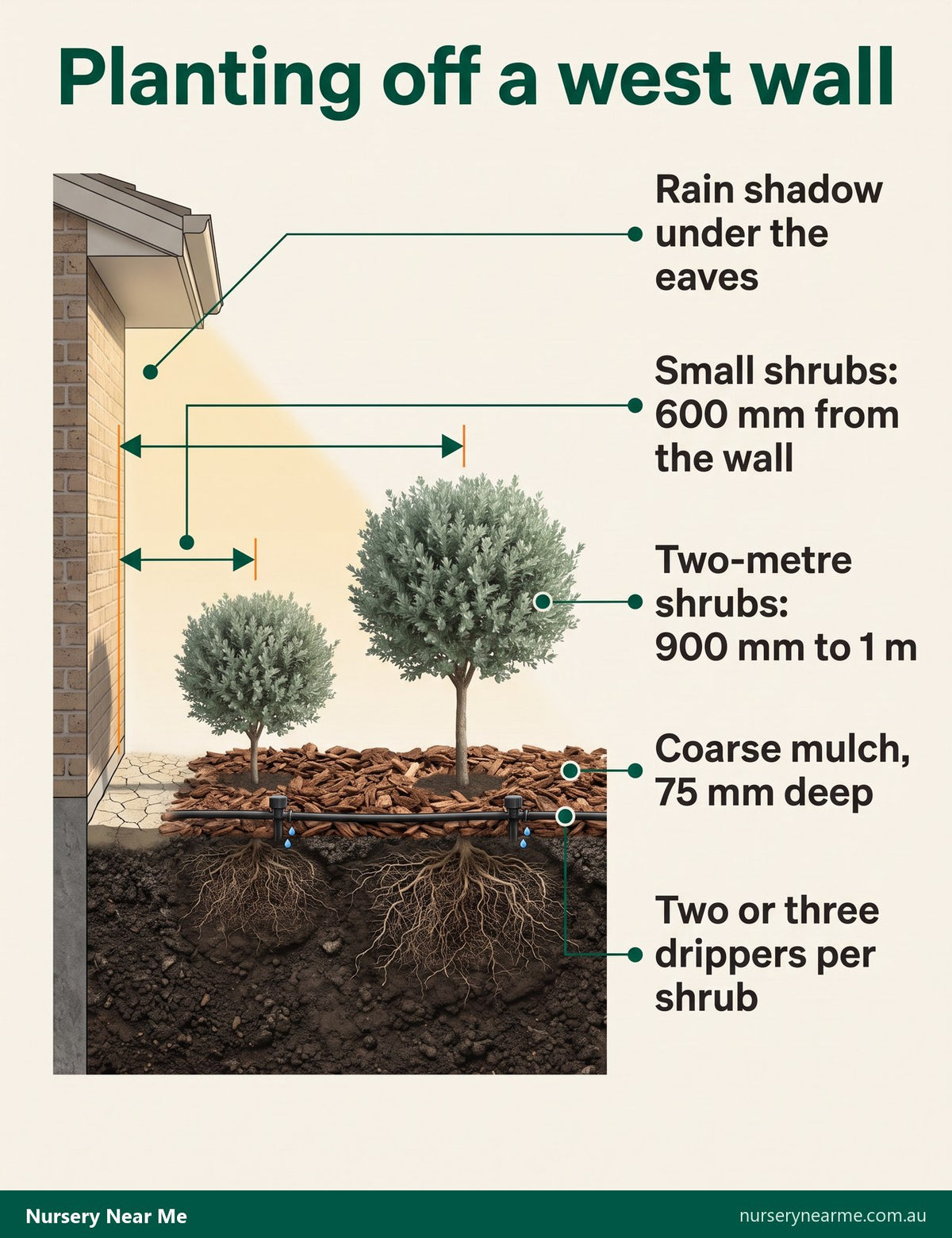
Distance from the wall matters more than the plant you choose. Set shrubs at least 600 mm out from the wall face, and 900 mm to a metre for anything reaching two metres. That clears the rain shadow, gives roots soil the footings have not compacted, and leaves airflow behind the plant so heat is not trapped against the foliage.
Dig wide rather than deep, and check that the soil is not builder rubble. Along a house wall it very often is, and 200 mm of crushed brick and mortar will beat any plant. Remove it and replace with quality garden soil to at least 400 mm. Soak the root ball before planting so it does not go in hydrophobic, and plant in autumn or early spring so roots reach depth before the first heatwave.
Mulch is not optional here. Use a coarse 75 mm layer that will not blow away, extended out to the drip line and kept clear of stems. Install drip irrigation rather than a sprinkler, because spray evaporates against a hot wall. Two or three drippers per shrub running 30-40 minutes once or twice a week delivers far more usable water than daily hand watering.
Ongoing care
Watering
Water early in the morning so plants start the afternoon fully charged, and water deeply rather than often. Through the first summer a west-facing bed needs a slow soak twice a week; after two years most plants here manage on a fortnightly soak or on rainfall. If the mulch is dry but the soil beneath is damp, do not water. If water beads and runs off, the soil has turned hydrophobic and needs a wetting agent first.
Feeding
Hot, dry positions need restrained feeding. One application of controlled-release fertiliser in early spring is enough for shrubs, and agaves and euphorbias want none at all. Overfeeding produces soft, fast growth with thin cell walls, which is exactly the tissue that scorches. Bougainvillea is the exception worth noting in reverse: high nitrogen gives you a wall of leaves and no bracts, so use a low-nitrogen flowering formulation.
Pruning
Prune to keep foliage off the wall and maintain airflow. Bougainvillea flowers on new growth, so cut it back hard after each flush and again in late winter. Trim westringia and rosemary lightly two or three times through the warm months, never into leafless old wood. Never prune heavily in the week before a forecast heatwave, because the remaining foliage will burn.
Common problems and fixes
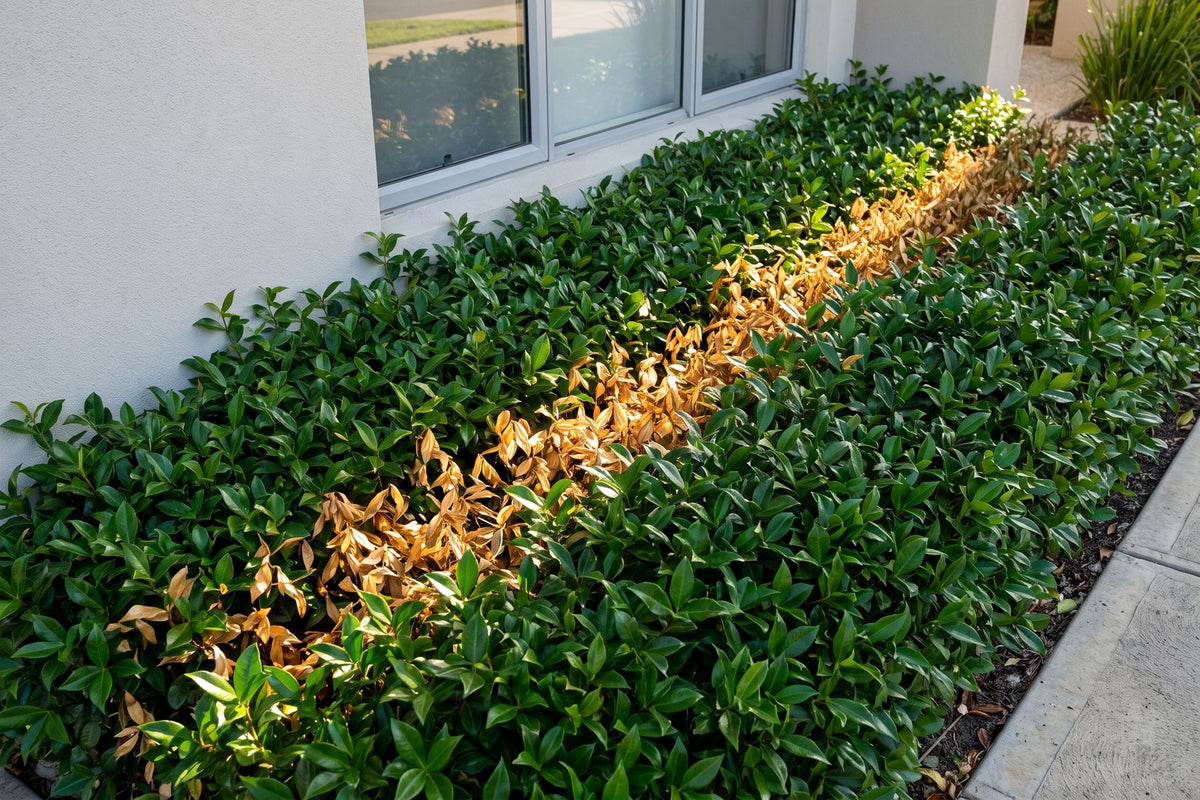
Bleached or brown leaf margins. This is scorch, not disease, and it shows on the wall side first. Water more deeply, add mulch, and if it repeats every summer move the plant out another 300 mm. Our guide to leaf burn explains how to tell it apart from salt and fertiliser damage.
Fine webbing and stippled leaves. Two-spotted mite explodes in hot, dry, sheltered conditions. Hose the undersides of leaves and treat with horticultural oil in the evening, never in full sun.
Everything wilts by 4pm but recovers overnight. Normal transpiration stress in extreme heat, not a watering fault. Check the soil at 100 mm before reaching for the hose, and see our advice on getting plants through heatwaves.
Scorched patches in an odd, moving band. Modern low-emissivity window glass can focus reflected sunlight into a narrow, extremely hot strip. If the damage tracks across the bed through the day, screening the window is the only fix.
Frequently asked questions
How far from the wall should I plant?
Allow a minimum of 600 mm from the wall face for small shrubs and groundcovers, and 900 mm to a metre for anything reaching two metres or more. Trees need two to three metres at least. That spacing keeps the plant out of the rain shadow under the eaves, gives roots uncompacted soil to work with, and lets air move behind the foliage so heat does not build up.
Will a climber damage a rendered or brick wall?
Self-clinging climbers such as creeping fig and ivy will, because their aerial roots work into mortar joints and render. Twining climbers such as star jasmine will not, provided you give them stainless steel wire or a timber trellis held 50 mm off the wall. That gap also allows airflow, which keeps the wall dry and the plant noticeably cooler through summer.
Does a west-facing wall get more sun than a north-facing one?
It gets fewer hours but harsher ones. A north-facing wall in Australia receives sun for most of the day, but with the sun high overhead in summer. A west wall gets sun only from early afternoon, when air temperatures peak and the sun is low enough to strike leaves and walls directly rather than glancing off them. That combination is what causes scorch.
What is the toughest plant for a hot west-facing wall?
For most of Australia, coastal rosemary is the safest choice. It handles reflected heat, salt, wind and poor soil, keeps a neat one and a half metre form with light trimming, and needs no supplementary water once established. In frost-free areas bougainvillea is tougher again and flowers harder the more heat you give it, as our list of drought-tolerant plants shows.
Ready to plant?
Treat a west wall as an opportunity rather than a problem. The plants that suit it are the least demanding in the catalogue, and the heat that kills a fern is exactly what makes bougainvillea flower. Start with our low water plants for hot climates, or pick specific performers such as coastal rosemary, Purple Cascade bougainvillea and star jasmine for a trellis. For the driest corners, our plants for full sun collection covers the rest.


