

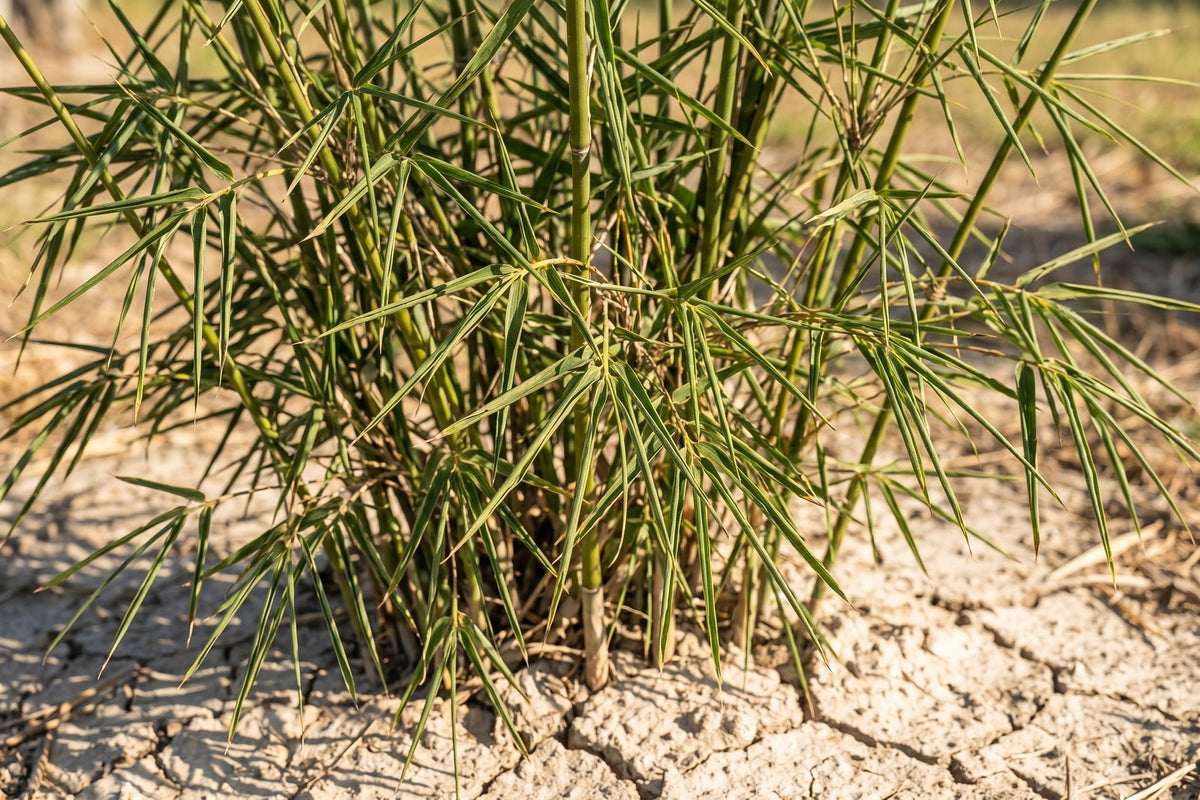
No screening plant on earth beats bamboo for speed. A row of Slender Weavers can turn an overlooked backyard into a private green room within two years, reaching heights a hedge would take a decade to manage. The key is choosing clumping bamboo, which stays exactly where you plant it, and giving it the water and food to sprint.
Quick facts
| Botanical name | Bambusa species (clumping) |
| Type | Evergreen giant grass |
| Height | 3 to 10m plus depending on variety |
| Position | Full sun to part shade |
| Soil | Rich, moist, well drained |
| Growth rate | Extremely fast, new culms reach full height in one season |
| Climate | Warm temperate to tropical, most varieties tolerate light frosts |
Clumping versus running: the question that matters
Running bamboos spread by underground runners and cause the horror stories. Clumping bamboos, including every variety below, grow from a tight root mass that expands only a few centimetres a year, like a giant ornamental grass. They do not invade next door.
Choosing a screening bamboo
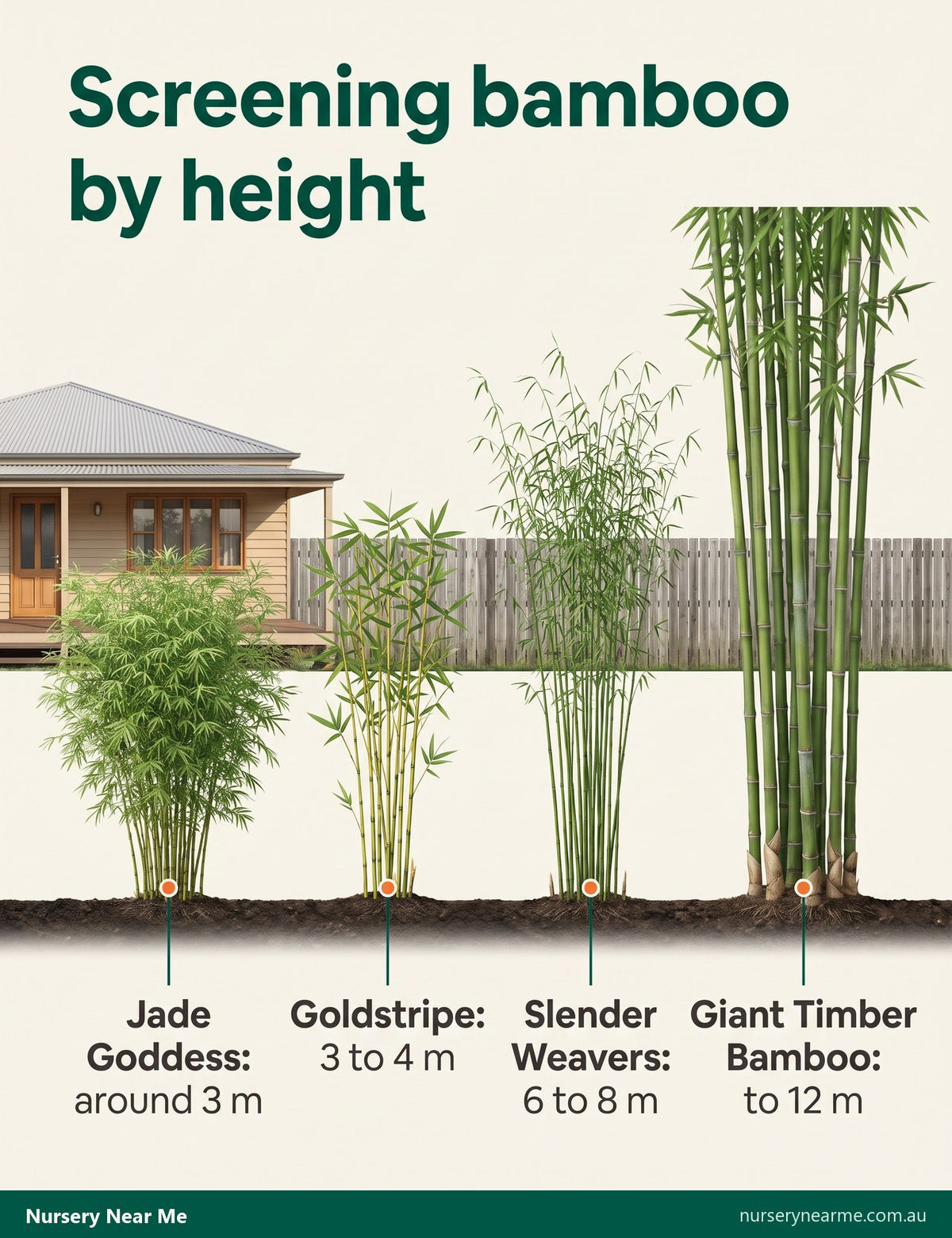
Slender Weavers (Bambusa textilis Gracilis) is the favourite screening bamboo in Australia for good reason: upright to 6 to 8m, slim footprint, graceful nodding tips. Timor Black brings glossy ebony canes for serious drama. Goldstripe is a compact 3 to 4m choice for smaller boundaries, while Giant Timber Bamboo from $39.95 creates park scale screens to 12m. For dense low screening, Jade Goddess keeps a lush fine leafed habit around 3m.
Planting a bamboo screen
Spacing: 1m apart for a fast dense screen, 1.5 to 2m for a budget planting that closes over in an extra season. A single row does the job.
Soil: Dig in generous compost and aged manure. Bamboo is a grass, and like lawn it loves rich living.
Watering in: Bamboo establishes fastest of anything you will ever plant, but only with water. Soak deeply three times a week for the first two months, then twice weekly for the first year.
Ongoing care
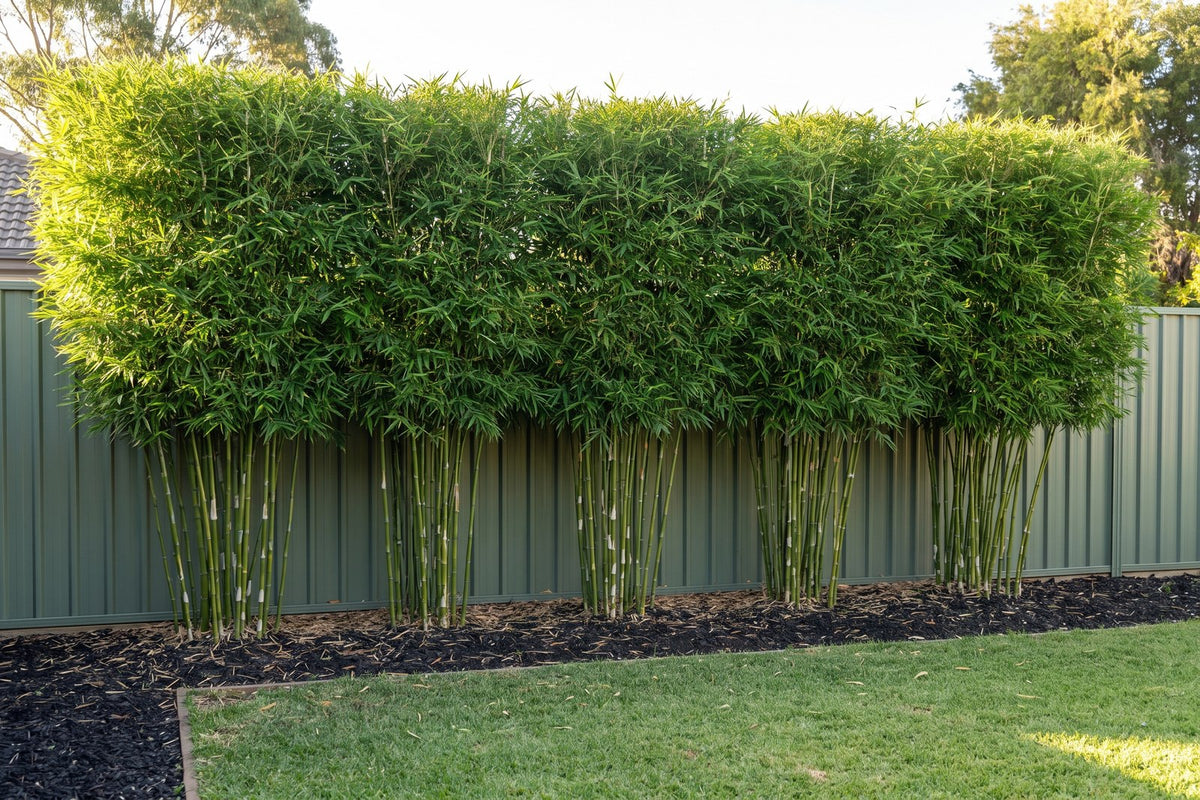
Feeding: Any high nitrogen fertiliser, including lawn food, in spring and midsummer. The difference between fed and unfed bamboo is dramatic.
Watering: Deep weekly soaks in dry weather. Curled leaves are the plant asking for water.
Maintenance: Thin old canes at ground level every few years and strip lower leaves for a clean look. Cut screens to your preferred height once and side branches fill the line.
Containment confidence: Clumpers need none, but a root barrier or raised planter adds peace of mind beside pools and paving if you want it.
Common problems
Yellow leaves with green veins: Hungry bamboo. Feed with nitrogen and iron.
Sparse thin screen: Usually underwatering or underfeeding in year one. Bamboo converts water and food directly into height and density.
Leaf drop in wind: Normal in exposed sites while establishing; new foliage returns denser.
Frequently asked questions
How fast will bamboo screen my fence?
Plant 1m apart with water and food, and most gardens have a usable 4m screen within 18 to 24 months.
Will clumping bamboo damage pipes or pools?
No. Clumping root systems are shallow and expand slowly outward from the original clump, unlike running bamboo.
Can bamboo grow in pots?
Yes, compact varieties like Goldstripe and Jade Goddess thrive in large troughs, a popular balcony screening solution.
Does bamboo handle frost?
Gracilis and most Bambusa handle light frosts easily. In cold inland areas, plant in spring so clumps establish before winter.
Ready to plant?
Compare every variety in our bamboo collection, or see all privacy and screening plants including lilly pillies and murraya. Read our pot and bag size guide to pick your starting size.
For the view from the street, our front yard kerb appeal planting guide works through hedges, feature trees and groundcovers that make a house look finished from the footpath.


