

No plant says Australia quite like a wattle in full bloom. Acacias are our largest genus of flowering plants, with close to 1000 species, and the golden wattle, Acacia pycnantha, is the national floral emblem. In the garden they earn their place with sheer speed and generosity: most wattles grow a metre or more a year, fix their own nitrogen from the air, ask for almost no care, and cover themselves in fluffy gold from late winter into spring when little else is performing.
The trade off is honesty about lifespan. Many of the fast shrubby wattles live hard and die young, often 10 to 20 years, which makes them brilliant pioneer plants: they screen a new garden in two seasons and shelter slower trees while they establish. Choose the right species, though, and you can also have a wattle that lasts generations.
Quick facts
| Botanical name | Acacia species |
| Type | Evergreen native shrubs and trees |
| Height | 2 m shrubs to 20 m trees, species dependent |
| Position | Full sun |
| Soil | Well drained; tolerates poor and sandy soils |
| Flowers | Golden yellow balls or rods, mainly winter to spring |
| Climate | Species for every Australian climate zone |
Choosing an acacia
Classic golden wattles
Golden Wattle from $19.95 is the national emblem itself, a 4 to 8 metre small tree with large perfumed golden balls in late winter. Brisbane Golden Wattle from $36.95 is one of the best garden wattles going, a dense 4 to 6 metre small tree with soft ferny foliage and pale gold flowers, and it takes pruning well enough to use as a screen. Both feature in our roundup of native plants with yellow flowers, which is worth reading if you want gold in the garden across more than one season.
Silver and blue foliage
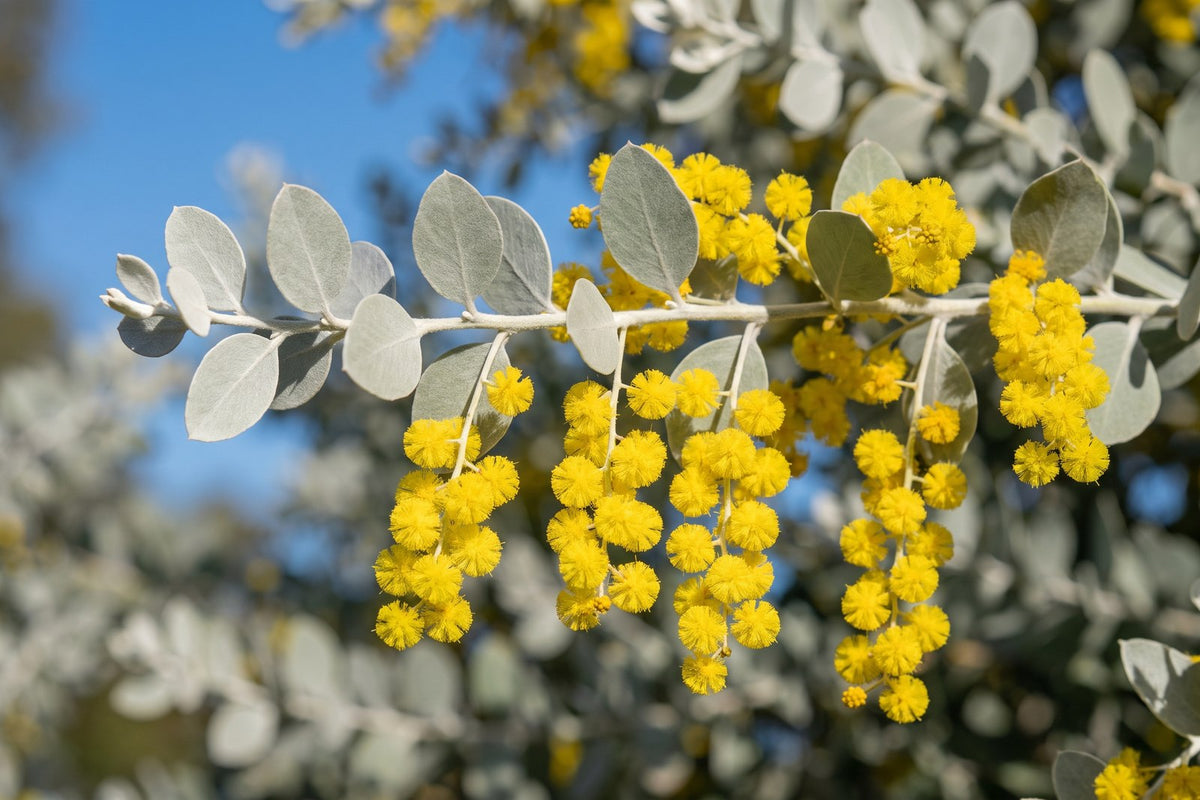
Queensland Silver Wattle from $52.95 pairs round silver grey leaves with brilliant gold flowers in the depths of winter, on a quick 3 to 5 metre tree. Cootamundra Wattle from $157.95 has famously fine silver blue foliage; plant it within its home range thoughtfully, as it can self seed beyond it. For something rarer, Acacia baileyana Purpurea from $229.95 adds dusky purple new growth to that silver, and Acacia binervia Sterling Silver from $229.95 makes a striking small silver tree for feature planting.
Long lived and unusual
Australian Blackwood from $1149.95 in advanced grades is the exception to the short lived rule, a true shade tree to 15 metres or more that can live a century and produces one of the world's great furniture timbers. At the other end of the scale, Knife Leaf Wattle from $10.95 is a tough 2 to 4 metre shrub with triangular grey leaves stacked along arching stems.
Planting
Full sun, always. Wattles tolerate almost any soil that drains, from sand to gravelly clay loam, and they positively resent rich, heavily fertilised beds. That tolerance for lean ground puts them near the top of our list of plants that thrive in poor soil. Dig a hole twice the pot width, plant at the same depth as the pot, water in with 8 to 10 litres and mulch to 50 mm.
Spacing: allow 2 to 3 metres between shrubby wattles used as screening, and 4 to 6 metres for tree species like blackwood. Autumn and spring are ideal planting windows. Young wattles establish so fast that a tubestock plant often overtakes an advanced one within two years, which is kind on the budget. If speed is your main objective, compare them against the rest of the field in our guide to the best fast-growing screening trees for privacy.
Ongoing care
Watering: Water deeply once or twice a week for the first summer only. After that, established wattles are among the most drought tolerant plants in the country and generally need nothing beyond rainfall.
Feeding: Mostly unnecessary. Acacias fix nitrogen through root nodules, so at most apply a low phosphorus native fertiliser at planting. Never use high phosphorus lawn or rose foods near them. The same warning applies across most of our native flora, and our grevillea care guide explains the phosphorus rule in full.
Pruning: Tip prune lightly after flowering each year to keep shrubs dense and extend their life. Like tea trees, wattles rarely reshoot from bare old wood, so little and often beats one dramatic intervention, a habit our leptospermum care guide covers in the same terms. Remove spent seed pods on species prone to self seeding.
Common problems

Borers: Small holes with sawdust like frass, usually on stressed or ageing plants. Squash larvae with a wire poked into the hole, prune off badly affected limbs, and keep plants vigorous; borers largely leave healthy wattles alone.
Galls: Lumpy growths on stems or flowers caused by wasps or fungi. Prune out and bin affected material; they are disfiguring rather than fatal.
Short lifespan: A fast wattle dying at 15 is not failure, it is the contract. Plan for succession by underplanting with the slower trees the wattle has been sheltering.
Yellow foliage in wet soil: Poor drainage suffocates the nitrogen fixing nodules. Replant on a mound; there is no fixing a wattle in a bog.
Wattles in a native garden
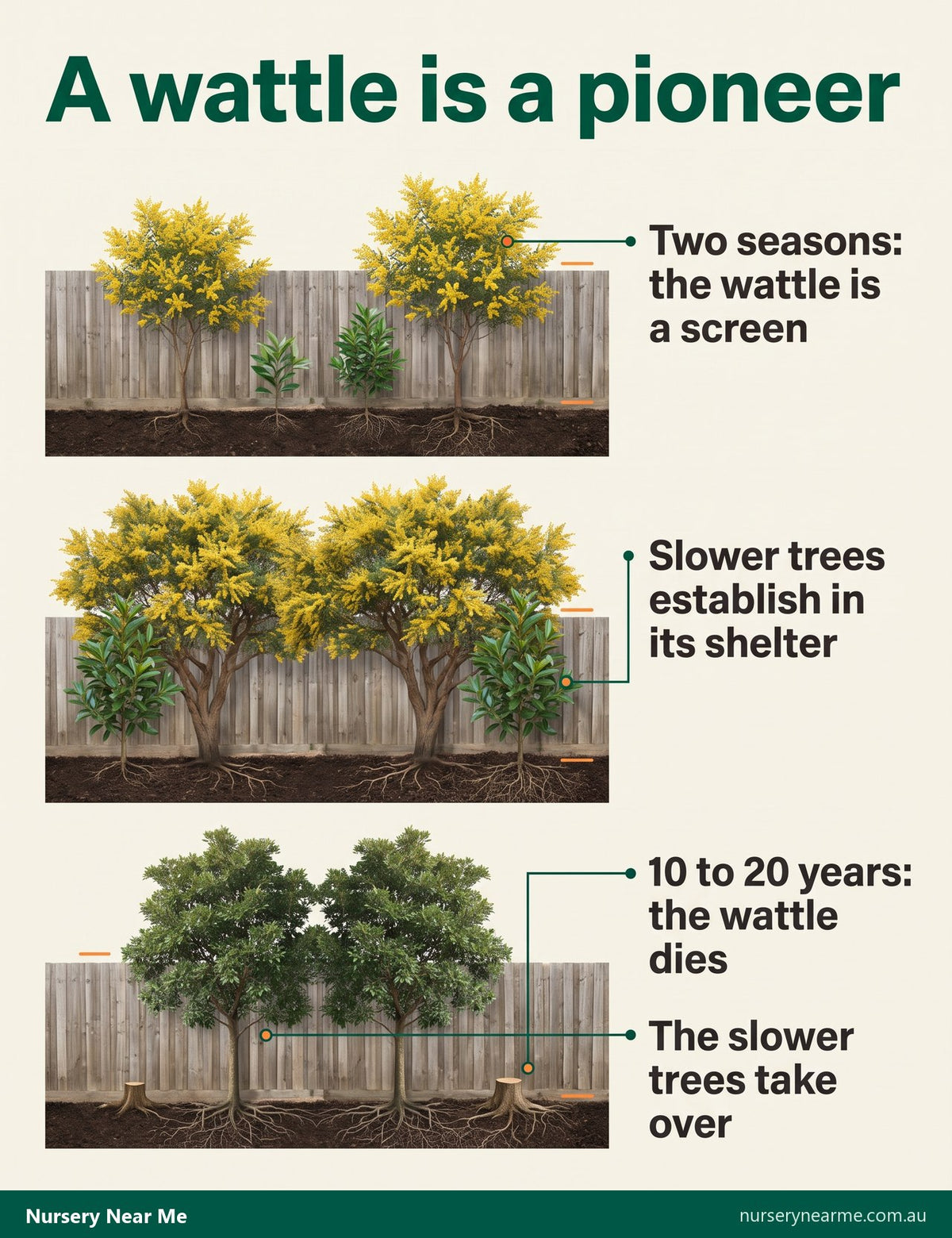
Acacias are pioneers rather than soloists, so they work best as the fast-growing framework around slower natives. Our step-by-step guide to the low-maintenance native garden shows how to phase that succession, and because wattle flowers feed insects that in turn feed birds, they slot neatly into the planting described in top bird-attracting native plants for Australian gardens.
Frequently asked questions
How fast do wattles grow?
Most garden wattles grow 1 to 2 metres a year in their first few years, with many flowering in their second year from planting. Blackwood is slower but far longer lived.
How long do acacia trees live?
Shrubby fast wattles typically live 10 to 20 years. Tree species like Acacia melanoxylon can live well over 100 years. Annual light pruning meaningfully extends the life of the short lived types.
Do wattles cause hay fever?
Less than they are blamed for. Wattle pollen is relatively heavy and insect carried; most spring hay fever is caused by wind blown grass pollens that peak at the same time the gold makes wattles an easy suspect.
Are wattle roots invasive?
Generally no. Most wattles have modest root systems, though all trees should be kept 3 metres or more from pipes and foundations, and large species like blackwood deserve more room.
Ready to plant?
For instant Australiana and the fastest screen in the west, wattles are hard to argue with. See the full range in our native plants collection, browse other fast growing plants, or pick a long term canopy from our trees. Our pot and bag size guide shows exactly what each size means, and every plant is backed by our 30 day satisfaction guarantee.
Wattles are part of a bigger shift. When we counted a year of orders in What Australia Planted in 2025-26, natives made up 61 per cent of everything shipped to Victoria and about half of Queensland and New South Wales.


