

Some plants work almost anywhere: sun or shade, wet or dry, coast or inland. They are the safest choices for a difficult spot and the backbone of most low maintenance gardens. This guide covers the plants with the widest range in Australian conditions, and where even they have limits.
The plants that do several jobs in Australian gardens
Versatility here means tolerating a genuinely wide range of conditions - not just looking good in different positions. These are the plants that work in sun and shade, wet and dry, or across multiple climate zones.
| Plant | Range it covers |
|---|---|
| Lomandra | Full sun to dry shade, drought to periodic wet, frost to tropics |
| Dianella | Sun or dry shade, coastal to inland, every capital |
| Liriope | Full sun to deep dry shade under trees |
| Star jasmine | Climber, groundcover or clipped panel; sun or shade |
| Westringia | Clipped hedge or informal shrub; salt, wind, drought, frost |
| Callistemon | Tolerates both waterlogging and drought |
| Dietes | Sun or part shade, poor soil, neglect |
| Lilly pilly | Cultivars from 1 m borders to 15 m screens |
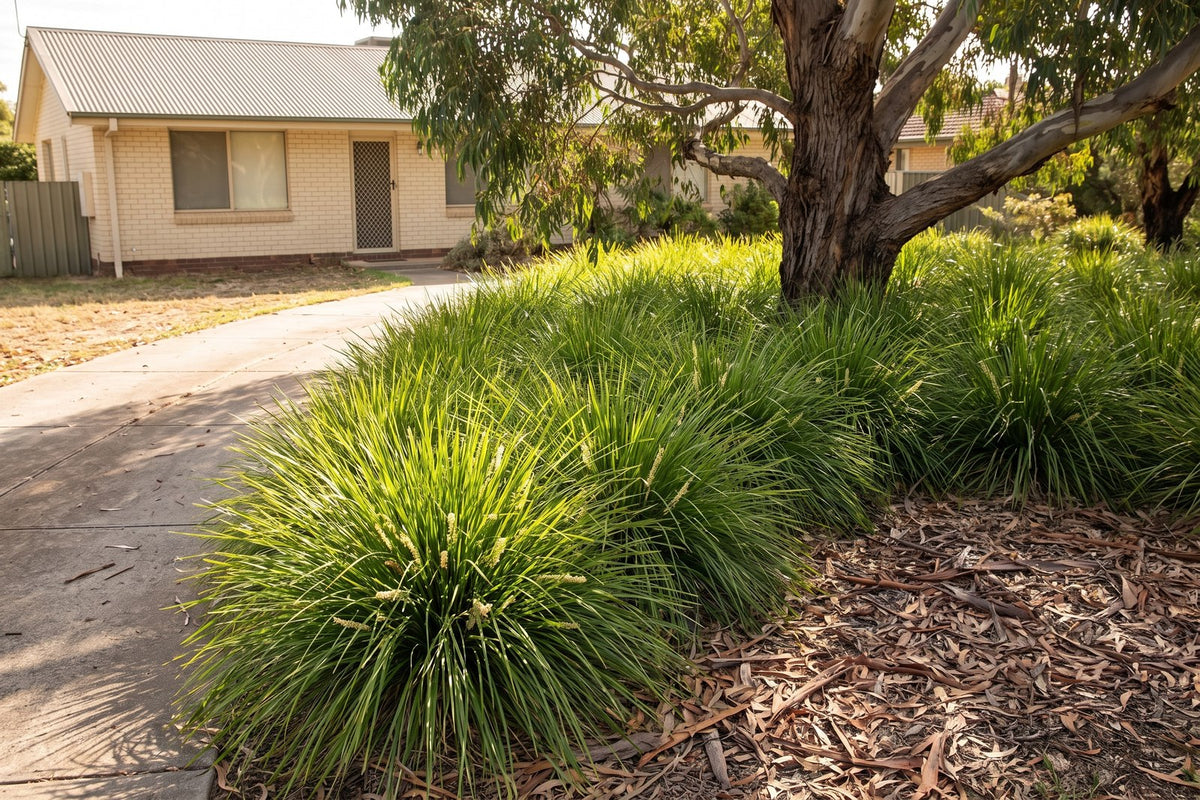
Lomandra is the standout
Genuinely unusual in tolerating full sun and dry shade, drought and periodic waterlogging, coastal salt and inland frost - and it grows in every Australian capital. Cut it back every two or three years and that is the entire maintenance requirement. That combination is why it appears in almost every commercial landscape planting in the country.
Lomandra hystrix extends the range further, handling genuinely wet ground where the common species will not.
Star jasmine: one plant, three uses
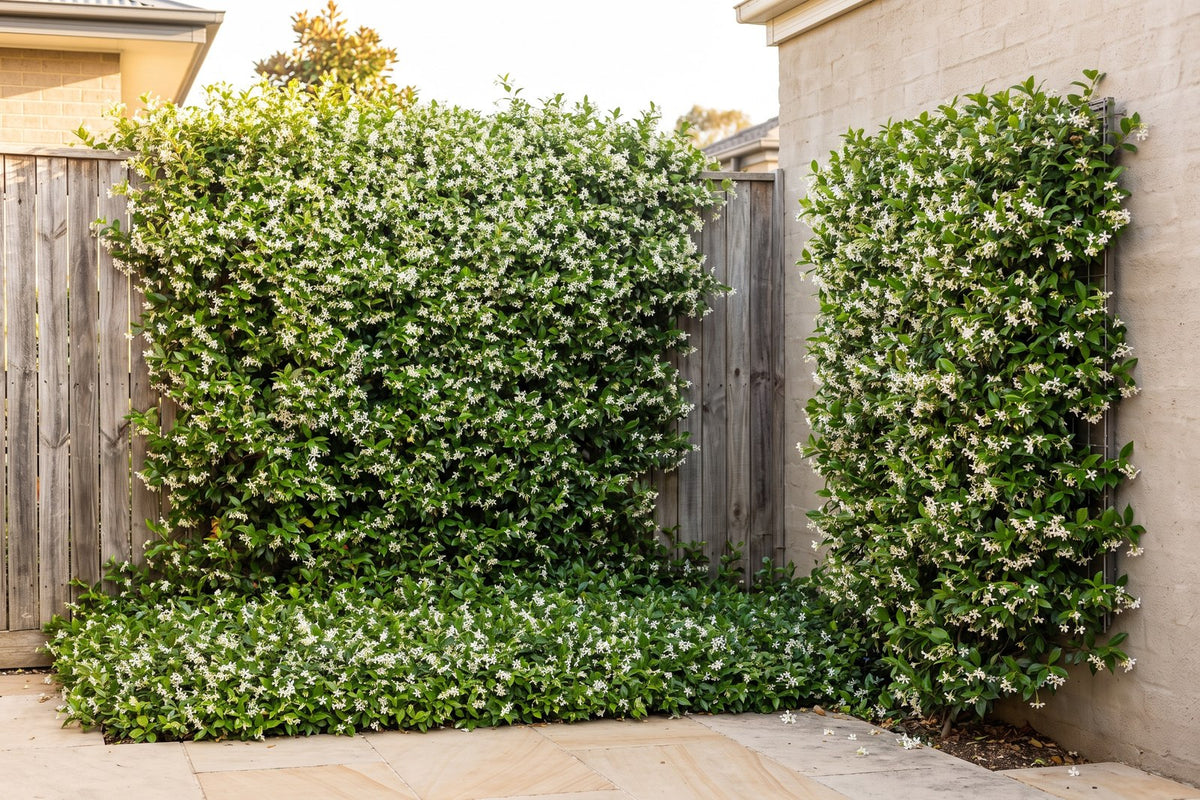
Left to climb it covers a fence or pergola in two to three years. Left flat it makes a dense evergreen groundcover that suppresses weeds. Clipped on a frame it forms a green wall panel as neat as a hedge. It also grows and flowers reliably in every Australian capital, and unlike climbing fig it can be removed later without damaging render.
Callistemon: wet feet and drought
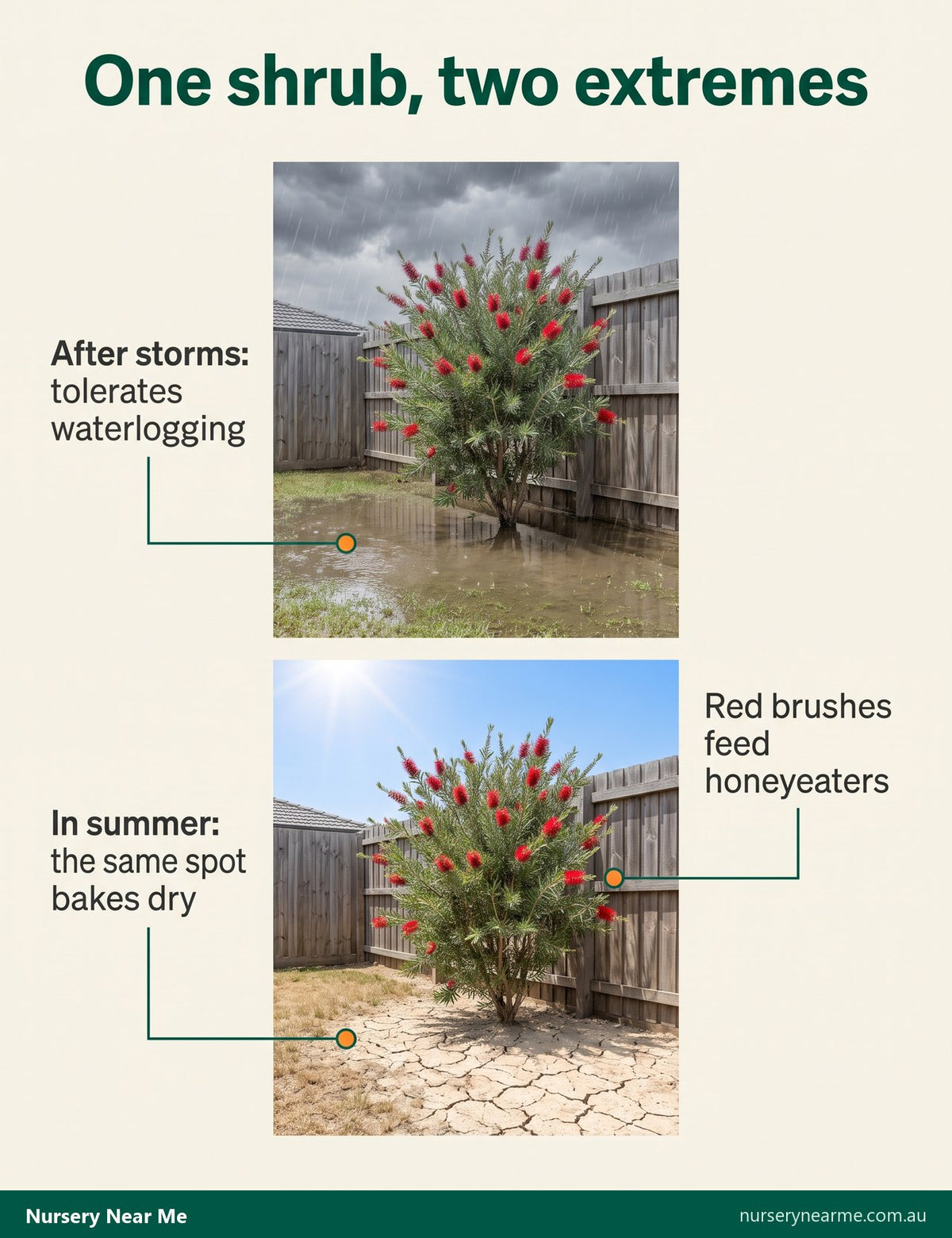
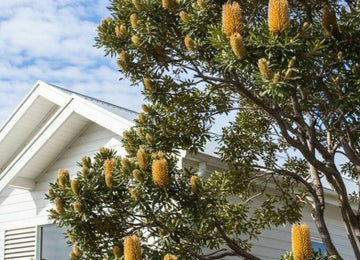
Very few plants tolerate both, and this is the practical answer for a low spot that floods after storms and then bakes dry in summer - a common and difficult Australian situation. It also feeds honeyeaters and comes in sizes from one-metre Little John to six-metre weeping forms.
Where versatility has limits
Two cautions worth stating. First, "versatile" does not mean it needs nothing in its first summer - every plant on this list needs deep watering through its first two summers to survive on rainfall afterwards.
Second, the natives among these still need low-phosphorus fertiliser. Callistemon and the strappy natives are less sensitive than grevilleas and banksias, but ordinary garden fertiliser and lawn feed drifting into a native bed remain a problem.
Building a garden around them
A planting of lomandra, dianella, westringia and callistemon with star jasmine on the fence will work in Brisbane, Sydney, Melbourne, Adelaide or Perth, in sun or part shade, and needs almost nothing once established. That is a rare thing in a country with this much climate variation, and it is a sensible backbone to build a more interesting garden around.
Related guides
For screening, the lilly pilly turns up in almost every plan, as our guide to lilly pilly for screening and privacy explains. Pittosporum and photinia are the usual alternatives, and our roundup of fast growing hedges for Aussie gardens compares the quickest of them.
For pollinators, bottlebrush feeds nectar loving birds and buddleja brings butterflies, and our guide to native plants that attract birds and pollinators explains what each group is doing in your garden.
For shaded beds, our guide to ideal fern environments covers the moisture and airflow they need.
For hot open positions, our list of low maintenance plants that thrive in full sun goes further, and for a dim indoor corner a peace lily is the forgiving choice.
Ready to plant?
The plants that earn their keep are the ones that solve more than one problem at a time: shade and structure, privacy and habitat, colour and low maintenance. Browse our low-maintenance plants for the versatile performers we grow, and our Australian natives collection for the species best adapted to local conditions.


