

Shaded ground is where most Australian gardens look worst - thin patchy lawn under a tree, bare soil beside the south fence, weeds in the gap nothing else will fill. A groundcover fixes all three at once, and once it closes over it suppresses the weeds permanently. The main decision is how much foot traffic the area gets, because that narrows the list far more than shade does.
Choose by traffic first
| Situation | Best options |
|---|---|
| Regular footsteps, between pavers | Dwarf mondo, pratia, dichondra |
| Occasional footsteps | Native violet, dichondra |
| Looked at, not walked on | Liriope, ajuga, star jasmine, clivia |
| Dry shade under trees | Clivia, liriope, Asiatic star jasmine |
| Damp shade | Native violet, dichondra, pratia |
Australian natives
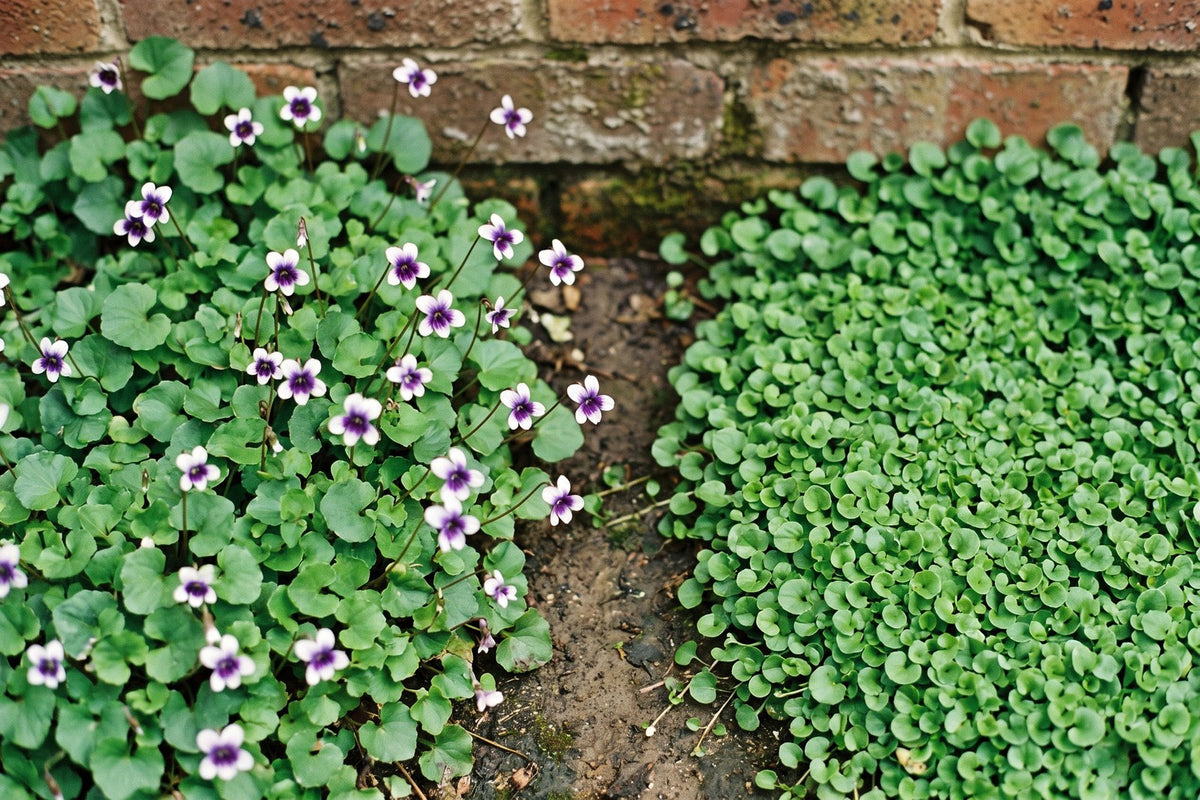
Native violet
Viola hederacea is the best groundcover for damp shade in Australia. It spreads into a soft green mat with small purple and white flowers through much of the year, takes light foot traffic, and thrives exactly where lawn always fails - under trees and along the shaded side of a house.
Kidney weed
Dichondra repens is a native with small round bright green leaves forming a flat dense mat. It handles light traffic, works in sun or shade, and is the closest thing to a native lawn substitute. It wants consistent moisture rather than dry conditions.
For dry shade under trees
This is the hardest situation in any garden, because the tree takes the water before anything else gets it.
Clivia
Clivia miniata is genuinely excellent here, and unusually it flowers in deep shade - orange blooms in late winter and spring. Strap foliage stays looking good year-round, and once established it needs very little water.
Liriope
Big Blue and Evergreen Giant tolerate root competition and dry shade while producing purple flower spikes in late summer. Stripey White brings variegation that lifts a dark corner considerably.
Asiatic star jasmine
Trachelospermum asiaticum makes a dense evergreen mat around 300 mm high, suppresses weeds thoroughly, and is drought tolerant once established. One of the most reliable weed-smothering groundcovers available for shade.
For crisp low structure
Mondo grass
Dwarf mondo is the classic for between pavers and tight edging - dark green, never needs cutting, and tolerates being stepped on. Black mondo is near-black and works as deliberate contrast against pale gravel or sandstone. Both are slow, so plant densely.
Blue star creeper
Pratia pedunculata hugs the ground at about 50 mm with pale blue star flowers, and handles regular foot traffic better than most. Ideal between stepping stones in part shade.
For colour in shade
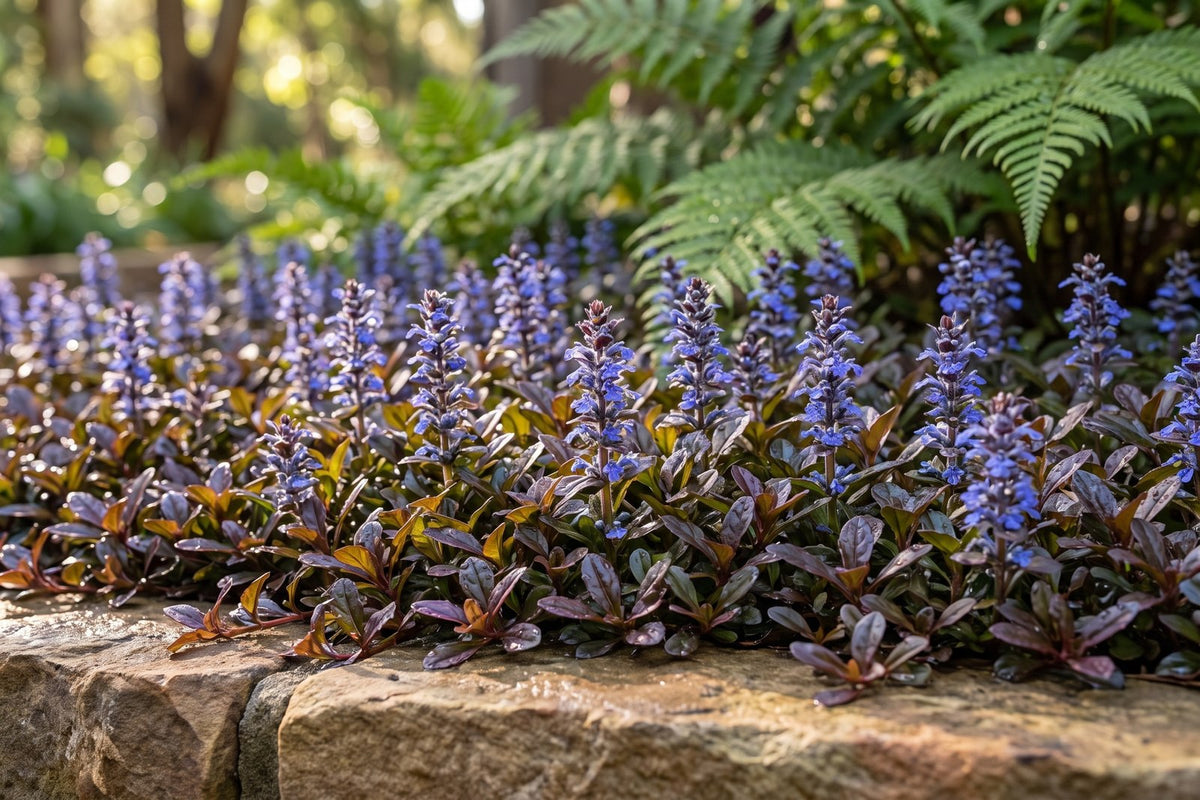
Ajuga
Chocolate Chip forms a low bronze-purple mat with blue flower spikes in spring, and Catlin's Giant is the larger-leaved form. Both spread readily in moist shade and give colour where most groundcovers give only green.
Plectranthus
Mona Lavender is taller than a true groundcover at around 600 mm, but it flowers prolifically in shade through autumn and winter and fills the middle layer of a shaded bed beautifully.
One thing to avoid
Two traditional shade groundcovers - English ivy and periwinkle (Vinca) - have become serious environmental weeds in parts of Australia, particularly in Victoria, New South Wales and Tasmania, where they smother native vegetation in bushland and along creek lines.
They still have a place in a fully contained courtyard well away from bushland, but we would not recommend either for a general garden. The natives and the alternatives above do the same job without the risk.
Where these grow in Australia
- Brisbane and subtropical Queensland - native violet, dichondra, mondo, liriope and clivia all perform well.
- Sydney and coastal NSW - everything on this list suits.
- Melbourne, Adelaide, Canberra - liriope, ajuga, mondo and clivia handle frost. Native violet may brown off in a hard winter and returns in spring.
- Perth - liriope, clivia and Asiatic star jasmine cope best with sandy soil; native violet and dichondra need irrigation.
- Tropical north - native violet, dichondra and mondo do well in the wet season with good drainage.
Getting a groundcover established
- Clear the area completely, including existing grass runners. Couch and kikuyu coming up through a new planting is very difficult to fix.
- Improve the whole area with compost, not just individual holes.
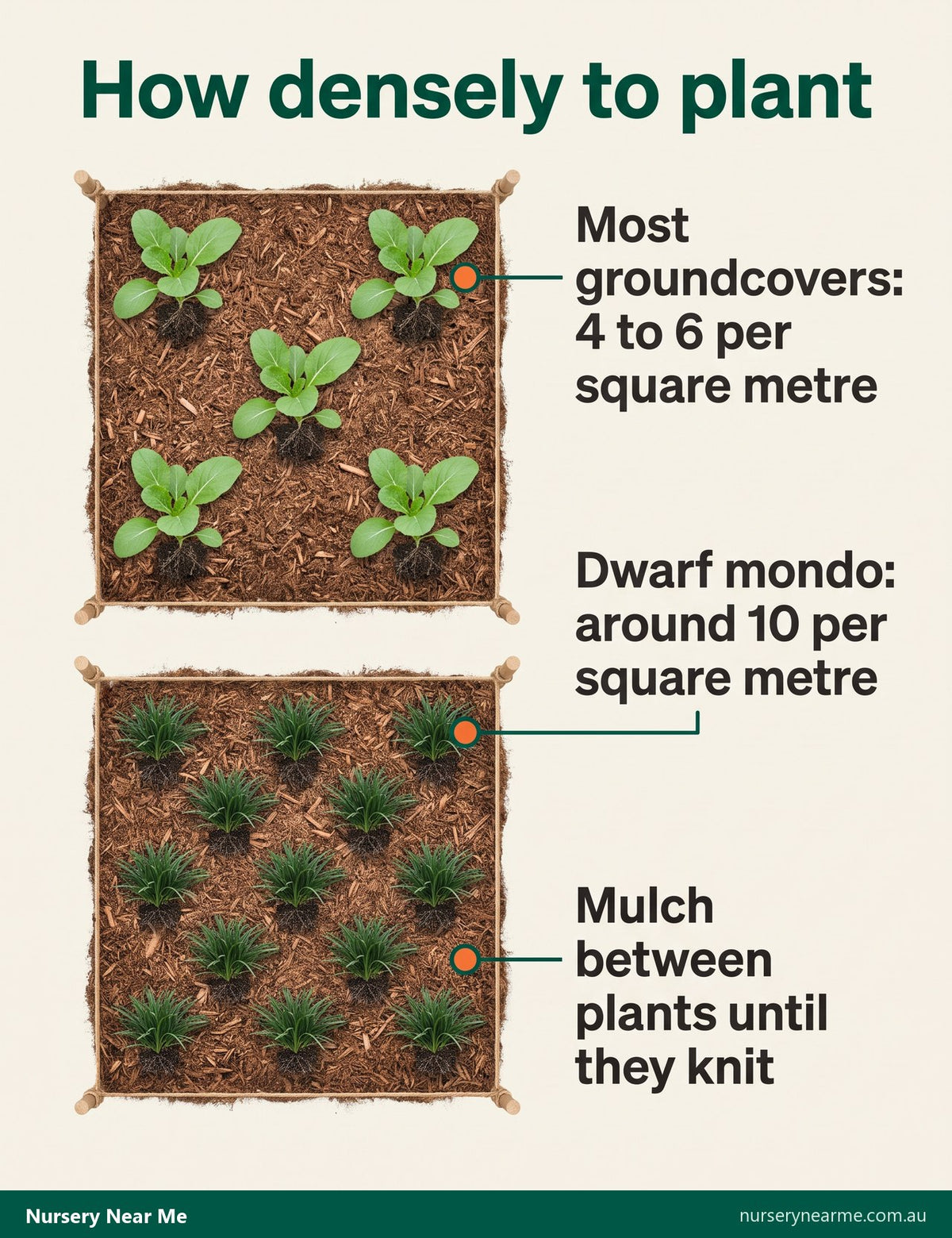
- Plant densely - 4-6 per square metre for most species, more for slow growers like mondo.
- Mulch between plants until they knit together.
- Water regularly for the first three months, and check dry shade areas by hand, since rainfall often never reaches soil under a dense canopy.
- Weed diligently for the first year. After the cover closes, weeding drops close to zero.
Frequently asked questions
What is the best groundcover for shade in Australia?
Native violet for damp shade, clivia or liriope for dry shade under trees, and dwarf mondo for crisp edging and between pavers. All are evergreen and need very little maintenance once established.
What grows under a big tree where grass won't?
Clivia, liriope and Asiatic star jasmine handle both shade and the root competition that makes dry shade difficult. The problem there is water rather than light, so mulch heavily and water deeply while plants establish.
Which shade groundcovers can be walked on?
Dwarf mondo, blue star creeper and dichondra all take light foot traffic and work between pavers and stepping stones. None will handle children playing or a dog running on them daily.
How many plants do I need per square metre?
Four to six for most groundcovers. Slow species such as mondo need closer spacing - around ten per square metre for dwarf mondo - or you will be weeding between plants for years.
Is English ivy a good shade groundcover?
We would not recommend it. English ivy and periwinkle have become significant environmental weeds in parts of Australia, smothering native vegetation in bushland. Native violet, clivia, liriope and Asiatic star jasmine do the same job without the risk.
Do groundcovers stop weeds?
Once they close over, yes - very effectively. The first year is the work, because bare soil between young plants needs mulching and regular weeding until the cover knits together.
Ready to plant?
Browse our groundcover collection, plants for full shade, or groundcovers for low-maintenance gardens.
Related reading: our shade gardening guide and the mondo grass guide.
If you garden in a bushfire prone area, our guide to bushfire-wise garden plants gathers what the CFA, CSIRO and the native plant societies say about placement, plant traits and the species on their published lists.
On a septic block the planting rules change: our guide to what to plant over a septic drain field gathers the state guidelines on cover plants, tree distances and the signs of a failing trench.


