

The foxtail palm has become the default feature palm in Australian gardens, and for good reason. The plumed fronds give it a fuller, softer look than most palms, it grows quickly, and it is self-cleaning - old fronds drop on their own rather than needing to be cut off a three-storey trunk. It is also an Australian native, which surprises most people, and its story is one of the more remarkable in modern horticulture.
Quick facts
| Detail | What to expect in Australia |
|---|---|
| Botanical name | Wodyetia bifurcata |
| Mature size | 8-10 m tall, 3-4 m frond spread |
| Position | Full sun. Tolerates part shade when young |
| Soil | Free draining. Excellent in sandy coastal soil |
| Water | Regular while establishing, then drought tolerant |
| Frost | Tender. Damaged below about 2°C |
| Growth rate | Fast for a palm - 300-600 mm a year in warm climates |
| Self-cleaning | Yes. Old fronds fall without pruning |
| Best climates | Brisbane, northern NSW, tropical Queensland, Darwin, coastal Perth |
An Australian native with an unusual history
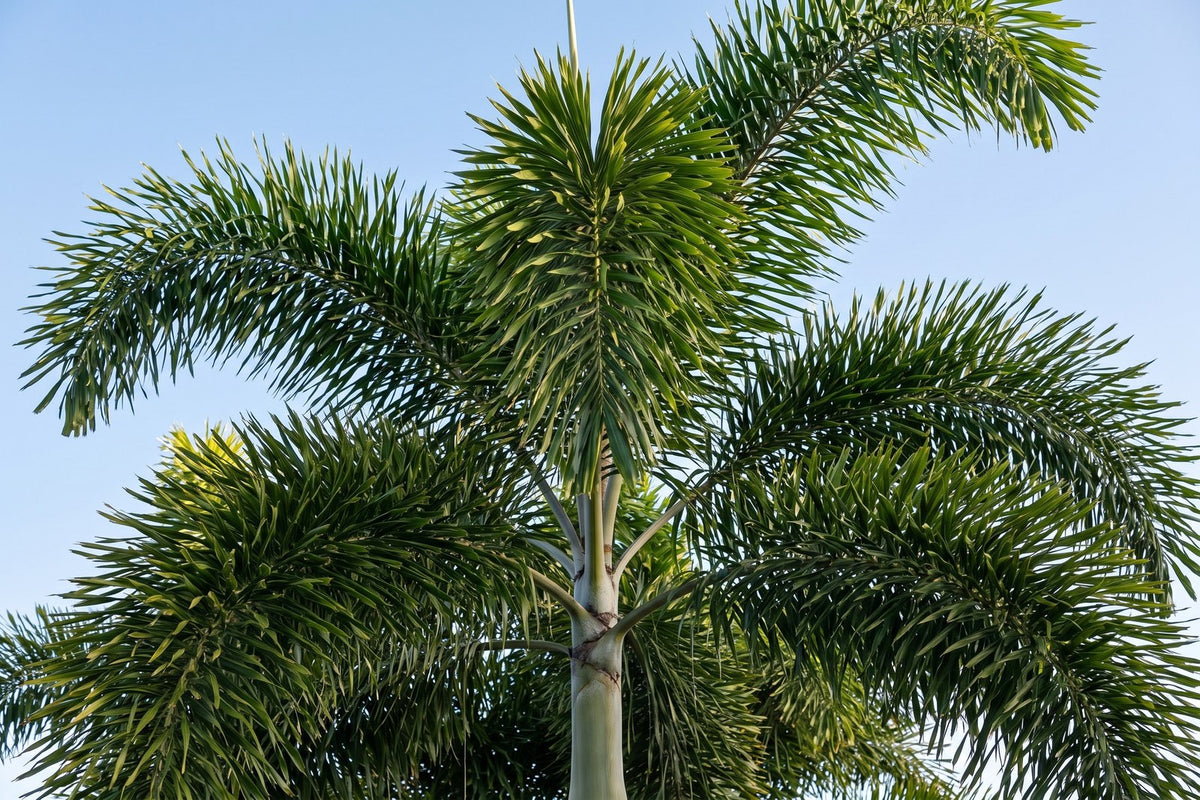
The foxtail palm grows wild only in a small area of Cape Melville in far north Queensland. It was unknown to Western botany until the 1970s and was not formally described until 1978, taking its botanical name from Wodyeti, an Aboriginal man of the region whose knowledge of the local plants informed its identification.
Once it entered cultivation, seed was collected illegally on a large scale because the palm was so commercially desirable. Nursery propagation has long since made that unnecessary - the palms sold today are grown from cultivated seed, and the species is now widespread in gardens across northern Australia and the world.
Where it grows well in Australia
- Tropical Queensland and Darwin - its natural climate. Fastest growth and the healthiest specimens.
- Brisbane, the Gold and Sunshine Coasts - excellent, and the palm is close to ubiquitous here.
- Northern NSW - grows well, slightly slower.
- Sydney - workable in a warm sheltered position, though growth slows through winter and cold snaps can mark the fronds.
- Coastal Perth - suits it, with sandy free-draining soil and mild winters.
- Melbourne, Adelaide, Canberra and inland - too cold. Frost damages the crown, and the growing point does not recover once it is lost.
Salt tolerance is a real strength. Foxtails handle coastal exposure well, which is why they appear so often in beachfront gardens and resort planting along the Queensland coast.
Why gardeners choose it over other palms
| Feature | Foxtail palm | Other common palms |
|---|---|---|
| Frond shedding | Self-cleaning, drops naturally | Many need cutting off at height |
| Frond form | Full, plumed, soft outline | Flatter, more formal |
| Growth rate | Fast for a palm | Often slow, e.g. date palms |
| Trunk | Smooth, self-supporting, no skirt | Some retain untidy frond bases |
| Spines | None | Date palms carry vicious spines |
That self-cleaning habit is the practical winner. A mature foxtail sheds its own dead fronds, which means no arborist visit to tidy a palm eight metres up. The fronds are heavy when they fall, so keep the palm clear of where people sit or park.
How to plant
- Plant in spring or early summer so it establishes through the warm months.
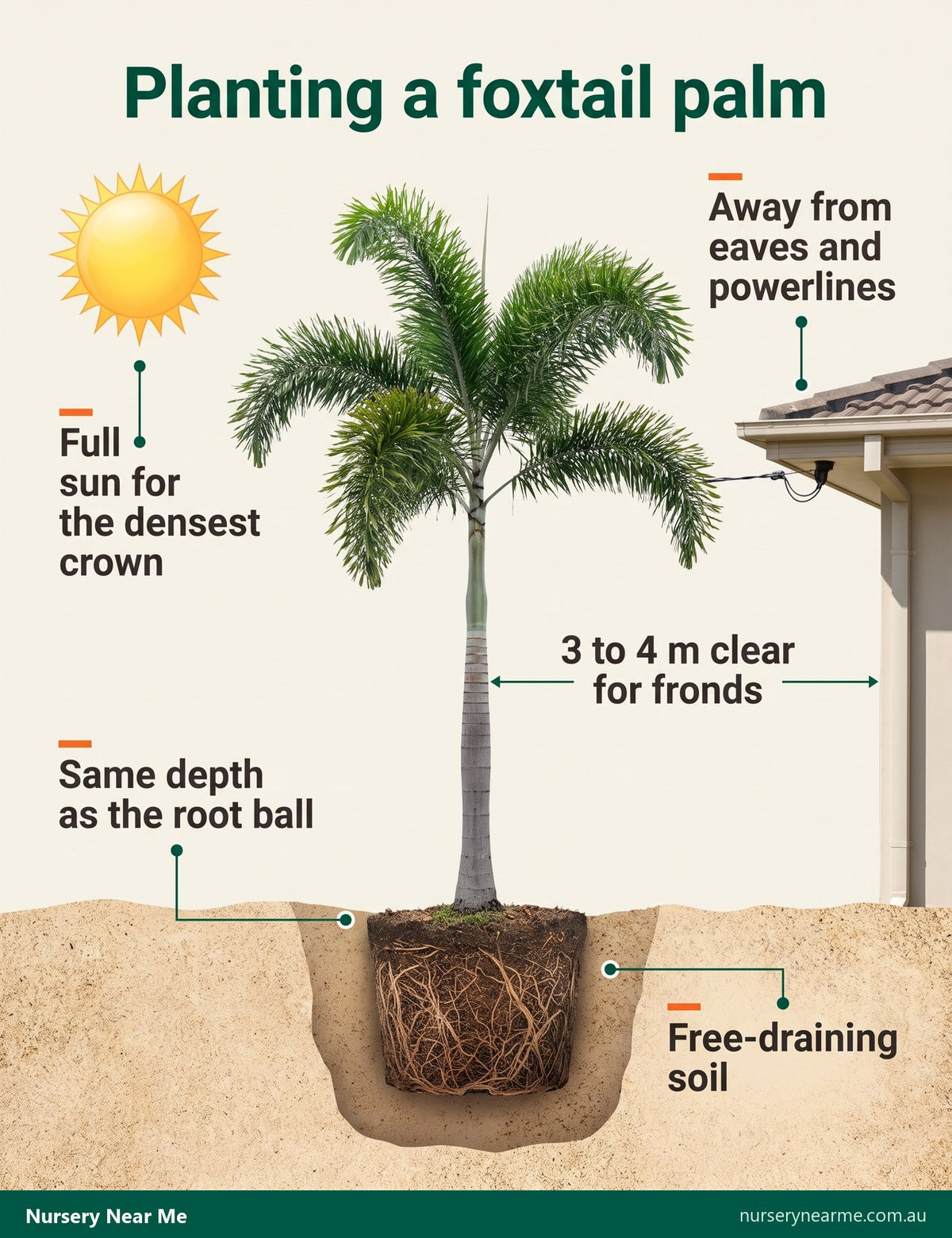
- Choose full sun for the densest crown. Young palms accept part shade.
- Ensure drainage. Foxtails handle heavy tropical rain but not soil that stays waterlogged.
- Plant at the same depth as the root ball. Planting a palm too deep is a common cause of crown rot.
- Allow 3-4 metres of clearance for the frond spread, and keep it away from eaves and powerlines.
- Water deeply two or three times a week through the first summer, then reduce.
Foxtails are often planted in groups of three at staggered heights, which looks considerably better than a single specimen in a large garden and mimics how palms grow naturally.
Ongoing care
Watering
Water regularly for the first two summers while roots establish. After that, foxtails are notably drought tolerant for a tropical-looking palm and need water only during extended dry spells. Deep infrequent watering beats frequent light watering.
Feeding
Use a palm-specific fertiliser in spring and again in midsummer. Palm blends contain magnesium and potassium, and a shortage of either is the usual cause of yellowing on older fronds. General garden fertiliser often lacks them, which is why a fed palm can still look hungry.
Pruning
Almost none needed. Let fronds drop naturally rather than cutting green ones off to tidy the crown - removing green fronds weakens the palm because it draws nutrients from older leaves to fuel new growth. Never cut into the growing point at the top of the trunk; unlike a tree, a palm cannot regenerate from there.
Common problems and fixes
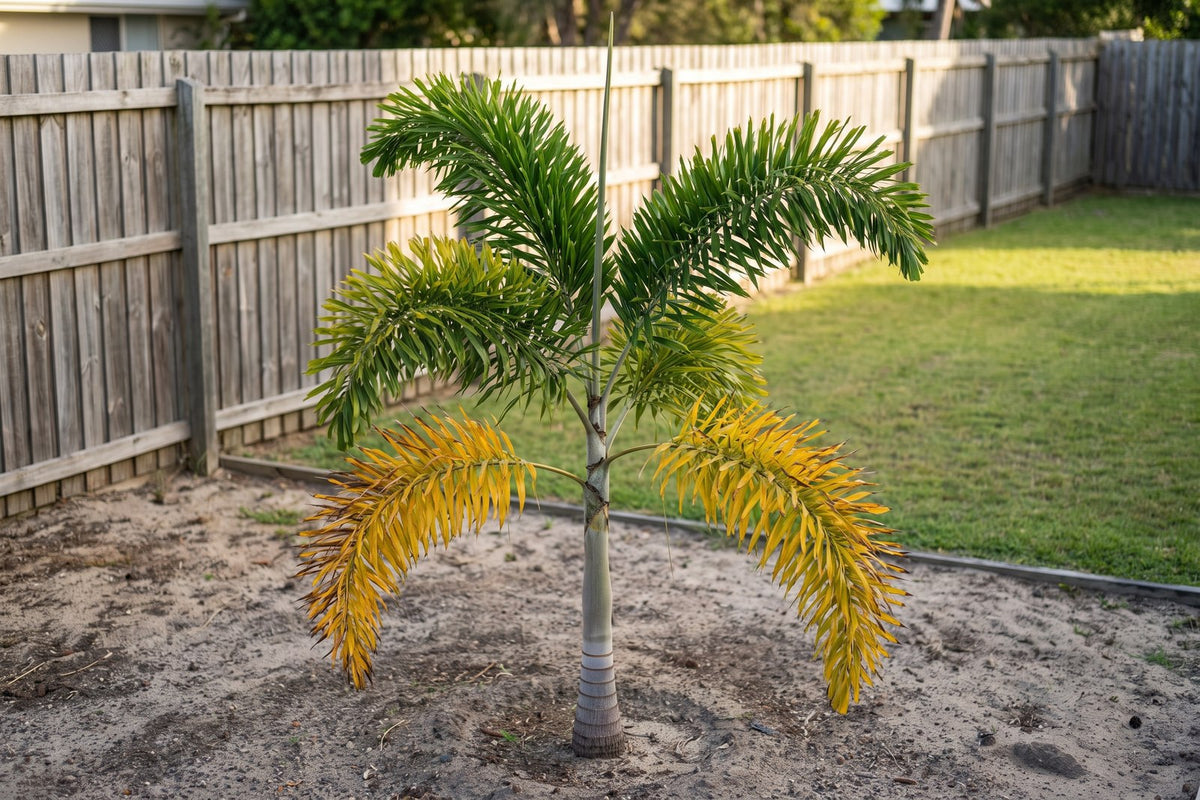
- Yellowing older fronds is usually a magnesium or potassium shortage. Switch to a palm-specific fertiliser rather than adding more nitrogen.
- Brown frond tips generally means dry soil or salty water. Deep soak and check irrigation.
- Collapsing central spear is serious and indicates crown rot, often after water sat in the crown or the palm was planted too deep. A palm that loses its growing point will not recover.
- Frost-marked fronds in southern gardens indicate the palm is outside its comfortable range. Damage to the crown is usually terminal.
- Slow growth in a young palm is often too much shade or cool soil. They speed up markedly once established in warmth.
- Heavy frond drop onto paving or cars is normal self-cleaning behaviour. Plan the position with that in mind.
Frequently asked questions
Is the foxtail palm an Australian native?
Yes. Wodyetia bifurcata occurs naturally only around Cape Melville in far north Queensland, and was not formally described until 1978. Every foxtail sold today is nursery-propagated from cultivated seed.
How fast do foxtail palms grow?
Fast by palm standards - 300 to 600 millimetres a year in Brisbane or further north, reaching eight to ten metres over time. Growth is noticeably slower in Sydney and Perth, and stalls in cool weather.
Do foxtail palms need their fronds cut off?
No. They are self-cleaning, meaning old fronds detach and fall on their own. That is one of the main reasons they are chosen over palms that need regular tidying at height. Falling fronds are heavy, so site them away from seating and parking.
Will a foxtail palm survive in Melbourne or Adelaide?
Not reliably. Foxtails are damaged below about 2°C and a frost that reaches the crown will usually kill the palm. They suit Brisbane, coastal New South Wales, tropical Queensland and coastal Perth rather than southern cities.
How far from the house should I plant one?
Allow three to four metres for the frond spread, and keep clear of eaves, gutters and powerlines. Foxtail roots are not invasive like a fig, so the constraint is the canopy rather than the root system.
Why are the older fronds turning yellow?
Almost always a magnesium or potassium deficiency, which is common in sandy soils and shows on the oldest fronds first. Use a palm-specific fertiliser containing both, and expect improvement in new growth rather than recovery of the yellowed fronds.
Ready to plant?
We grow foxtail palms from young plants through to advanced specimens for immediate impact. Browse our palms collection, or the wider palms, ferns and tropical range for the full warm-climate palette.
Comparing palms? See our guide to palm tree varieties, and the Bismarck palm if you want a large silver-blue alternative.
Before a tree goes in near the house, read our guide to planting near pipes: it sets out what Australian water utilities say about root behaviour, what can go directly over a sewer line, and which trees to keep well away.


