

Viburnum odoratissimum is a versatile plant that adds both beauty and functionality to any garden design. With its glossy foliage, fragrant flowers, and tolerance for various soil conditions, this plant is a favourite among garden enthusiasts. In this blog post, we will explore the many ways in which Viburnum odoratissimum can enhance your outdoor space and provide you with valuable tips on incorporating it into your own garden design.
The versatility of viburnum in garden design
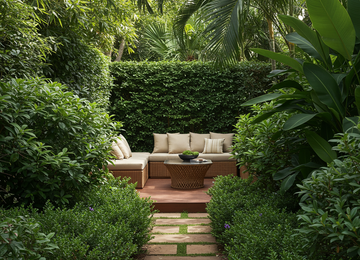
Viburnum odoratissimum is a versatile evergreen shrub that adds beauty and fragrance to any garden design. With its large, glossy leaves and clusters of small white flowers in spring, this shrub creates an attractive focal point as a specimen plant. It also works well as a dense hedge or screening for privacy due to its fast growth and ability to be pruned into shape. Additionally, the small red berries it produces in early summer are not only decorative but also attract birds, making it an excellent addition to mixed borders or container gardening.
1. Background and Characteristics of Viburnum Odoratissimum
Viburnum odoratissimum is an evergreen shrub with large, glossy leaves and fragrant white flowers that bloom in spring. It grows to a height of around 3 to 4.5 metres and carries dense clusters of small red berries in early summer. The leathery oval-shaped leaves add texture and interest to the garden throughout the year.
2. Viburnum Odoratissimum as a Hedge Plant
Viburnum odoratissimum is an evergreen shrub that makes an excellent hedge plant. Its dense growth and glossy, leathery leaves provide privacy and screening in the garden. In spring, it produces clusters of fragrant white flowers, followed by small red berries in early summer.
3. Viburnum Odoratissimum as a Specimen Plant
Viburnum Odoratissimum is an evergreen shrub known for its dense growth and glossy, leathery leaves. It produces clusters of fragrant white flowers in early spring, followed by small red berries in summer. With its large size and attractive foliage, Viburnum Odoratissimum makes an excellent specimen plant in the garden.
This versatile shrub can be used to create focal points or add visual interest to a landscape. Its vibrant flowers and lush green leaves provide year-round beauty, while the clusters of small red berries add a pop of colour to the garden. Whether planted alone or as part of a mixed border, Viburnum Odoratissimum is sure to make a statement in any garden design.
4. Viburnum Odoratissimum in Mixed Borders
Viburnum odoratissimum is a versatile evergreen shrub that adds beauty and fragrance to mixed borders. With its glossy, leathery leaves and clusters of white flowers in spring, it creates an attractive backdrop for other plants. In addition, its dense growth habit makes it ideal for creating hedges or screening areas in the garden.
5. Viburnum Odoratissimum for Screening and Privacy
Viburnum odoratissimum is a versatile evergreen shrub that is ideal for creating privacy and screening in your garden. With its dense growth habit and glossy, leathery leaves, it forms a thick hedge that blocks out unwanted views and noise. In addition, the fragrant white flowers that appear in early summer are followed by small red berries, adding aesthetic appeal to your outdoor space.
6. Viburnum Odoratissimum as a Foundation Plant
Viburnum Odoratissimum, with its dense growth and glossy evergreen leaves, is an ideal choice as a foundation plant. Its fragrant white flowers in spring add a touch of elegance to any garden, while the small red berries that follow in early summer provide an additional burst of colour. This versatile shrub can be pruned into a hedge or used as a standalone specimen plant to create visual interest and privacy.
7. Viburnum Odoratissimum in Container Gardening
Viburnum odoratissimum, an evergreen shrub known for its fragrant flowers and glossy leaves, is a versatile addition to container gardening. Its dense growth habit makes it suitable for creating privacy screens or hedges in small gardens. The clusters of white flowers that bloom in early spring are followed by small red berries, adding interest throughout the summer season.
- Fragrant flowers
- Glossy leaves
- Dense growth habit
- Suitable for privacy screens or hedges
- Clusters of white flowers bloom in early spring
- Small red berries add interest in summer
8. Care and Maintenance of Viburnum Odoratissimum
To care for Viburnum odoratissimum, prune in early summer to maintain desired height and shape. Remove any dead or damaged branches as well. It is an evergreen shrub with glossy leaves that are oval and leathery. In addition, it produces fragrant white flowers in clusters during the spring season followed by small red berries in summer.
Regular watering is important for the growth of Viburnum odoratissimum, especially during dry periods. Provide a well-draining soil and mulch around the base of the shrub to help retain moisture. This dense and large shrub can be used as a hedge or screening plant due to its versatility and thick foliage that provides privacy.
9. Design Tips and Combinations with Viburnum Odoratissimum
Viburnum Odoratissimum is a versatile evergreen shrub that offers numerous design possibilities in the garden. Its dense growth, glossy leaves, and fragrant white flowers make it an excellent addition to any landscape. Here are some design tips and combinations to consider when incorporating Viburnum Odoratissimum into your garden:
- Use Viburnum Odoratissimum as a hedge for privacy or screening. Its thick foliage and fast growth rate make it ideal for creating a lush green barrier.
- Pair Viburnum Odoratissimum with other flowering shrubs such as azaleas or camellias to create beautiful mixed borders that offer colour throughout the seasons.
- Combine Viburnum Odoratissimum with other evergreen plants like boxwood or holly for an attractive foundation planting.
By considering these design tips and combinations, you can enhance the beauty of your garden while showcasing the versatility of Viburnum Odoratissimum.
Choosing the right viburnum for the job
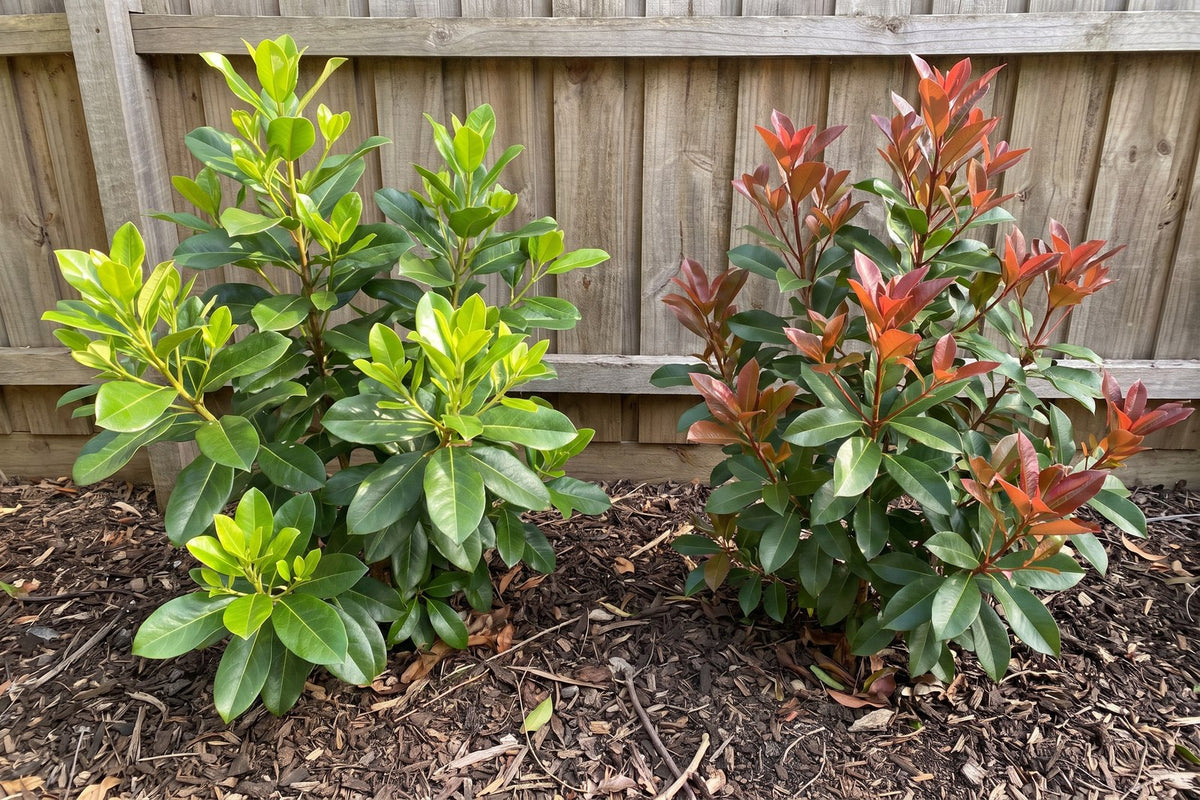
Viburnum odoratissimum is the best known member of a much bigger genus, and matching the variety to the job is the difference between a screen that closes over in two years and one that never quite works.
For fast, tall privacy screens
The classic is Emerald Lustre viburnum, a selected form of odoratissimum with larger, glossier leaves and flushes of lime green new growth, reaching 3 to 4 metres quickly on a boundary. For narrow side passages, Viburnum Dense Fence was bred in Australia to branch densely from the base and hold a tighter, more upright habit, so you get the screen without surrendering half the yard. If you are weighing viburnum against other options, our comparison of fast growing screening trees for privacy puts the growth rates side by side.
For colour and cooler climates
Coppertop sweet viburnum flushes rich copper red with every burst of new growth, turning a plain hedge into a feature. In frosty districts where sweet viburnum sulks, laurustinus viburnum is the pick: a tough evergreen to around 3 metres that flowers white from pink buds through winter, when little else is happening.
For a feature shrub
Viburnum plicatum Lanarth is a different plant entirely: deciduous, with horizontal tiered branches lined in white lacecap flowers each spring. Plant it as a standalone feature in a cool climate garden rather than as a hedge.
Planting a viburnum hedge
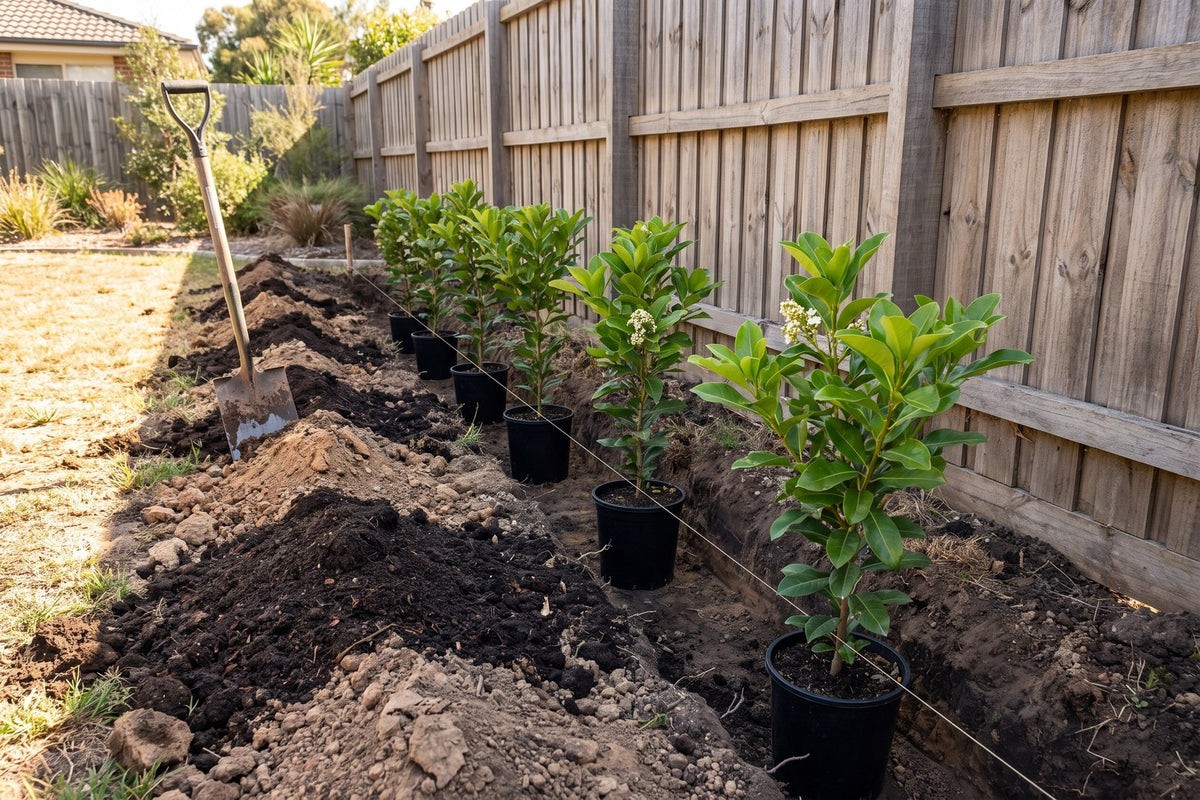
Full sun grows the densest hedge, though sweet viburnum tolerates half a day of shade. Dig compost through the bed before planting and check that drainage is reasonable; viburnums forgive most soils but not a waterlogged one. Space sweet viburnum and Emerald Lustre a metre apart for a standard privacy hedge, or 75cm if you are impatient for the gaps to close, with Dense Fence at 75cm and laurustinus at 60cm to 80cm. For long runs, dig a continuous trench rather than individual holes so every plant roots into the same loosened soil. Our step by step guide on how to create a great hedge covers setting the string line and getting the spacing right the first time.
Ongoing care
Watering: water deeply once a week through the first two summers. An established viburnum hedge is surprisingly drought tolerant, but it grows noticeably faster with regular moisture.
Feeding: apply a complete slow release fertiliser in spring and again in midsummer. Fast growers are hungry growers, and a well fed viburnum hedge can close a one metre gap in under two years.
Pruning: tip prune young plants early and often to force branching low down, because a hedge that is dense at the base was made that way in its first year. Established hedges take a trim three or four times through the growing season, with early spring or late summer the best windows for a harder reshape.
Common problems
Thin, leggy base: almost always caused by letting young plants shoot for the sky untrimmed. Cut back by a third and keep tipping; viburnum reshoots readily from old wood.
Leaf spot: brown or grey spots appear in humid weather, especially on crowded plants watered from above. Water at the base in the morning and thin congested growth to improve airflow.
Aphids on new growth: soft spring flushes attract aphids. Hose them off or use a soap spray; the damage is cosmetic.
Slow growth: a viburnum that is sulking is usually dry, hungry or sitting in compacted soil. Water, feed and mulch, and it will repay you within a season.
Where sweet viburnum grows in Australia

Sweet viburnum has become one of the most specified hedging plants in Australian landscaping, and the reason is versatility - it clips into a formal wall, grows into an informal screen, and performs in nearly every climate zone in the country.
| Location | How it performs |
|---|---|
| Sydney and coastal NSW | Excellent. One of the most planted screening hedges |
| Melbourne and Adelaide | Very good, and frost hardy once established |
| Brisbane and southeast Queensland | Fast and dense; watch airflow in humid summers |
| Perth | Performs well with reliable summer water in sandy soil |
| Canberra and cold inland | Good - hardier than lilly pilly or murraya |
| Tropical north | Grows, though subtropical natives suit better |
Its cold tolerance is the practical advantage over lilly pilly and murraya. In Melbourne, Canberra and frost-prone districts where those two are marginal, sweet viburnum is a reliable evergreen screen.
Which form to plant
- Emerald Lustre - the standard selection, glossy dark foliage with lime green new growth, four to five metres unclipped. The default hedging choice.
- Coppertop - striking bronze-orange new growth that flushes several times a year, giving seasonal colour on a green hedge.
- Straight V. odoratissimum - larger and more vigorous, for tall screens.
- Viburnum tinus - a different species entirely, smaller at two to three metres, with white winter flowers and blue-black berries. Better for a low hedge in a cool climate.
Why it suits poolside planting
Large glossy leaves shed slowly and are easy to lift out of the water by hand, unlike fine-leaved plants whose litter passes skimmer baskets and clogs filters. Combined with dense evergreen growth and no thorns, that makes sweet viburnum one of the better screening choices around an Australian pool. Check pool barrier requirements before planting near the fence, since dense rigid growth inside the non-climbable zone can affect compliance.
Planting and pruning
- Space at 800 mm to 1 m for a dense hedge, or 2 m for individual shrubs.
- Plant in autumn or spring.
- Full sun to part shade - it tolerates more shade than most hedging plants.
- Improve heavy clay with compost, and plant slightly raised.
- Trim three or four times through the growing season rather than once hard.
- Keep the base wider than the top so light reaches the lower foliage - the single rule that prevents a bare-bottomed hedge.
Problems to watch
- Fungal leaf spot in humid Brisbane and Sydney summers, worse in crowded hedges. Space for airflow and avoid overhead watering.
- Yellow leaves in a clipped hedge usually means nitrogen shortage - a constantly regrowing hedge feeds heavily.
- Thrips and scale in still shaded positions; treat with horticultural oil.
- Berries are mildly toxic if eaten in quantity, worth knowing in a family garden.
Frequently asked questions
How fast does sweet viburnum grow?
In warm climates with water and fertiliser, expect 60cm to a metre of growth per year. A 1.5 metre privacy screen from young plants typically takes about two years.
What spacing do I need for a viburnum hedge?
Plant sweet viburnum 75cm to a metre apart for a boundary hedge. Closer spacing closes the gaps sooner but makes no difference to the final result.
Is viburnum frost tolerant?
Viburnum tinus handles hard frost with ease. Sweet viburnum tolerates light frost once established but can burn in cold inland winters, so choose laurustinus in frosty districts.
Can I keep viburnum to a set height?
Yes. Sweet viburnum is happily maintained anywhere between 1.8 and 4 metres with three or four trims a year, and Dense Fence suits even lower, narrower hedges.
Ready to plant?
Viburnum is the backbone of a great many quick garden transformations, including the one in our guide to a fast backyard makeover on a budget, and it pairs well with the climbers and shrubs in our notes on softening fences and retaining walls. Compare varieties across our privacy and screening range and our fast growing plants collection.
For the view from the street, our front yard kerb appeal planting guide works through hedges, feature trees and groundcovers that make a house look finished from the footpath.
If there is a sewer or stormwater line anywhere near the planting spot, our planting near pipes guide gathers the water utilities' distances and their lists of trees to avoid.


