

A fast growing tree gives shade or privacy in a few years, not a decade. The trade is that quick trees tend to grow large, drop more and live shorter lives, so the right choice depends on how much room you have. This guide covers the fast trees that suit Australian gardens, what each one costs you later, and how to get the most growth from any tree you plant.
What fast growth costs
- Size. Most trees that put on a metre or more a year do not stop at fence height. Check the mature height and spread before the speed.
- Timber. Quick growth usually means weaker wood. Fast trees shed more limbs in storms and need formative pruning while they are young.
- Lifespan. Many wattles finish in ten to fifteen years. That is useful as a nurse crop while slower trees establish, and a disappointment if you expected a permanent screen.
- Roots. Vigorous tops come with vigorous roots. Keep big fast trees well away from pipes, paving and the house.
Our guide comparing native and exotic plants sets out what each brings to a garden.
Fast growing trees and where they fit

| Tree | Mature height | Best for | Watch for |
|---|---|---|---|
| Sydney blue gum | 30 m and more | Acreage, shelter belts | Far too large for a suburban block; drops limbs |
| Lemon scented gum | 25 to 30 m | Large gardens and avenues | Keep well clear of buildings |
| Blackwood | 10 to 20 m | Cool, moist climates; shade and shelter | Can sucker; longer lived than most wattles |
| Silky oak | 20 to 25 m | Large blocks; golden flowers for birds | Brittle branches and heavy leaf drop |
| Jacaranda | 10 to 15 m, and as wide | A feature and shade tree for a large lawn | Surface roots and slippery flower drop on paving |
| Weeping lilly pilly | 10 to 15 m in gardens | Tall evergreen screens with water | Bigger than most boundaries need |
| Leighton Green conifer | Hedged at 3 to 8 m | The fastest dense hedge for cool climates | Needs clipping every year or it gets away |
| Tulipwood | 6 to 10 m | Suburban shade with well behaved roots | Moderate, not rapid, growth; frost tender when young |
For privacy on a narrow boundary, a tree is often the wrong tool: the fast growing privacy trees range gathers the upright forms, and clumping bamboo reaches full height in two or three years in a metre of ground. For shade, the species in our roundup of the best canopy trees to create shade give the widest cover. The native trees range has the locals, and the flame trees sit in bottle trees and kurrajongs; our guide to the poinciana and the real flame tree tells the two apart.
Match the tree to the climate
A tree only grows fast where it is suited. Subtropical species race in Brisbane and stall in Melbourne; blackwood and the cool climate conifers do the reverse. Frost, summer rainfall and soil drainage matter more than any growth figure on a label, so choose from trees that already do well in your district.
Getting the most growth from any tree
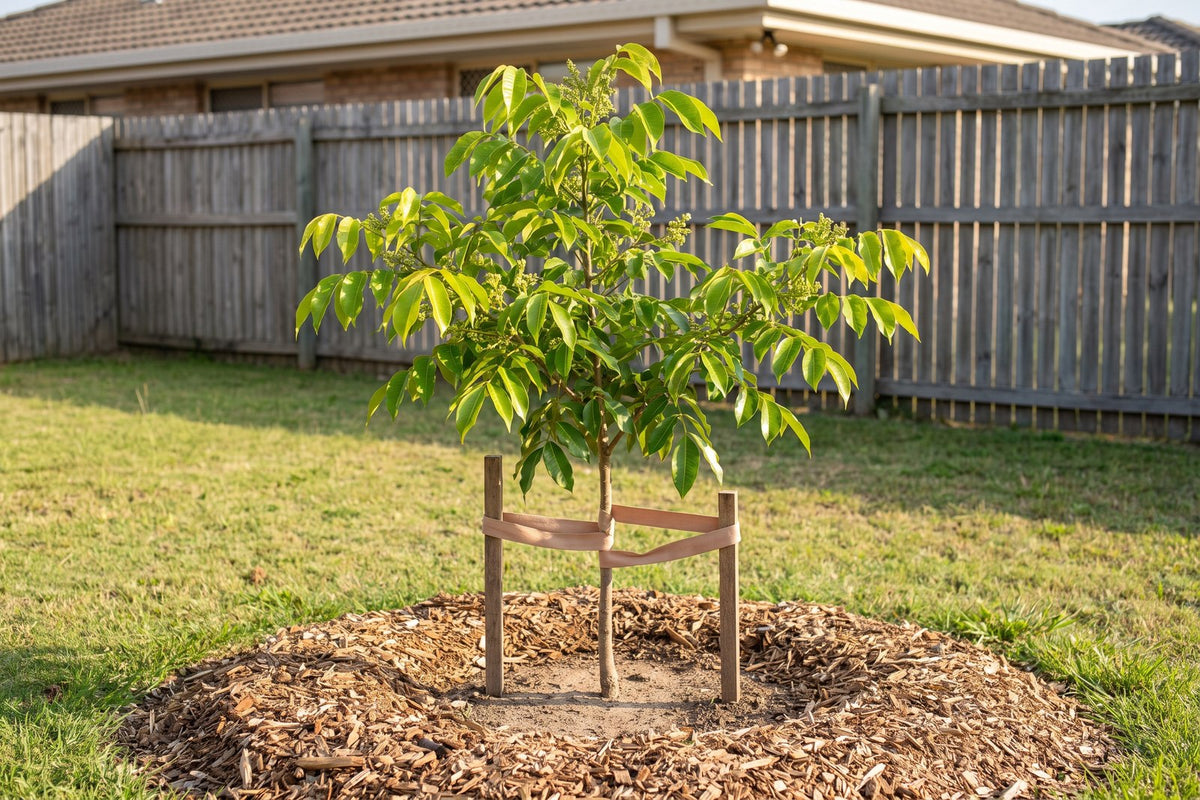
- Plant in autumn. Roots grow through the cool months, and the tree meets its first summer established. Our guide to the best time to plant a tree in Australia sets out the windows region by region.
- Prepare the soil, not just the hole. Loosen a wide area so roots run outwards. Our guide on how to prepare the soil for planting covers testing and improving it first.
- Plant at the right depth. The top of the root ball sits level with the soil. Planting deep is the most common cause of a tree that sits and sulks.
- Water deeply. A long soak once or twice a week through the first two summers drives roots down. Light daily watering keeps them at the surface. Drip lines under mulch waste the least, in keeping with an eco friendly garden.
- Mulch wide. A metre wide ring of mulch, kept off the trunk, and no lawn competing at the base.
- Feed lightly in spring. A slow release fertiliser is plenty, and a low phosphorus one for natives. Heavy feeding makes soft growth that breaks.
- Stake low and loose, then remove the stake. A trunk that moves in the wind thickens faster.
- Prune for structure early. Keep one leader and remove tight, narrow forks while the cuts are small.
Small plant or advanced tree?
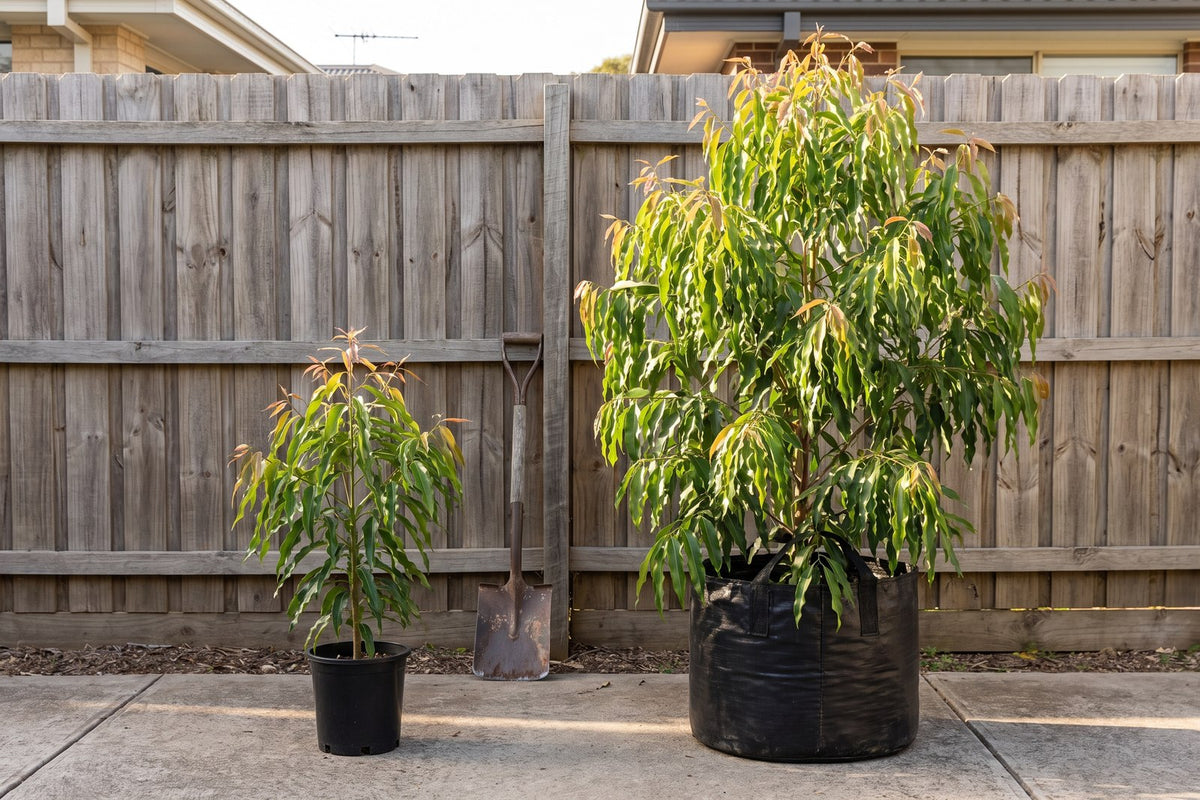
A small tree planted well often overtakes a large one within a few years, because it establishes faster. Buy advanced stock where the point is shade or privacy now. Either way, think about what goes underneath: our guide on how to layer plants like a professional landscaper covers building the planting around a new tree.
Common questions
What is the fastest growing shade tree for an Australian backyard?
For a suburban block, jacaranda and weeping lilly pilly are among the quickest that stay within reach, given room. The very fastest trees, such as blue gums, are too large for most gardens.
How close to the house can I plant a fast growing tree?
Allow at least half the mature canopy width, and more for gums and other large species. Keep vigorous trees away from sewer and stormwater lines.
Do fast growing trees have shorter lives?
Often, yes. Many wattles last ten to fifteen years, while slower trees last generations. Planting both gives quick cover now and a permanent tree later.
Ready to plant?
Fast growth is only half the equation; the other half is buying a tree that is already well ahead. Browse our fast growing range to compare species and growth rates, or our advanced trees if you want canopy from the first season and not the fifth.
If you want the tree delivered and planted and not left on the driveway, Nursery Direct supplies advanced trees from 45 litres up as one bundled price that includes delivery and professional planting, and its guide to what happens on installation day shows how a large root ball is handled.


