

Orchids are easier in Australia than their reputation suggests. Most of the country can grow at least some outdoors all year, and the common indoor types ask for little beyond bright filtered light and a pot that drains. This guide covers which orchids suit which climate, and the light, water, potting mix and feeding that keep them flowering.
Growing orchids in the Australian climate
Australia is unusually well suited to orchids, and we have around 1,700 native species of our own.
| Location | What grows outdoors |
|---|---|
| Darwin and tropical Queensland | Almost everything: vandas, phalaenopsis, native dendrobiums |
| Brisbane, Gold and Sunshine Coasts | Cymbidiums, native dendrobiums, oncidiums; phalaenopsis in shelter |
| Sydney and coastal NSW | Cymbidiums and native rock orchids do very well |
| Melbourne and Adelaide | Cymbidiums outdoors in shade; tropical types indoors |
| Perth | Cymbidiums with shade and attention to humidity |
| Canberra and cold inland | Cool growing types; protect from frost |
Choosing a type
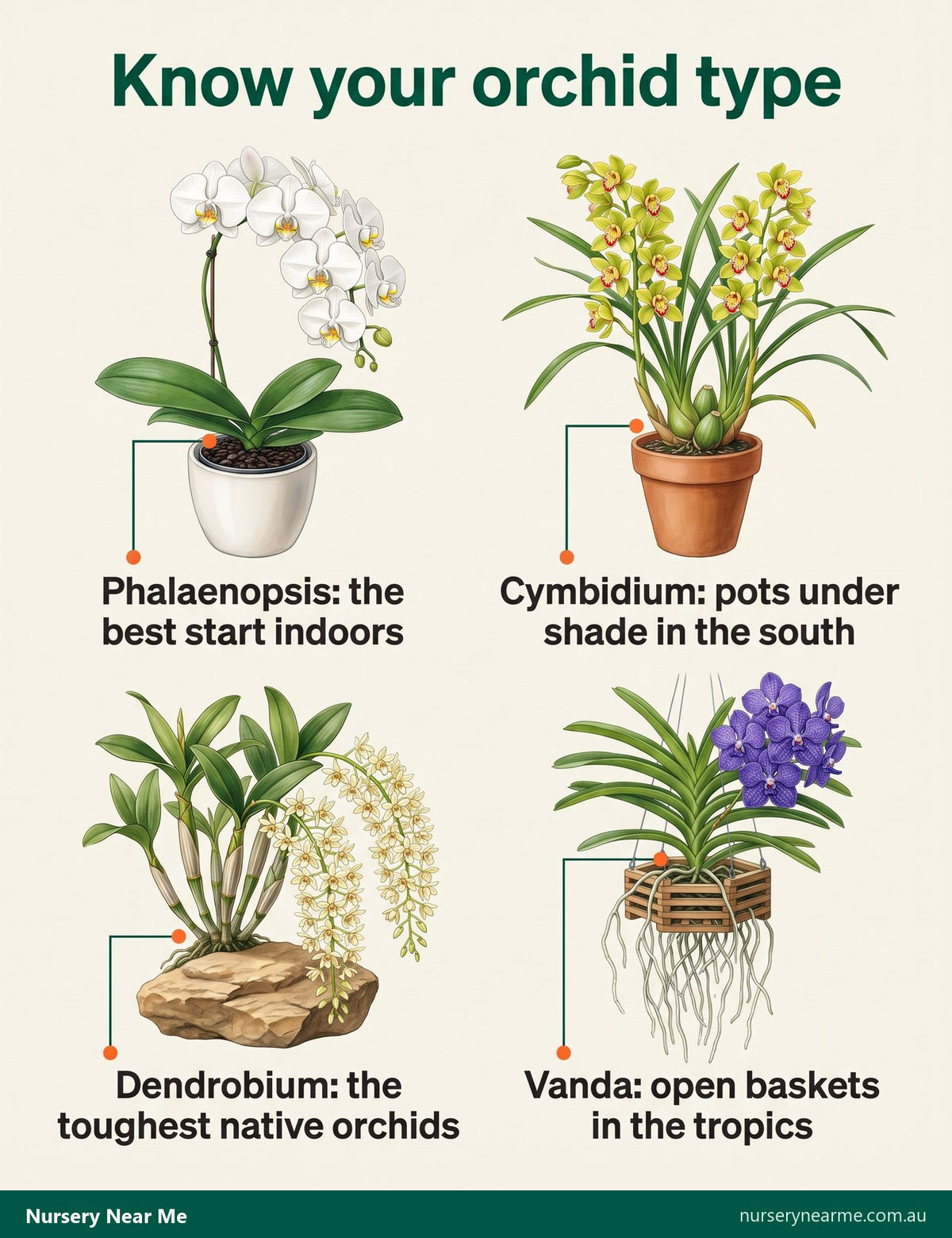
- Phalaenopsis (moth orchid). The best orchid to start with indoors. It likes the same temperatures people do and flowers for months.
- Cymbidium. The classic garden orchid of southern Australia, grown in pots under shade and brought in to flower.
- Dendrobium. Includes the toughest native orchids, grown on trees, rocks or in pots.
- Vanda. Spectacular in the tropics in open baskets with roots in the air; hard work anywhere dry or cold.
- Ground orchids. Spathoglottis grows in garden soil in warm climates and flowers for months, and the vanilla orchid is a climbing orchid for the tropics.
Australian native orchids
Worth growing, and often easier than the imported ones because they are already adapted to the conditions.
- Rock orchid (Dendrobium speciosum): grows on rock faces and trees along the east coast, extremely hardy, with large sprays of cream flowers in spring.
- Cooktown orchid (Dendrobium bigibbum): Queensland's floral emblem, from the far north.
- Native dendrobium hybrids: bred for garden conditions and among the toughest orchids available here.
Australian native orchids are protected. Collecting them from the wild is illegal across the country, and permits are required to possess wild collected material. Buy nursery propagated plants from a licensed supplier.
Light
Bright filtered light, never direct Australian sun. A shadehouse at around 50 to 70 per cent shade is the standard here, and it is what most orchid growers use. Indoors, an east facing window works well; a north or west facing one will scorch leaves through unshaded glass.
Leaf colour is the guide. Mid green means the light is about right. Dark green means too little light and few flowers. Yellowish or bleached means too much.
Watering: the mistake that kills most orchids
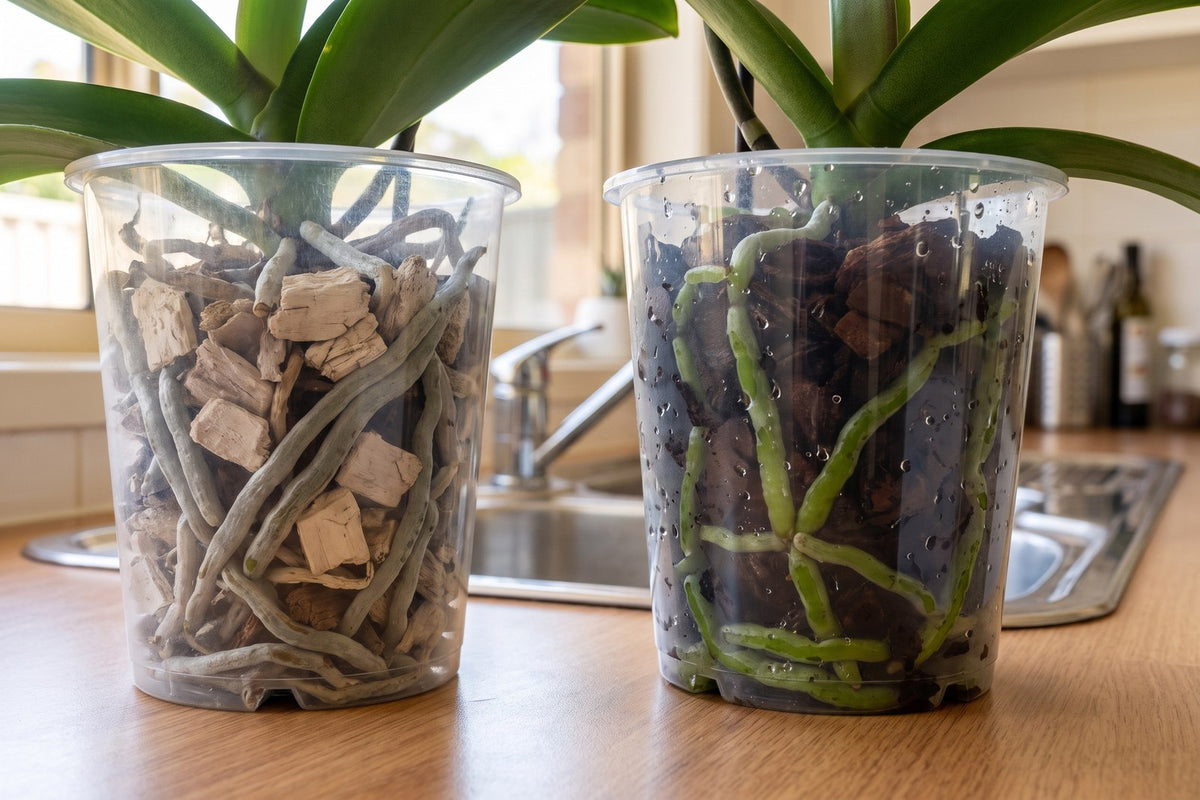
Overwatering, and specifically water left sitting in the crown. Most orchids sold here are epiphytes: they grow on trees, with roots exposed to air, not in soil. Roots that sit wet rot within days.
- Water thoroughly, then let the pot drain completely. Never leave it standing in a full saucer.
- Water in the morning so foliage and crowns dry before nightfall.
- Let the mix approach dryness before watering again. On a phalaenopsis in a clear pot, silvery roots mean it is time and green roots mean wait.
- Reduce watering sharply in winter when growth slows.
- Water more often in Perth and Adelaide, where low humidity dries the mix faster, and less through a humid Brisbane wet season.
Potting mix and repotting
Never use ordinary potting mix. Use orchid bark or another coarse, open medium that water runs straight through. Repot about every two years, when the bark has started to break down, into a pot only slightly larger. The best time is after flowering as new roots begin. Trim away dead or mushy roots with a clean blade as you go. A bagged orchid potting mix saves blending your own, and our guide to repotting your plants covers the method.
Humidity and air
Most orchids are happiest at 50 to 70 per cent humidity with air moving around them. Indoors, a tray of wet pebbles under the pot helps in a dry room. Still, damp air invites fungal trouble, so give them ventilation and space between plants.
Feeding
Feed lightly and often while the plant is growing: a soluble orchid fertiliser at quarter to half the label strength every week or two, with a plain watering now and then to flush salts from the bark. Ease off in winter. Too much fertiliser burns the roots and gives leaves in place of flowers.
After flowering, and getting them to flower again
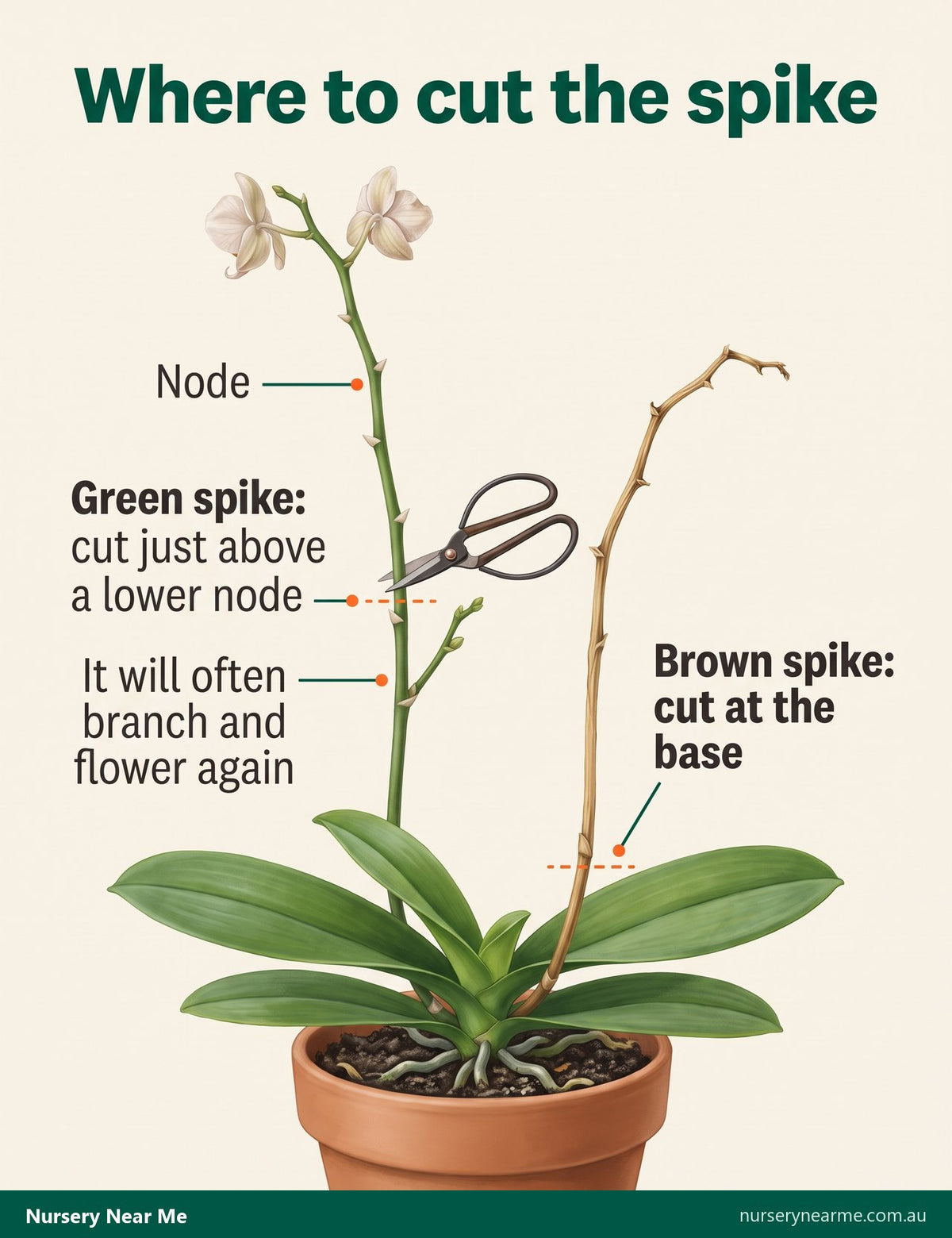
Cut a cymbidium spike off at the base when the flowers finish. On a phalaenopsis, cut the spike just above a lower node while it is still green and it will often branch and flower again; if it has browned, cut it at the base.
Cymbidiums are the common frustration in Australian gardens: plenty of foliage and no flowers. They need a distinct drop in night temperature in autumn to start their spikes, which means keeping them outdoors under shade through that season, not in a warm sheltered spot. In Brisbane and further north, cymbidiums often fail to flower because nights never get cool enough, and warm growing types suit better there. Phalaenopsis respond to the same cue on a smaller scale: a few weeks of cooler nights in autumn usually brings a new spike.
Pests and problems
Scale, mealybug and mites are the usual pests, along with snails on outdoor plants. Check under the leaves and treat early. Black, soft patches at the crown or roots are rot from too much water. Use a clean blade between plants, because orchid viruses spread on tools and cannot be cured.
Common questions
How often should I water an orchid?
When the bark is nearly dry, which is often about once a week indoors and more often outdoors in summer. Water thoroughly and let it drain.
Why will my orchid not flower again?
Usually too little light, or nights that never cool down in autumn. Move it to brighter filtered light and let it feel the cooler nights.
Can orchids grow outside in Australia?
Yes. Cymbidiums and native dendrobiums grow outdoors under shade through most of southern and eastern Australia, and almost every type grows outdoors in the tropics.
Ready to plant?
Browse our indoor flowering plants for orchids and their companions, or the tropical plants range for a warm, humid garden.


