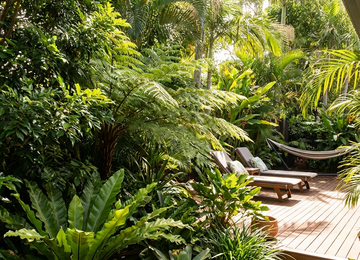
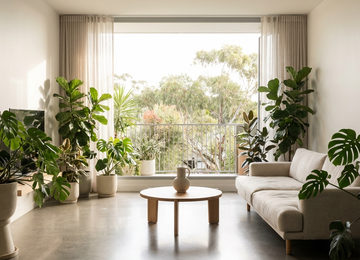


The Gold Coast is a strip of beach sand, a floodplain of heavy river clay and a wall of hinterland, all within half an hour of each other, and the plant that thrives at Burleigh can sulk at Nerang and freeze at Canungra. The climate is generous: humid subtropical, frost-free on the coast, with most of its 1,400 mm of rain falling between December and March. The limits are salt wind on the front line, waterlogging on the flats, light frost in the hinterland valleys and a wet, humid summer that tests anything from a drier climate. Choose for your soil and your distance from the surf, and almost anything subtropical will grow.
Quick facts
| Detail | Gardening on the Gold Coast |
|---|---|
| Climate | Humid subtropical; January averages about 29 degrees, July about 21; rainfall around 1,400 mm, mostly December to March |
| Soil | Deep sand along the coast and the canals; heavy alluvial clay on the Nerang, Coomera and Albert River flats; red volcanic loam on Tamborine Mountain; shallow shale and sandstone in the hinterland hills |
| Frost | None on the coast and canals; light frost in the hinterland valleys from Canungra to Beaudesert and on cold nights at Tamborine |
| Limiting factors | Salt wind within a kilometre of the surf, summer waterlogging on the flats, storm winds, and humidity-driven fungal disease |
| Best planting window | March to May, then September to November; summer planting works with daily water |
Choosing the right plants for your part of the coast
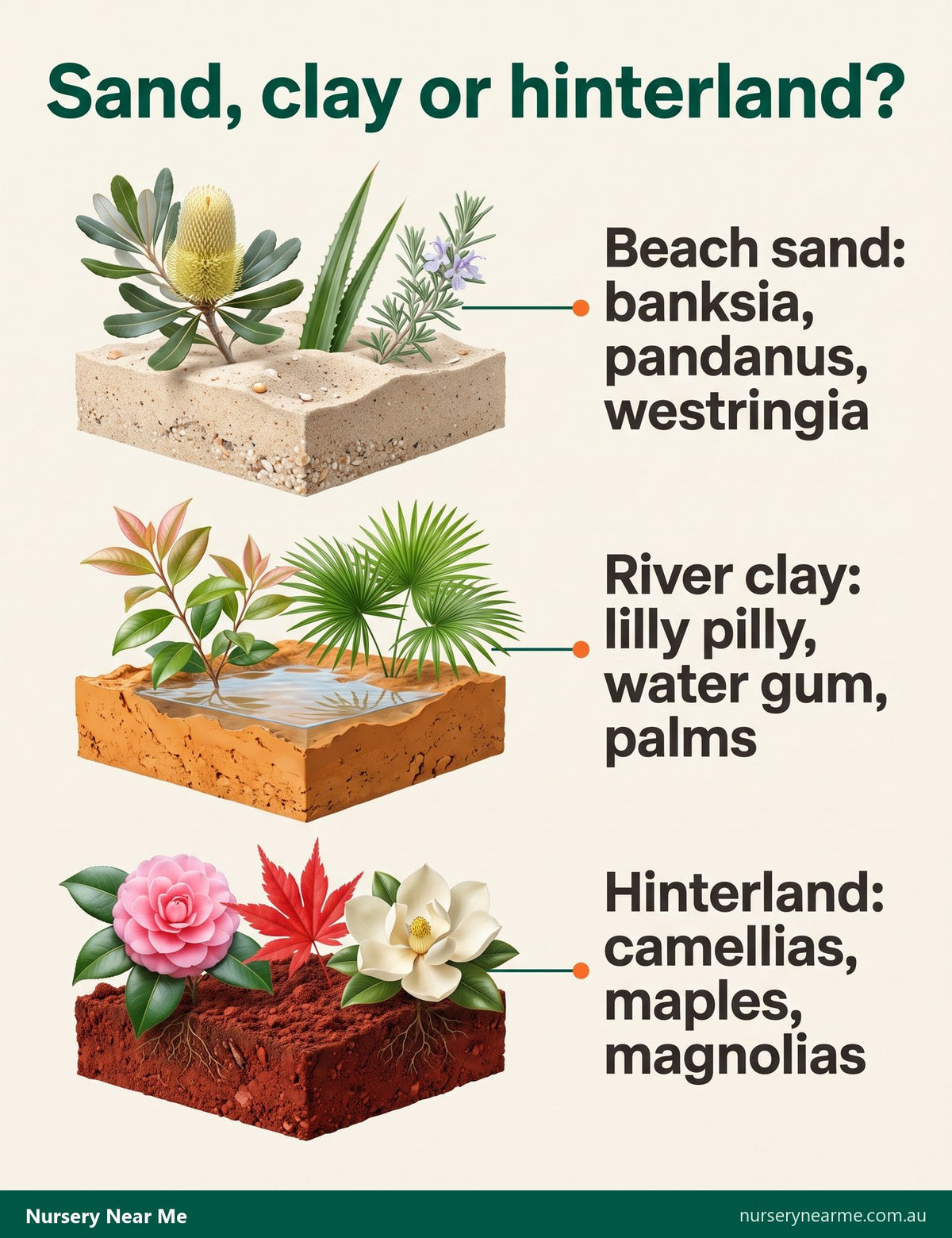
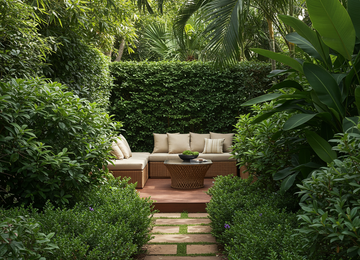
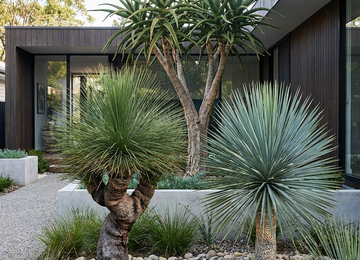
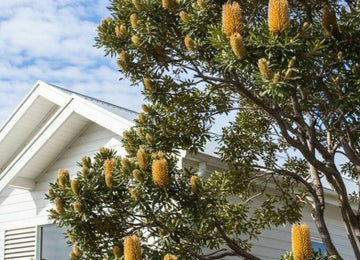
On the beach sand and the canal estates. The soil drains in minutes and holds almost nothing, and the wind carries salt. Build the garden from the plants that grow on the dunes naturally: coast banksia as the backbone tree, coastal rosemary as the clipped outer hedge, coastal screw pine as the sculptural feature, and pigface as the carpet. Tuckeroo is the shade tree, as salt-proof as anything on the coast and small enough for a canal block; our tuckeroo guide covers it. Behind that outer layer, the frangipanis, hibiscus and palms that define the coast's gardens grow without trouble. For the full exposure zones, read our guide to coastal gardens.
On the river flats. Nerang, Oxenford, Coomera and the suburbs along the Albert sit on clay that stays wet for days after a summer storm. Mound beds, plant on the high side, and choose plants that take wet feet: Lilly Pilly Resilience for the hedge, water gum for a street-sized tree, shell ginger and bangalow palm for the low, damp corners. Avoid the Mediterranean plants, lavender and olives among them, which rot in a wet February on clay.
In the hinterland. Tamborine Mountain's red loam grows almost anything, including the cool-climate plants the coast cannot: camellias, maples, magnolias and azaleas. The valleys below it get frost, so a hedge there should be a frost-hardy selection, and tender tropicals such as golden cane palm and heliconia belong on the coast, not at Canungra.
Trees that suit the Gold Coast
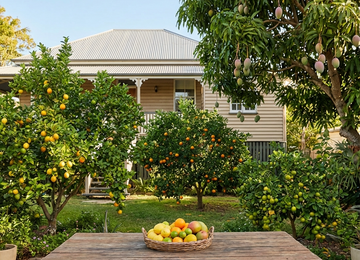
For shade on a suburban block: tuckeroo at 8 to 10 m, tulipwood for a glossy canopy and orange seed pods, and golden penda, the north Queensland native that flowers gold in summer and loves the humidity. All three keep their roots to themselves.
For flowers: ivory curl tree with its cream flower spikes in late summer, poinciana if you have the room for a 10 m canopy, pink trumpet tree for the spring show, and crepe myrtle for the small front yard, where it flowers through the hottest months and colours in autumn. Jacarandas flower better in the hinterland than on the humid coast.
For screening fast: golden cane palm on the coast, where it is the quickest tropical screen there is, and lilly pillies everywhere. Our guide to fast-growing screening trees ranks the options by speed.
How to plant
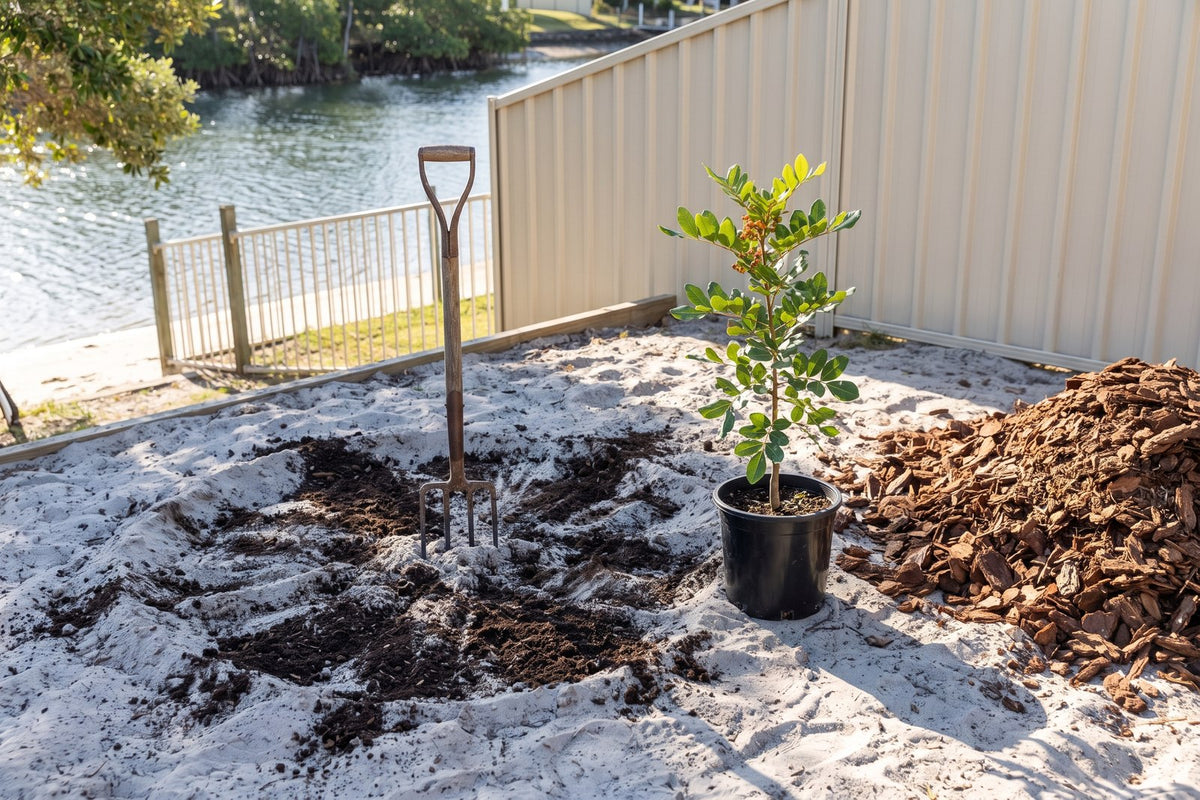
On sand, the mistake is a pocket of bagged garden soil in a sea of sand, which dries in a day. Blend compost through as wide an area as you can, plant, and mulch 75 mm deep; the mulch matters more here than anywhere else on the coast. Water new plantings every second day through the first month in summer, then twice a week until autumn.
On clay, the mistake is a hole that becomes a bathtub. Plant 50 to 100 mm proud of the surrounding ground, fork the sides of the hole so roots can leave it, and direct downpipes away from the bed. Gypsum helps on the dispersive clays of the flats; the method is in our guide to plants for heavy clay.
Plant in autumn if you can. March to May gives six months of mild weather for roots to settle before the next wet season, and the ground is still warm. Spring is the second window. A summer planting succeeds on the Gold Coast only with daily water for the first fortnight, so plan the big jobs for the cooler months and the basics are in our step-by-step planting guide.
Ongoing care
Watering
Summer rain is heavy but it comes in bursts; three dry weeks in January are normal. Water deeply once or twice a week in a dry spell rather than lightly every day, and in winter, the dry season, keep the hedges and young trees going with a deep soak every ten days. Sand needs water more often than clay; a bed on the canals can dry out in two days of westerly wind.
Feeding
Sand holds no nutrients, so feed twice a year, in early spring and late summer, with a complete slow-release fertiliser on exotics and a low-phosphorus native fertiliser on banksias, grevilleas and the other natives. Clay needs structure more than food: compost and mulch, with a light feed in spring.
Pruning
Everything grows fast here. Tip-prune hedges every four to six weeks from September to April so they thicken rather than stretch, and prune tropical shrubs hard in late winter before the spring flush. Thin the crowns of young trees before the November storm season so they do not catch the wind; our guide to preparing for storm season has the list.
Common problems and fixes
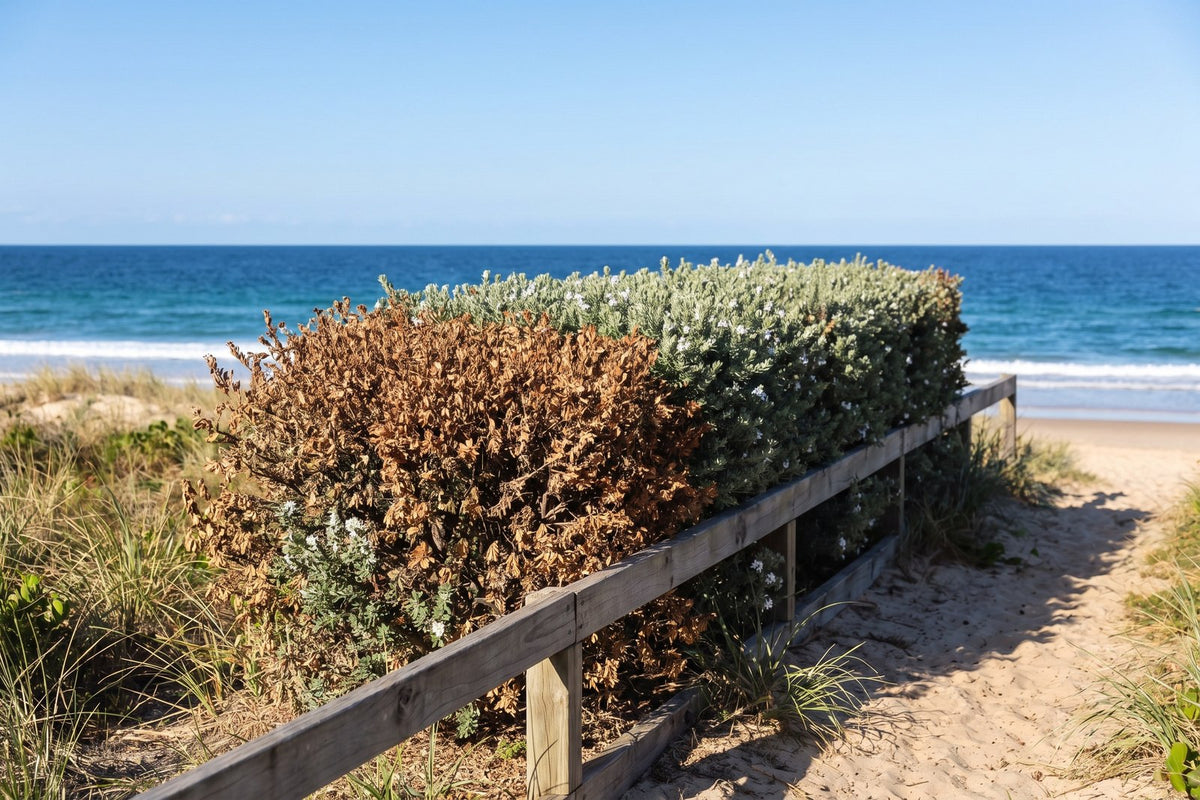
Salt burn on the seaward side. Brown, crisped leaves on one face of a plant after a strong south-easterly. Hose the foliage with fresh water after a blow, and build a windbreak of westringia, coastal banksia or she-oak on the exposed side so tender plants grow in its lee.
Hedge collapse after a wet summer. Root rot on the clay flats, especially on murraya and viburnum planted flat. Replant on a mound with lilly pilly or water gum, and get the downpipes out of the bed.
Psyllid on lilly pilly. Pimpled new growth across the older hedges of the Gold Coast every spring. Replace with a resistant selection rather than spraying; our psyllid resistance guide explains which ones.
Black spots and yellow powder on new growth. Myrtle rust, which likes the coast's humidity. Prune out and bin affected growth, avoid overhead watering, and choose less susceptible species.
Lawn dying in patches in summer. Armyworm or curl grub, both common on the coast from November. Treat early, feed the lawn and it recovers; the lawn care range has the products.
Frost damage in the hinterland. Blackened tips on tropical plants after a clear July night at Canungra or Beaudesert. Cover young plants, plant tender things on the north side of the house, and leave frost-burnt growth on until spring.
Frequently asked questions
What is the best hedge for the Gold Coast?
A psyllid-resistant lilly pilly such as Resilience or Northern Select for a 3 to 5 m screen, on sand or clay. On the beachfront, coastal rosemary clipped at 1 to 1.5 m as the outer layer. For a fast tropical screen on the coast, golden cane palm. Avoid murraya and viburnum on the wet clay flats unless the bed is mounded.
What grows in sand at the canal estates?
Coast banksia, tuckeroo, coastal rosemary, pandanus, pigface, lomandra, dianella, frangipani and most palms. Add compost over a wide area, mulch heavily and water twice a week in summer. Anything that needs rich, moist soil will need a raised bed of imported mix.
When is the best time to plant on the Gold Coast?
March to May. The soil is warm, the wet season has just finished and there are six mild months ahead. September to November is the second window. Summer planting works with daily water for the first two weeks, but it is harder work.
Can I grow camellias and maples on the Gold Coast?
On Tamborine Mountain and in the cooler hinterland, yes, and they do well. On the humid coast they struggle with the summer heat; sasanqua camellias in morning sun are the exception. Grow the cool-climate plants in the hinterland and the tropical ones on the coast.
Which trees are safe near a canal house's pipes and paving?
Tuckeroo, tulipwood, ivory curl tree, crepe myrtle, water gum and the compact magnolias all have well-behaved roots. Keep figs, poincianas and large eucalypts for acreage. Our guide to planting near pipes has the full list.
Ready to plant?
Browse coastal plants for the front line, plants for subtropical climates for everything behind it, and hedging and screening plants for the boundary. Our Gold Coast delivery page explains how plants arrive, and the where to buy plants online on the Gold Coast guide covers what to expect from an order.


