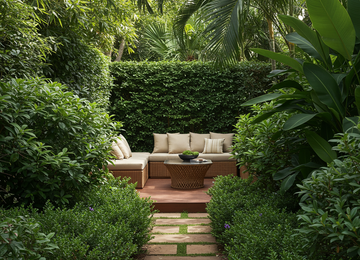


Viburnum is the answer to one of the most common questions we get asked: what is the fastest way to block out the neighbours without planting bamboo? Sweet viburnum, Viburnum odoratissimum, can put on a metre of growth a year in good conditions, forming a dense, glossy screen of soft apple green foliage. It clips well but never looks stiff, which is why landscapers reach for it on almost every new build.
The genus is bigger than one hedge, though. There are compact forms bred specifically for narrow modern blocks, copper leafed varieties, the tough evergreen laurustinus for cold climates, and even an elegant deciduous feature shrub with tiered white flowers. Whichever you choose, viburnums share the same easy going nature: sun or part shade, average soil and a trim a few times a year.
Quick facts
| Botanical name | Viburnum odoratissimum, Viburnum tinus and others |
| Type | Evergreen shrub (V. plicatum deciduous) |
| Height | 2m to 4m, compact forms around 3m |
| Position | Full sun to part shade |
| Soil | Any reasonable free draining soil |
| Growth rate | Fast; up to 1m per year for sweet viburnum |
| Climate | Cold temperate to subtropical depending on species |
Choosing the right viburnum
For fast, tall privacy screens
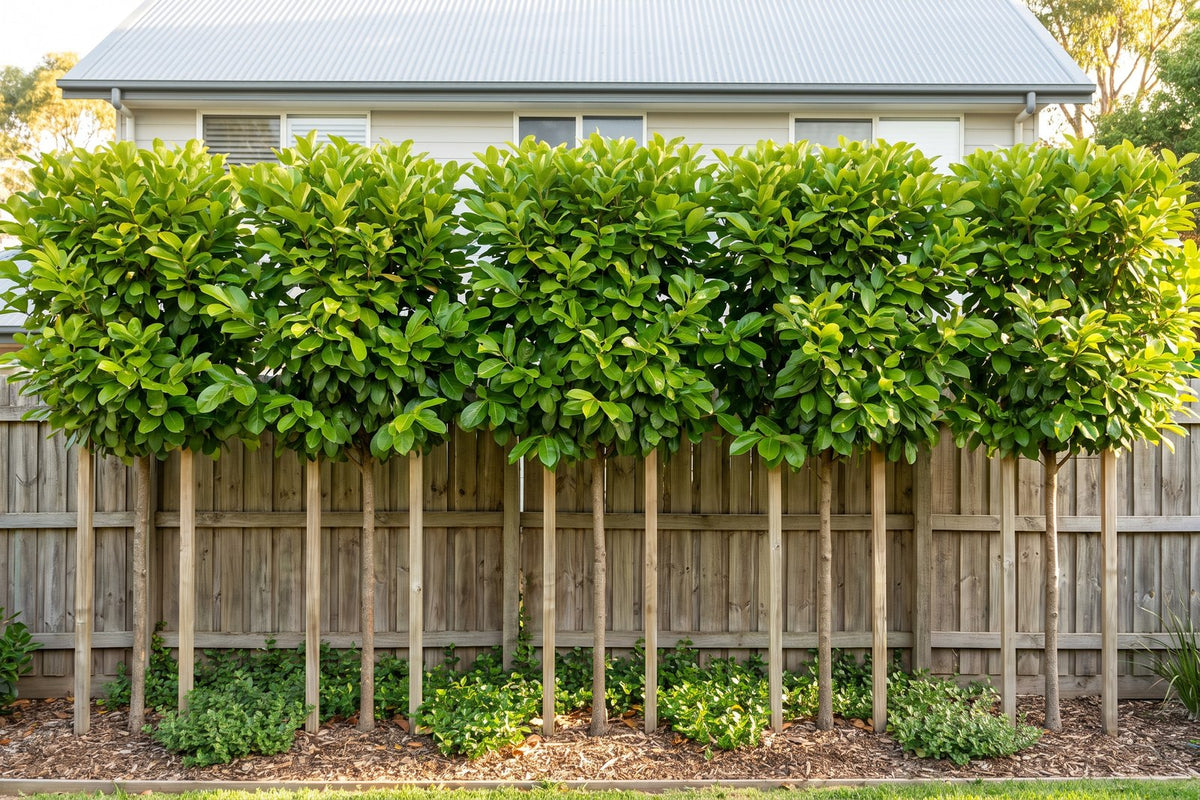
The classic is Sweet Viburnum, from $10.95, which reaches 3m to 4m quickly and suits boundaries where you need serious height. It also takes well to pleaching, so a row can be trained into a hedge on stilts where privacy is needed above an existing fence. Emerald Lustre Viburnum is a selected form with larger, glossier leaves and flushes of lime new growth, from $14.95. For narrow spaces, Viburnum Dense Fence was bred in Australia to branch densely from the base and hold a tighter, more upright habit, so you get the screen without sacrificing half the yard.
For colour and cooler climates
Coppertop Sweet Viburnum flushes rich copper red with every new burst of growth, turning a plain hedge into a feature. In frosty districts where sweet viburnum struggles, Laurustinus Viburnum is the pick: a tough evergreen to around 3m that flowers white from pink buds through winter when little else is happening, from $14.95.
For a feature shrub
Viburnum plicatum Lanarth is a different beast entirely: deciduous, with horizontal tiered branches lined in white lacecap flowers each spring. Plant it as a standalone feature in a cool climate garden rather than a hedge. And if it was fragrance that drew you to viburnums, Tea Olive (an osmanthus, not a viburnum, but a close garden cousin) delivers intensely perfumed white flowers on a neat evergreen shrub.
Planting
Full sun grows the densest hedge, though sweet viburnum tolerates half a day of shade. Dig through compost before planting and ensure drainage is reasonable; viburnums forgive most soils but not a waterlogged one. For a standard privacy hedge, space sweet viburnum and Emerald Lustre at 1m apart, or 75cm if you are impatient for the gaps to close. Dense Fence can go at 75cm, and laurustinus at 60cm to 80cm. For long runs, dig a continuous trench rather than individual holes; spacing is easier and every plant roots into the same loosened soil. Set each root ball level with the surrounding soil, backfill firmly, and shape a shallow watering basin around each plant so early irrigation soaks down instead of running off. Water deeply at planting and every few days for the first month while roots establish.
Ongoing care

Watering: Weekly deep watering through the first two summers. Established hedges are surprisingly drought tolerant but grow noticeably faster with regular moisture.
Feeding: A complete slow release fertiliser in spring and again in midsummer. Fast growers are hungry growers, and a fed viburnum hedge can close a 1m gap in under two years.
Pruning: Tip prune young plants early and often to force branching low down; a hedge that is dense at the base was made that way in its first year. Established hedges take a trim three or four times through the growing season, and early spring or late summer are the best windows for a harder reshape, when fresh growth covers the cuts within weeks.
Common problems
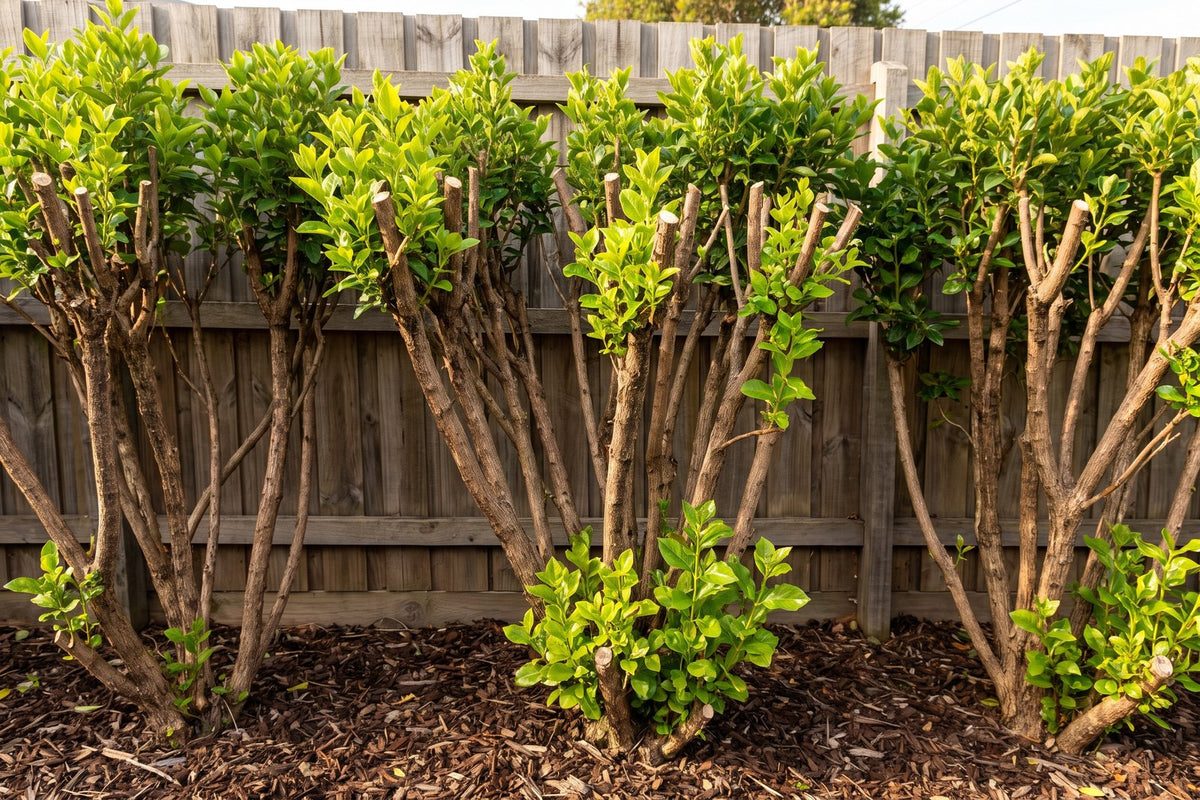
Thin, leggy base: Almost always caused by letting young plants shoot for the sky untrimmed. Cut back by a third and keep tipping; viburnum reshoots readily from old wood.
Leaf spot: Brown or grey spots appear in humid weather, especially on crowded plants with overhead watering. Water at the base in the morning and thin congested growth to improve airflow.
Aphids on new growth: Soft new flushes attract aphids in spring. Hose them off or use a soap spray; damage is cosmetic.
Slow growth: A viburnum that is sulking is usually dry, hungry or sitting in compacted soil. Water, feed and mulch, and it will repay you within a season.
Frequently asked questions
How fast does sweet viburnum grow?
In warm climates with water and fertiliser, expect 60cm to 1m of growth per year. A 1.5m privacy screen from young plants typically takes about two years.
What spacing do I need for a viburnum hedge?
Plant sweet viburnum at 75cm to 1m apart for a boundary hedge. Closer spacing closes the gaps sooner but makes no difference to the final result.
Is viburnum frost tolerant?
Viburnum tinus handles hard frost with ease. Sweet viburnum tolerates light frost once established but can burn in cold inland winters, so choose laurustinus in frosty districts.
Can I keep viburnum to a certain height?
Yes. Sweet viburnum is happily maintained anywhere between 1.8m and 4m with three or four trims a year, and Dense Fence suits even lower, narrower hedges.
Ready to plant?
Compare viburnums with the rest of our privacy and screening range and fast growing plants, or browse all shrubs. Check our delivery page to see options for your postcode.
Viburnum turns up twice in the Western Australian top ten in What Australia Planted in 2025-26, our year of order data, under two different fast-screening selections.
The same thinking applies out the front. See front yard planting for kerb appeal for the combinations that photograph well and survive neglect.


