





Propagation is the cheapest way to fill a garden, and the slowest. Seed, cuttings, layering and division each suit different plants and different seasons, and in Australia the timing is the reverse of most of what is written online. This guide covers the four methods, when to use each one here, the extra steps native plants need, the legal limits, and the handful of conditions that decide whether a cutting strikes or rots. Our guide on how to propagate for plant success walks through each method step by step if you want a practical companion to this overview.
The four methods
Seed
Cheapest and slowest, and the only way for annuals, vegetables and most species plants. Buy fresh seed from a reputable source such as our seed range, sow into a sterile seed-raising mix at a depth of about twice the seed's width, keep the mix damp and warm, and prick the seedlings out into their own pots once they have two true leaves. Getting the mix right matters just as much as the seed, and our guide on preparing soil for planting covers the drainage and structure young roots need.
Cuttings
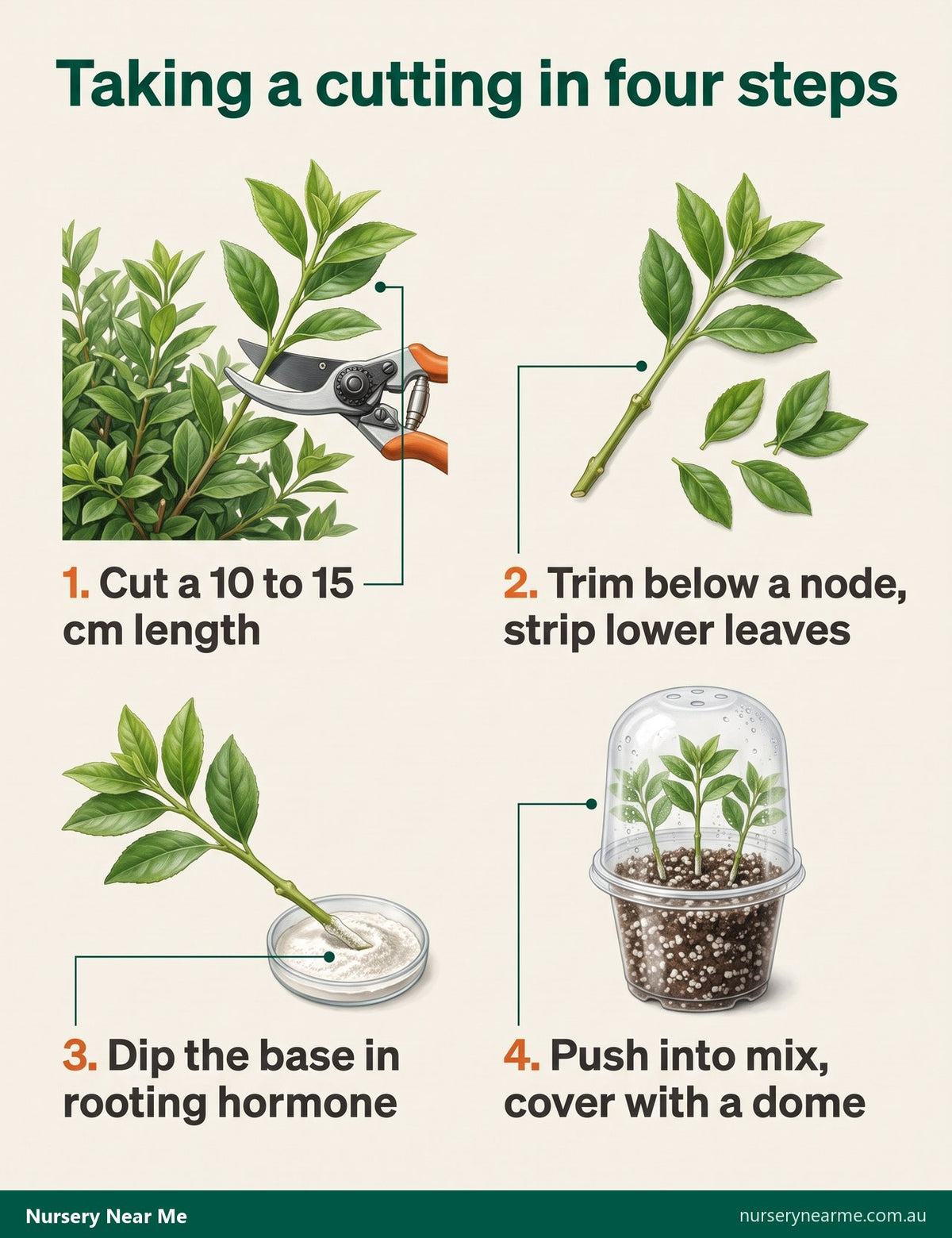
The main method for shrubs and many perennials, and the one that gives an exact copy of the parent. Take 10 to 15 cm lengths, cut just below a node, strip the lower leaves, dip the base in rooting hormone, and push into a free-draining propagating mix under a humidity dome or a clear bag. Softwood cuttings come from fresh spring growth, semi-hardwood from the firming growth of late summer and autumn, and hardwood from dormant deciduous wood in winter.
Layering
For plants that will not strike easily from a cutting: bend a low, flexible stem to the ground, wound the underside lightly, pin it down and cover with soil, and leave it attached to the parent until roots form, then cut it free. Slow but nearly foolproof.
Division
For clumping plants such as lomandra, dianella, agapanthus, clivia and most grasses. Lift the clump, split it with a spade or two forks into pieces that each have roots and shoots, cut the foliage back by half and replant straight away.
Timing propagation for Australian seasons

| Method | Best window in Australia |
|---|---|
| Softwood cuttings | Spring to early summer, from fresh new growth |
| Semi-hardwood cuttings | Late summer to autumn, the main window for most shrubs |
| Hardwood cuttings | Winter, from dormant deciduous wood |
| Division | Autumn or early spring, avoiding summer heat |
| Seed | Spring in the south; autumn and the dry season up north |
| Layering | Spring, so roots form over the warm months |
In Brisbane and northern Australia, avoid striking cuttings at the peak of the wet season; constant humidity rots the propagation mix faster than roots can form. In Perth and Adelaide the opposite risk applies and cuttings dry out, so a covered setup matters more.
Propagating Australian natives
Natives have their own requirements and are worth treating differently from exotics.
- Semi-hardwood cuttings in autumn work for most grevilleas, callistemons, westringia and melaleucas.
- Use a very free-draining mix. Natives rot readily in a moisture-retentive medium.
- Many native seeds need smoke or heat treatment. Species from fire-prone habitats, including many acacias and banksias, will not germinate without it. Smoke water and smoke-infused vermiculite are sold for this, and acacia seed generally needs a boiling water soak to break the hard coat.
- Grafting is standard practice for Western Australian grevilleas grown on the humid east coast, since they die of root rot on their own roots.
- No high-phosphorus products on native seedlings.
Plant Breeder's Rights
This matters and is easy to overlook. Many cultivars sold in Australian nurseries are protected under Plant Breeder's Rights, and propagating them, certainly for sale or to give away, is a breach of that protection. Look for "PBR" or "PVR" on the label. Named cultivars including Tanika lomandra and Straight and Narrow, Resilience lilly pilly, and the Diamonds in the Dark crepe myrtles are protected. Species plants and older unprotected varieties are free to propagate.
Collecting from the wild is illegal
Australian native plants are protected under state and federal law. Collecting plants or seed from the wild, including from roadsides and reserves, requires a permit, and many species are listed as threatened. Propagate from your own garden plants or buy from licensed nurseries.
What actually determines success
- Bottom heat matters more than air temperature. Cuttings root far faster with warmth at the base, which is why autumn cuttings in Melbourne benefit from a heat mat and Brisbane ones often do not need one.
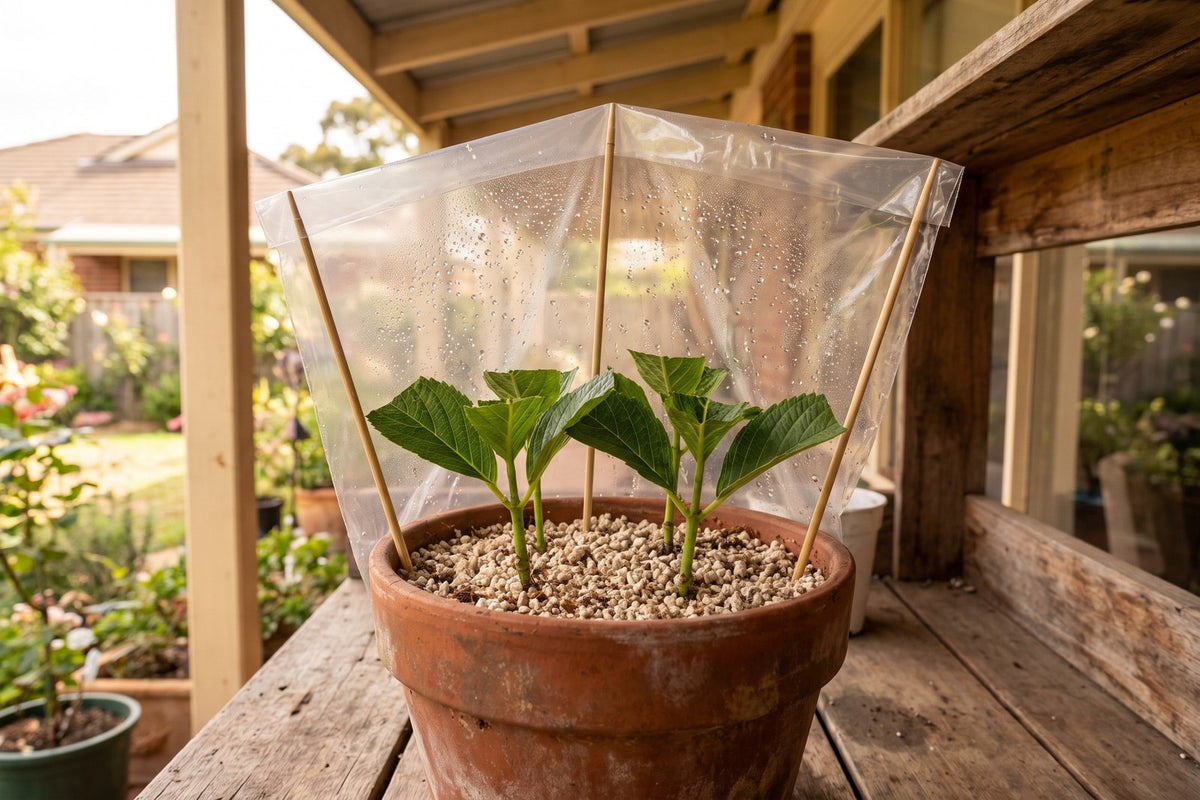
- Humidity around the foliage without water sitting on it: a clear bag, a propagation dome, or a shaded spot with misting.
- A sterile free-draining medium. Propagating mix, or perlite and coir. Garden soil carries pathogens.
- Reduce leaf area by half on large-leaved cuttings so they lose less water than the cut stem can supply.
- Bright shade, never direct sun. Australian sun will cook a propagation tray in under an hour.
- Dampen potting mix and wear a mask; it can carry Legionella longbeachae, and there are Australian cases every year.
Common problems
Damping off, where seedlings collapse at the soil line, is a fungal disease that follows excessive moisture, poor ventilation or overcrowding, and it is closely related to the root rot that follows waterlogged soil in established plants: sow thinly, water from below and give the tray air. Cuttings that blacken at the base were too wet or the mix was not sterile; cuttings that stay green but never root usually wanted bottom heat or a hormone. Fungus gnats and aphids find seedlings quickly, and our guide to identifying and treating common plant pests and diseases is a useful reference at this stage.
Ready to plant?
Propagation is deeply rewarding, but it is also slow, and there is no shame in starting from an established plant while your cuttings strike. Browse our full plant range for advanced stock delivered Australia wide (see our delivery page for how plants travel), and read our guide to repotting your plants like a pro for the step that follows a successful strike.


