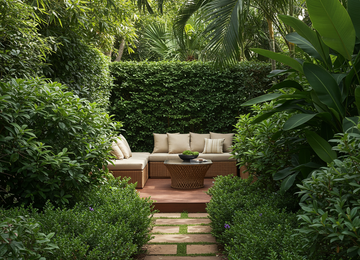
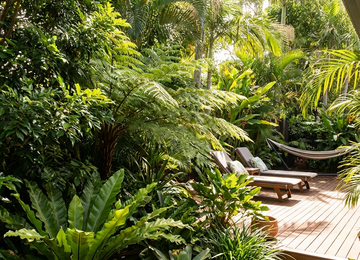
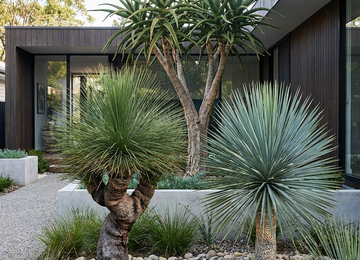
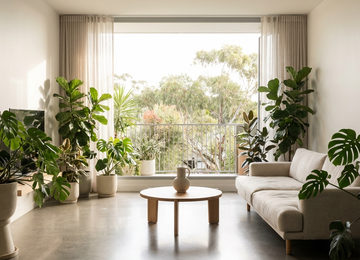
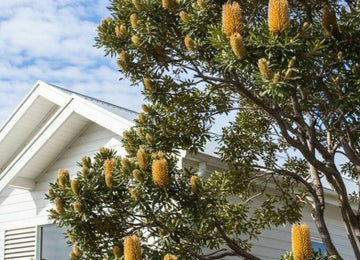


Exotic plants are grown for a bold leaf or an unusual flower: a bird of paradise in a bright corner, a calathea with painted leaves, an anthurium in flower for months. Most come from tropical forests, so indoors they want what a forest floor gives them, which is bright filtered light, steady moisture and humid air. This guide covers four to start with, how to look after them, and where they grow outdoors in Australia.
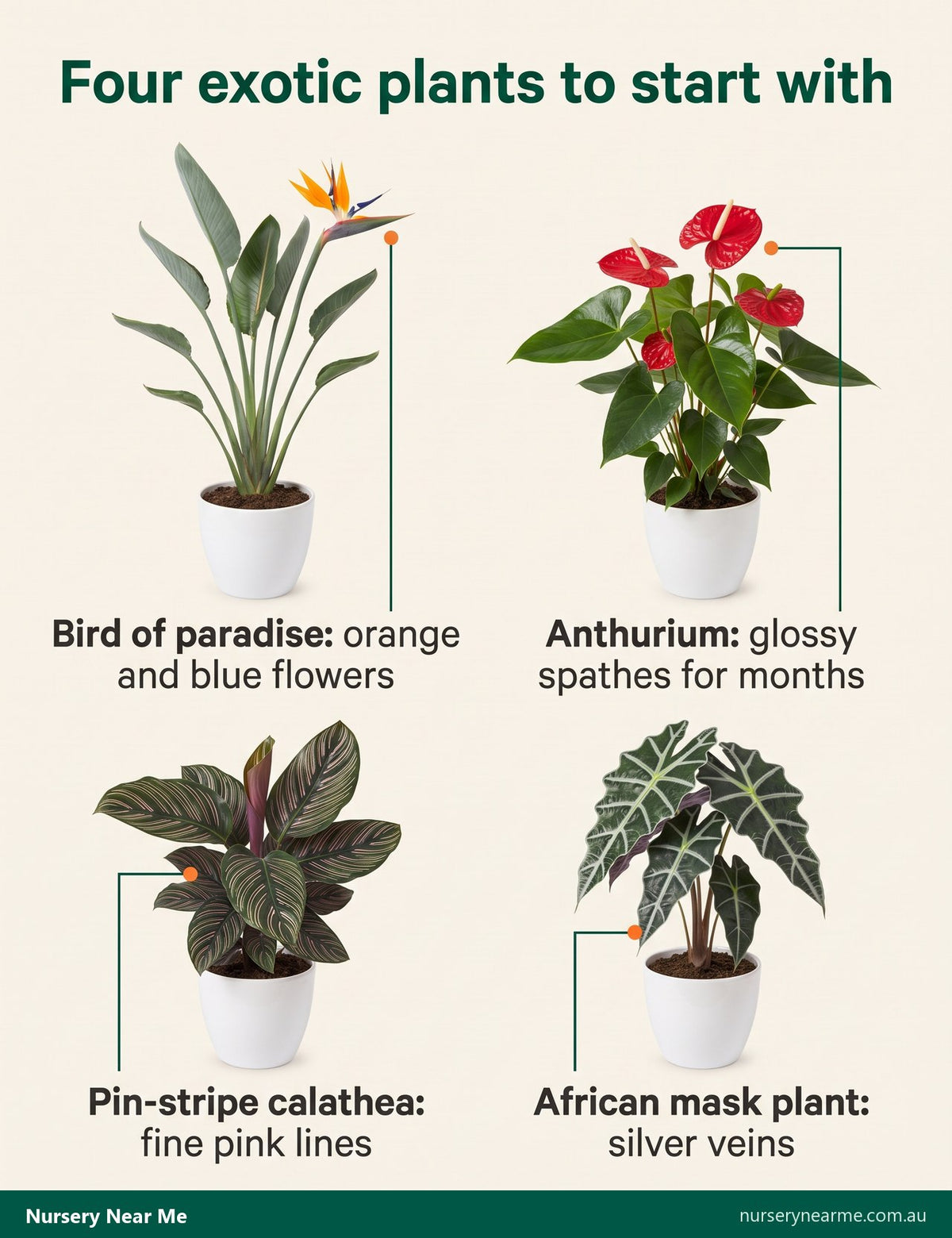
Four exotic plants to start with
| Plant | What it offers | What it needs |
|---|---|---|
| Bird of paradise (Strelitzia reginae) | Paddle leaves and orange and blue flowers shaped like a crane's head, to about 1.8 metres | The brightest spot in the house, or full sun outdoors in frost free gardens. The toughest of the four. Its giant relative has its own guide: growing Strelitzia nicolai |
| Anthurium | Glossy red, pink or white spathes that last for months | Bright indirect light, warmth, and mix kept just moist |
| Pin-stripe calathea (Calathea ornata) | Dark leaves ruled with fine pink lines. More kinds are in the calathea range | Low to medium indirect light, humid air, and no cold draughts. Brown leaf edges mean dry air |
| African mask plant (Alocasia amazonica) | Dark arrowhead leaves with silver veins. Its larger relatives are in the elephant ears range | Bright indirect light and warmth. It may die back in a cold winter and reshoot in spring |
The larger garden alocasias are covered in our guide to caring for elephant ear plants, and for a tough floor plant with a similar tropical look, Philodendron Xanadu is reliable. A peace lily is the easiest flowering companion for low light.
Care indoors
- Light. Bright, with no hot direct sun on the leaves. In Australia an east window is the easiest, and a north window needs a sheer curtain.
- Water. Water when the top few centimetres of mix are dry, until it drains, and empty the saucer. Overwatering kills more indoor plants than anything else, and it is worse in low light.
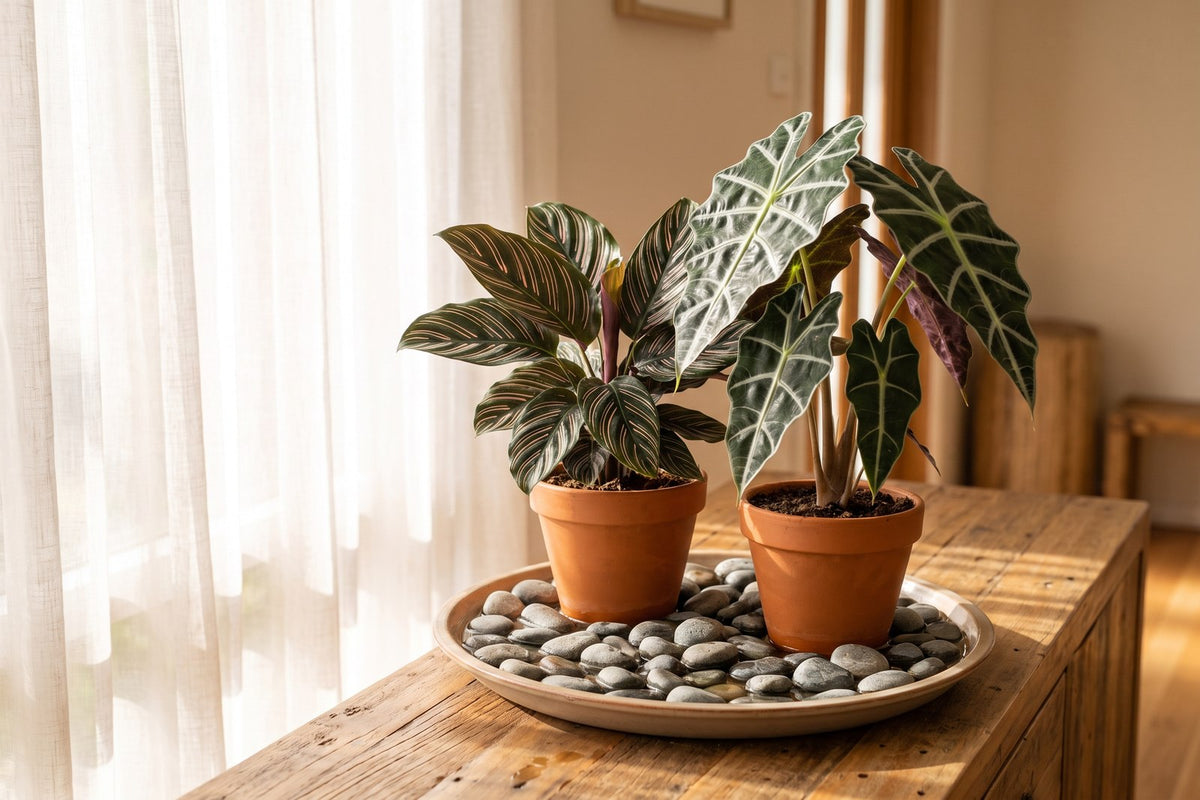
- Humidity. Group plants together, stand pots on a tray of wet pebbles, and keep them out of the airstream of heaters and air conditioners.
- Warmth. Keep tropical plants above about 12 degrees and away from cold glass at night.
- Feeding. A diluted liquid fertiliser every few weeks from spring to autumn, and none in winter.
- Mix and pots. A free draining indoor potting mix, in a pot with drainage holes. Repot in spring when roots fill the pot.
If you are just starting out, our indoor plant tips for beginners cover the basics in more detail.
Styling
- One large plant does more for a room than several small ones.
- Group plants in odd numbers and at different heights, with one pot colour repeated.
- Put bold leaves against a plain wall, where the shape shows.
Pets and children
The ASPCA lists alocasia, anthurium and bird of paradise as toxic to cats and dogs, and calathea as non-toxic. Alocasia and anthurium contain crystals that irritate the mouth if chewed, so keep them out of reach of pets and small children.
Growing exotics outdoors in Australia
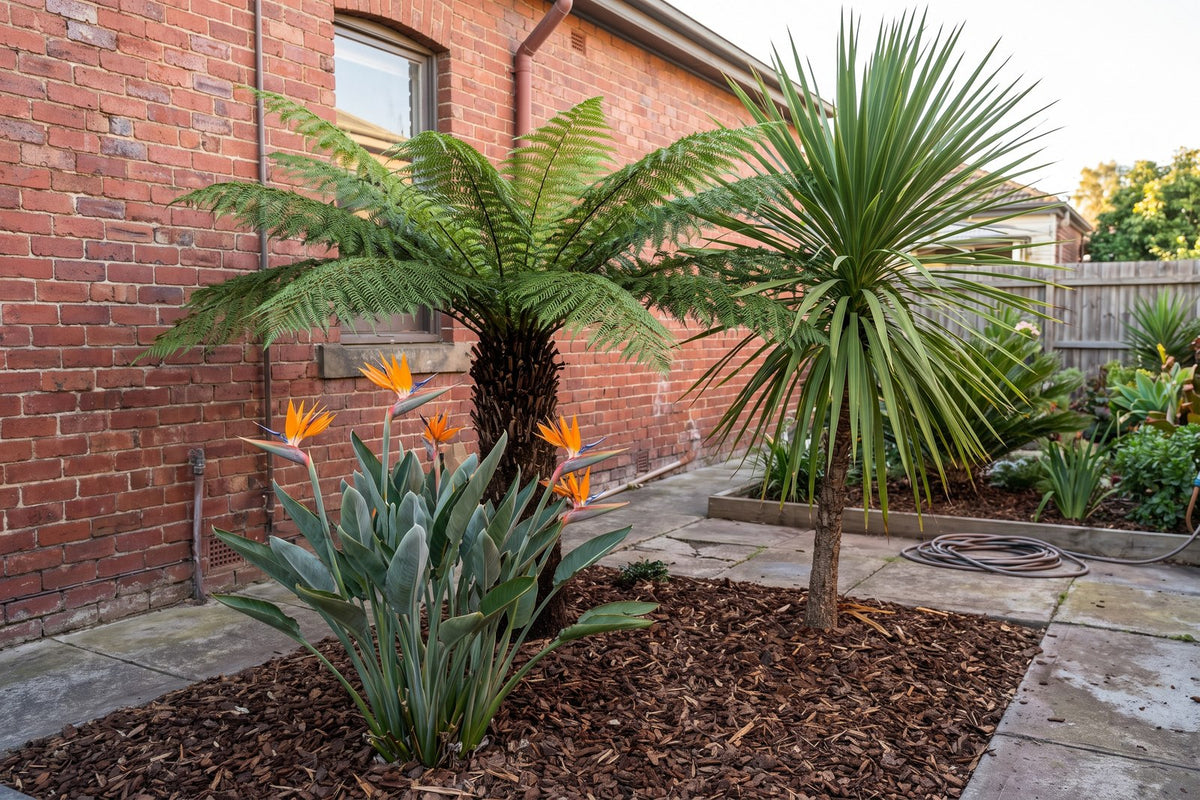
Australia's range of climates means a great deal is possible outdoors. The limits are frost at one end and humidity at the other.
| Location | What is realistic outdoors |
|---|---|
| Darwin and tropical Queensland | Almost anything tropical: heliconia, licuala, gingers, monstera |
| Brisbane and the subtropics | Most tropicals in sheltered positions; frangipani, hibiscus, cordyline |
| Sydney and coastal NSW | The hardier tropicals: strelitzia, xanadu, ficus |
| Perth | Mediterranean and dry climate exotics: olive, agave, dragon tree |
| Melbourne, Adelaide, Canberra | Pots that shelter over winter, or cold hardy substitutes |
Frost is the hard limit. Most tropical exotics are damaged below about 2 to 5 degrees, and a hard frost kills them. In Melbourne, Adelaide and Canberra, use large pots that can move under cover, or cold hardy plants that give a similar effect: Cordyline australis in place of tropical cordylines, strelitzia in place of heliconia, tree ferns in place of licuala.
Outdoors, shelter from hot, dry wind matters more than the heat itself, broad soft leaves want morning sun and afternoon shade, and in wet Brisbane and Sydney summers drainage decides survival.
Quarantine and weeds
Bringing plants, seeds or cuttings into Australia without a permit is illegal, and movement between states is restricted, particularly into Western Australia and Tasmania. Buy from Australian nurseries that ship legally into your state.
Most of Australia's environmental weeds arrived as garden plants: lantana, privet, English ivy and agapanthus among them. Check your council's weed list before planting near bushland, deadhead anything that seeds freely, do not dump garden waste in bushland, and plant clumping bamboo, not running bamboo.
Common questions
What is the easiest exotic plant to grow indoors?
Bird of paradise, in a bright room. It tolerates dry air and missed waterings better than calathea or alocasia.
Why are the edges of my calathea leaves brown?
Dry air, usually from heating or air conditioning. Move it out of the airstream and raise the humidity around it.
Can these plants grow outside?
In frost free districts, yes, in shelter. In cold districts keep them in pots that come under cover for winter.
Ready to plant?
Start with our exotic and rare plants, find something for a bright corner in indoor plants, or browse the full range. Every plant is delivered Australia wide.


