

Geisha Girl is the duranta most Australian gardeners end up with, and for good reason: it flowers from late spring until the first cold snap, it takes a hedge trim without sulking, and it grows fast enough to close a gap in a season. It is also frost tender and its berries are toxic, so it pays to know where to put it before you plant a row of them.
Quick facts
| Detail | Geisha Girl duranta (Duranta erecta) |
|---|---|
| Mature size | 2 to 3m tall by 1.5 to 2m wide unclipped; easily held at 1 to 1.5m as a hedge |
| Position | Full sun for best flowering; tolerates part shade with fewer blooms |
| Soil | Almost any free-draining soil from sand to improved clay, pH 6.0 to 7.5 |
| Water | Moderate; weekly through summer, tolerates short dry spells once established |
| Climate zones | Subtropical and tropical Australia, coastal New South Wales and Perth; frost tender below about 0°C |
| Flowering | Violet flowers edged white, October through to May in warm districts |
| Growth rate | Fast, 40 to 60cm a year in warm conditions |
Choosing the right duranta
Three durantas do most of the work in Australian gardens and they are not interchangeable.
For flower colour
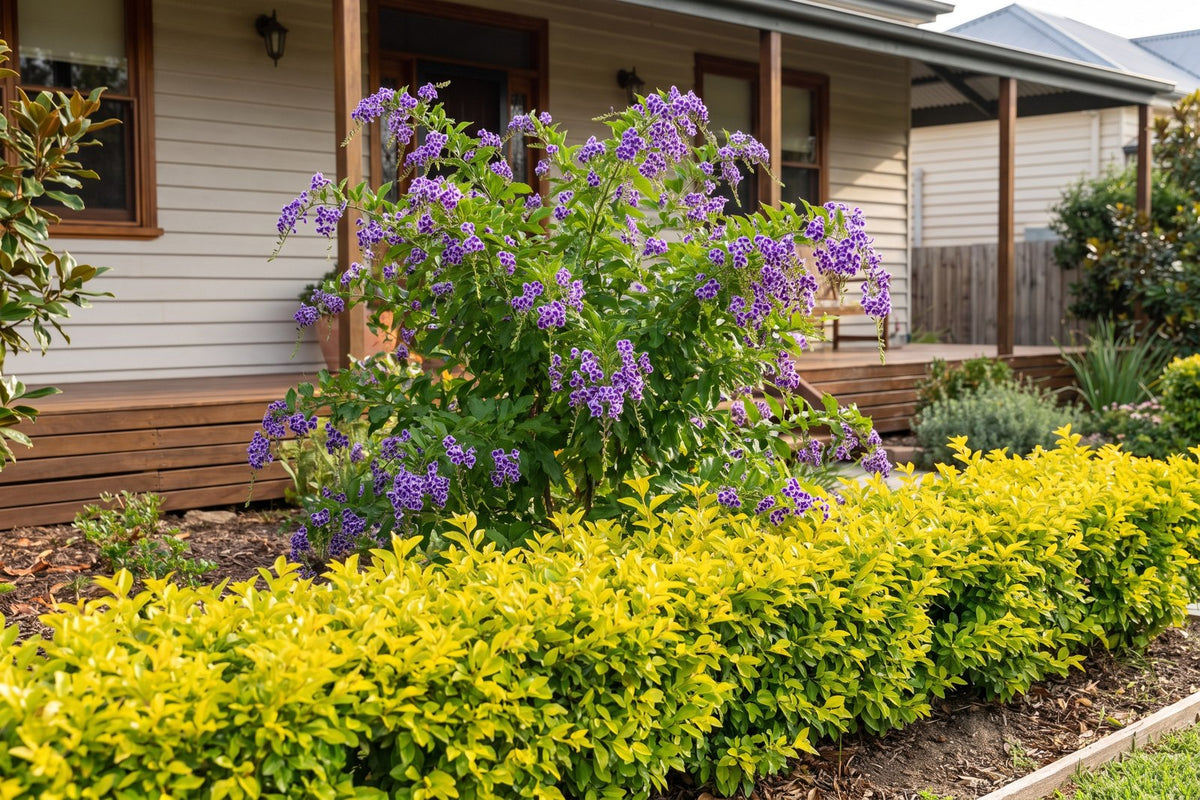
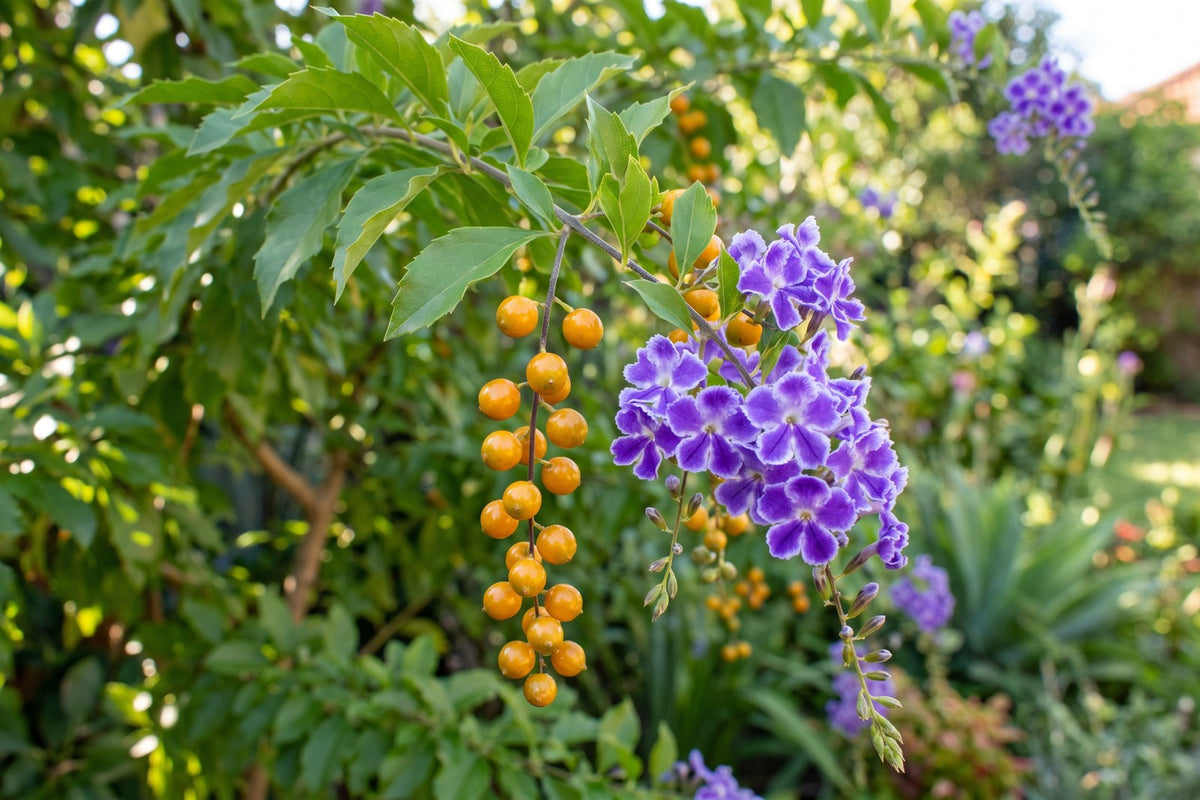
Geisha Girl is grown for its sprays of violet flowers with a crisp white margin, held in pendulous trusses at the branch tips. It flowers on new wood, which is the single most important fact about pruning it. Alba is the pure white form and reads as a cooler, quieter hedge.
For foliage colour
Sheena's Gold is grown for lime-gold leaves rather than flowers and is the one to use where you want a bright block of colour against dark foliage. It burns in harsh afternoon sun inland, so give it morning sun there.
Where a duranta is the wrong answer
In Canberra, Ballarat, the Adelaide Hills or anywhere that reliably drops below zero, a duranta will be cut to the ground most winters. Choose something evergreen and cold hardy instead; our list of alternative hedging plants includes several that hold their shape through frost. Duranta is also regarded as an environmental weed in parts of Queensland, northern New South Wales and the Northern Territory, where birds carry the berries into bushland. If you back onto a reserve or a creek line, trim after each flowering flush so very little fruit sets.
How to plant
Plant in spring or early summer in warm districts so the plant has a full growing season before its first winter. Autumn planting works in Brisbane, Darwin and coastal Queensland but is a gamble further south.
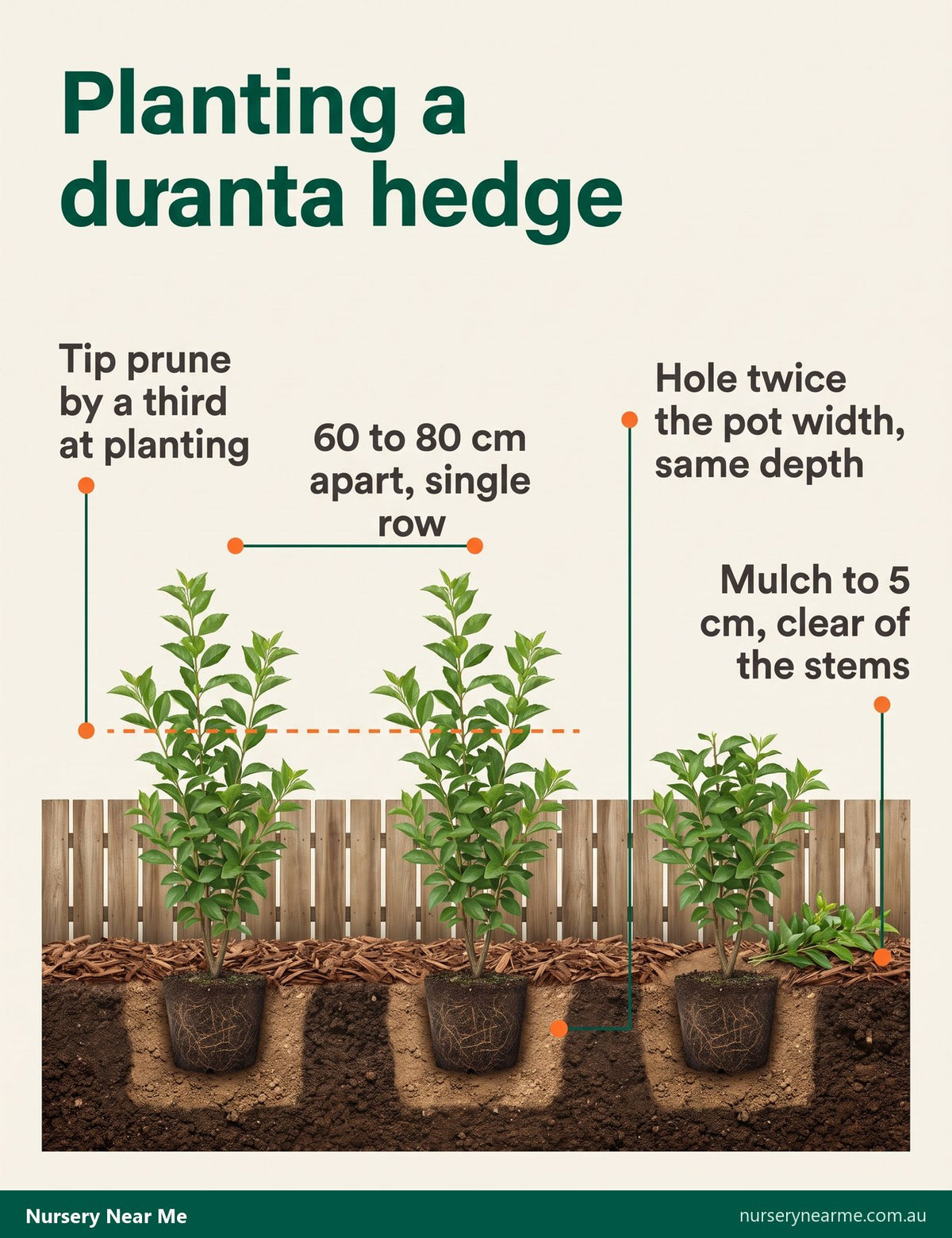
Durantas are not fussy about soil, but they will not tolerate waterlogging. Dig a hole twice the width of the pot and the same depth, tease the outer roots if the plant is pot bound, and backfill with the native soil improved with about a third compost. Water in well and mulch to 5cm, holding the mulch clear of the stems.
For a hedge, space plants 60 to 80cm apart in a single row. At 60cm you will get a solid face in about eighteen months; at 1m spacing you will wait an extra season but the plants stay healthier. Tip prune every plant by about a third at planting, even though it feels wrong. That single cut is what produces a hedge that is furnished to the ground instead of a row of bare sticks with green tops. The technique is covered in more detail in our guide to building a hedge that keeps its shape.
Ongoing care
Watering
Water new plants twice a week for the first month, then weekly through the first summer. An established duranta in a Brisbane garden needs a deep soak roughly every ten days through the hottest part of summer and very little in winter. In pots, check the top 3cm of mix with a finger rather than watering on a schedule. Plants that dry out badly drop flower buds first and leaves second.
Feeding
A duranta flowers for seven or eight months, and that costs it. Apply a complete controlled-release fertiliser in early spring as growth restarts, and a second lighter application in mid summer. A liquid feed high in potassium every three to four weeks through the flowering season noticeably lifts flower numbers. Avoid heavy nitrogen late in the season, which pushes soft growth straight into the cold. Our explainer on how fertilisers actually work covers reading the N-P-K ratio on the bag.
Pruning
Because Geisha Girl flowers on new wood, pruning is what makes it flower. Give it a hard shape-up in early spring, taking the whole plant back by a quarter to a third and removing any winter-damaged wood at the same time. Then tip prune lightly after each flowering flush through summer. Stop pruning by about March in cooler districts so new growth hardens off before winter. An old, woody, thin-flowering plant can be cut back to 40cm in September and will regrow completely within a season.
Common problems and fixes
Frost damage. Blackened tips and stem dieback after a cold snap look fatal but rarely are. Leave the damaged growth in place through winter, because it insulates the wood beneath it, then cut back to live green tissue in September once the risk has passed.
Scale and sooty mould. Soft scale on the stems produces honeydew and a black sooty film follows. Treat with horticultural oil at label rate on a mild day, covering leaf undersides, and repeat after three weeks. The pest and disease identification steps in our plant pest and disease guide apply here.
Chewed leaves. Looper caterpillars and grasshoppers both graze durantas in summer. Damage is cosmetic on a vigorous plant, and a hedge trim removes it. Only reach for a control if defoliation is severe.
Leggy growth with flowers only at the top. Almost always too much shade or too little pruning. Move it or open up the canopy above it, then renovate hard in spring.
Berries in a family garden. Duranta berries and leaves are toxic if eaten and the orange fruit is attractive to small children and dogs. Trim after flowering so fruit rarely forms, or choose from our list of pet friendly plants for areas the dog uses.
Frequently asked questions
How fast does a Geisha Girl duranta grow?
Fast for a flowering shrub, at 40 to 60cm a year in a warm frost-free position with regular water. A 200mm pot plant spaced at 60cm will typically form a usable 1.2m hedge face within two growing seasons, which makes it one of the quicker ways to screen a fence line in the subtropics.
Does it have thorns?
The species can carry short spines on older wood, and Geisha Girl occasionally produces them on vigorous shoots, though it is far less thorny than wild forms. Wear gloves when you renovate an old plant. On regularly clipped hedges you will rarely encounter them.
Will it grow in Melbourne or Adelaide?
Only in a warm, sheltered microclimate such as a north-facing courtyard or against a brick wall, and expect frost damage in a hard winter. In a large pot it can be moved under cover for the coldest weeks. Gardeners in genuinely frost-prone areas are better served by a cold-hardy evergreen.
Is duranta toxic to dogs?
Yes. The berries and foliage contain compounds that are toxic to dogs, cats and people if eaten, and the ripe orange fruit is the part most likely to be picked up. Regular trimming after flowering keeps fruit set to a minimum, and it is worth siting the plant away from a dog run.
When should I prune it?
Hard prune in early spring, around September, and tip prune after each flowering flush through summer. Avoid a heavy cut in autumn or winter: you will remove the wood that carries the next flush and expose soft new growth to cold.
Ready to plant?
For a warm-climate hedge that flowers for most of the year and asks very little in return, a duranta is hard to beat. Compare the three forms in our flowering shrubs collection, or see the full range of hedging plants if you are still deciding what to run along the fence. For faster screening options in the subtropics, our guide to fast growing hedges for Australian gardens compares growth rates side by side.


