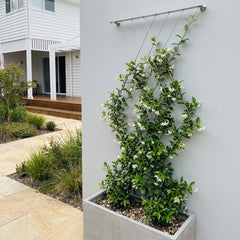
Camouflage Ivy (Hedera helix 'Camouflage') is a self-clinging evergreen climber with dark green, three-lobed leaves marked with irregular white patterning. It is less vigorous than plain green ivy but still quick, and it trims well into archways, topiary and pot displays. Grown with care, it is a dependable shade plant that gives cover and shelter all year.
Why you'll love it
-
Bright white patterning. Random splashes of white across deep green leaves lift a shaded spot that plain green plants leave flat.
-
Climbs unaided. Self-clinging stems attach themselves to walls, trunks and fences, so no ties are needed.
-
Less vigorous than plain ivy. It is easier to keep in check than the all-green form, though it still gets going quickly.
-
Shelter and food for wildlife. Dense growth gives birds shelter and nesting cover, and the black winter berries and the foliage feed birds and insects.
-
Clips into shapes. It takes regular clipping well, so it works as topiary or trained over an archway.
Where it works best
Archways and topiary. Train it over a wire frame or archway and clip regularly for a crisp, variegated shape. The leaves turn diamond-shaped as mature climbing stems form.
Shaded groundcover. Plant 60cm apart under trees or along a shaded wall. The stems root along their length where they touch soil, so it fills in on its own.
Pots and indoors. While it is small or regularly trimmed, it can live indoors in plenty of bright, indirect light, or in a patio pot.
Growing Camouflage Ivy in Australia
Position and climate. Shade or filtered sun with plenty of indirect light; it suits shaded positions. It is totally cold hardy, and ivy as a group does best in cool to mild climates, so it suits cool temperate, warm temperate and Mediterranean gardens.
Soil. Happy in almost any soil.
Water and feed. Mulch and water regularly until established, with extra water in dry periods. Feed with a controlled-release fertiliser each spring and follow with a liquid fertiliser monthly through summer.
Pruning. Growth can be prolific, so cut it back as required and clip topiary regularly. Ivy is toxic to pets and people if eaten, and the sap can irritate skin, so wear gloves. English ivy has also become a serious environmental weed in parts of Australia, particularly Victoria, New South Wales and Tasmania. Keep it contained, never let it run toward bushland, and check your local weed rules before planting.
What to expect when it arrives
We sell Camouflage Ivy as tube stock, a young plant in an 80mm deep tube that establishes quickly. A tube is all you need to start a topiary frame or a pot, and a handful will cover a shady bed. Expect a small, trailing plant on arrival that picks up speed within weeks of planting.
Plants are delivered Australia wide, with delivery from $29.95. Every plant is covered by our 30 day healthy plant guarantee.
Plant care guides and related reading
Common questions
What makes Camouflage different from plain ivy?
The white patterning on the leaves, and a slightly less vigorous habit. It still climbs and spreads, so it needs the same containment.
Will it damage walls?
Self-clinging ivy grips with small aerial roots that can mark paint, loosen old render and work into cracks. Grow it on sound masonry, a fence or a trellis, or use it as a groundcover instead.
Can I grow it indoors?
Yes, while it is small or regularly trimmed, in bright, indirect light. Keep it out of reach of pets, because ivy is toxic if eaten.