

Lawn is the thirstiest, most labour hungry part of most gardens, and a good share of it is never walked on. Replacing some of it with native plants cuts the mowing and watering and brings birds and insects in. This guide covers how to remove the grass, what to plant in its place, and how to get a new native planting through its first year.
Decide how much lawn to keep
Keep the grass people use: the patch where children play or the dog runs. Replace the rest, starting with the hardest lawn to keep alive, such as the hot strip beside the driveway, the shade under trees, the slope that is awkward to mow and the front yard nobody sits in. Check your council's rules before planting the verge; many councils encourage it, and most set a height limit near driveways.
Removing the lawn
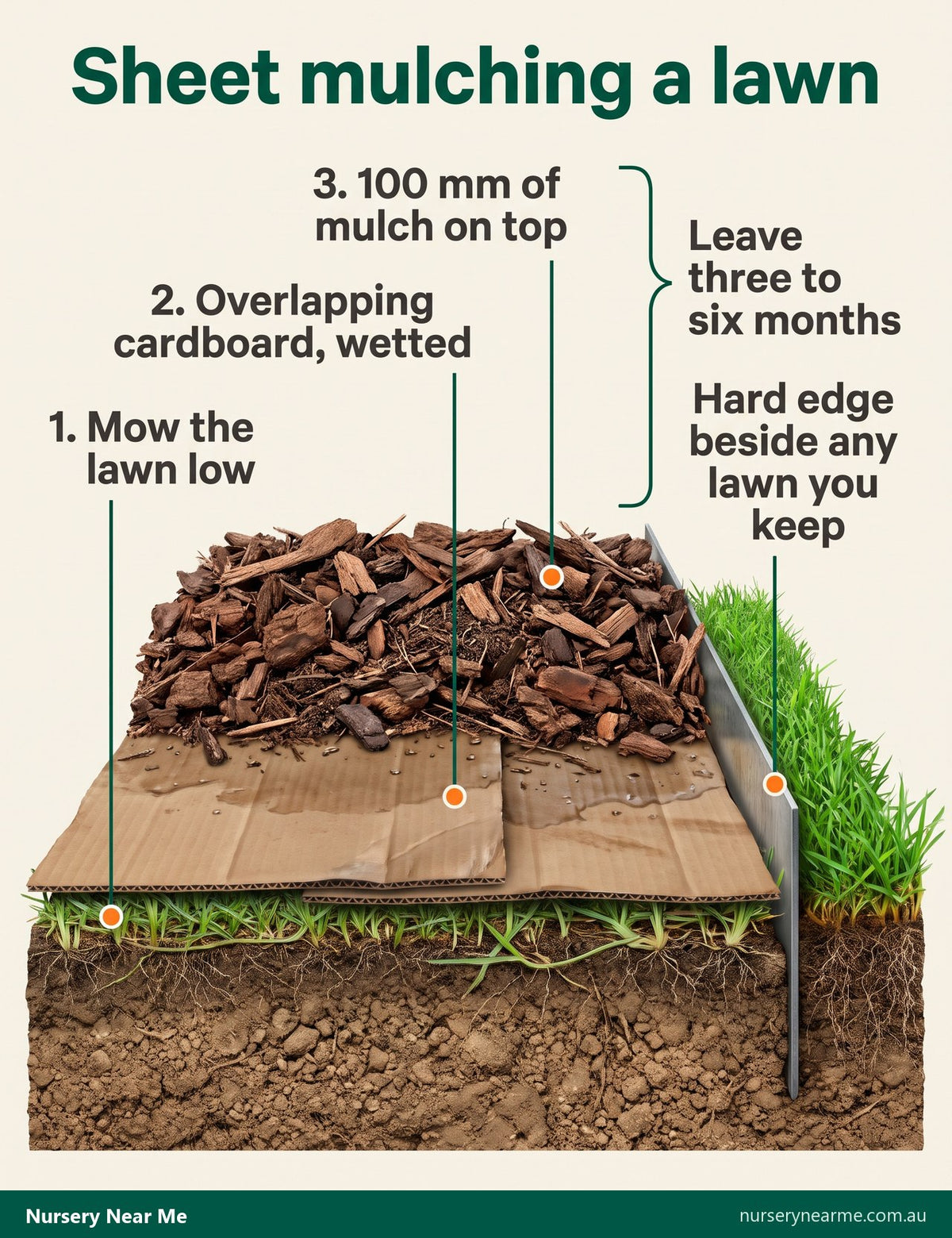
The grass has to be dead before you plant, or it will come up through everything. Couch and kikuyu are the difficult ones because they regrow from runners.
- Sheet mulching. Mow low, cover the area with overlapping cardboard, wet it, and top it with 100 mm of mulch. Leave it three to six months. This is the easiest method and needs no herbicide.
- Solarising. Clear plastic pinned over damp, mown lawn through the hottest weeks of summer cooks the grass and much of the weed seed beneath.
- Digging out. Fast for a small area. Lift the turf with its runners and sift out what is left.
Put a hard edge between the new bed and any lawn you keep, or the runners will be back within a season. Our guide on how to avoid weeds in your garden covers the follow up weeding.
What to plant in place of grass
| Job | Plants | Notes |
|---|---|---|
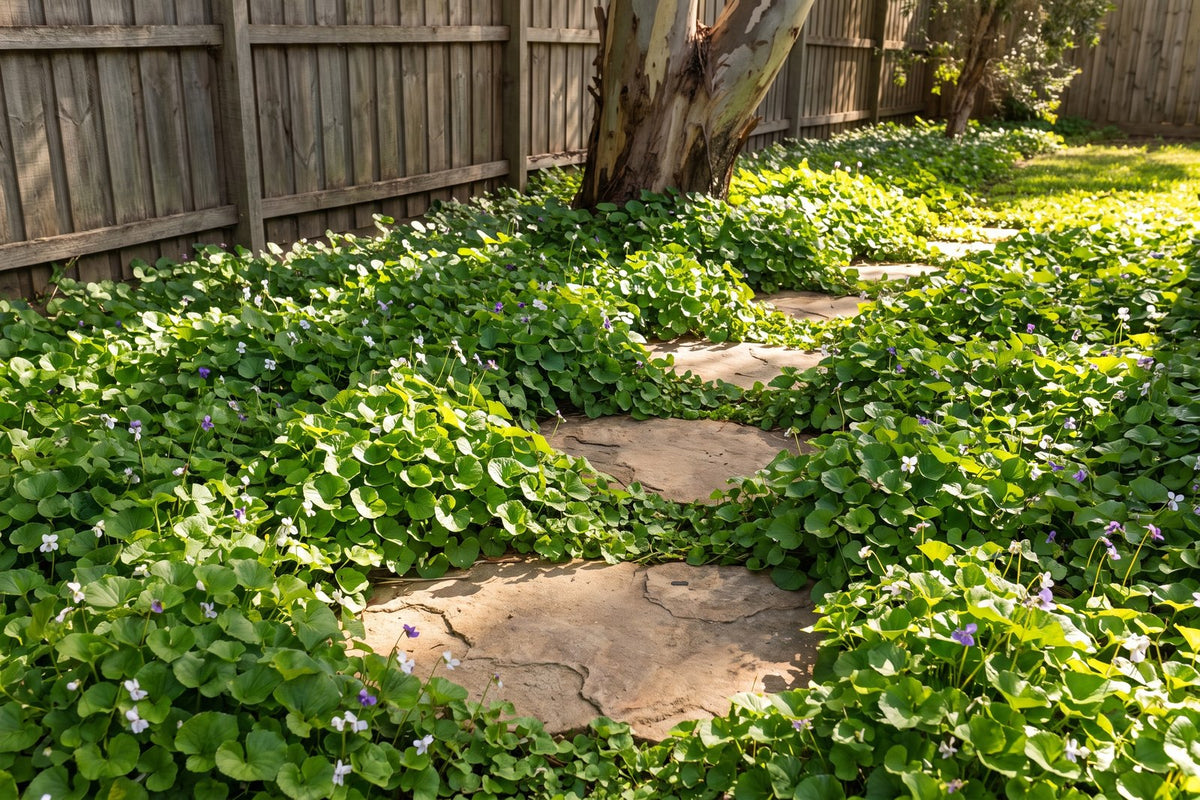
| A green carpet in shade | Native violet, kidney weed | Takes light foot traffic and moist soil |
| A low cover in full sun | Creeping boobialla, pigface, groundcover grevilleas | Not for walking on; plant stepping stones through it |
| A soft meadow look | Native grasses such as poa and kangaroo grass | Cut back once a year in late winter |
| Tough massed planting | Lomandra and dianella | Sun or shade, almost no care once established |
| Flowers and birds | Kangaroo paw, native daisies, low callistemons | Plant in drifts among the strappy plants |
Choose species local to your district where you can, since they suit your soil and rainfall without help. Mix heights for a layered planting: groundcovers at the front, strappy plants and low shrubs through the middle, and one or two small trees for shade. Our guide to no mow groundcovers covers the walkable options in more detail.
Planting
- Plant in autumn. Roots establish through the cool months and the plants meet their first summer with a working root system.
- Do not enrich the soil. Most natives want the ground as it is. Skip the compost and manure, and never use ordinary fertiliser near banksias and grevilleas.
- Plant small and close. Tubestock is the cheapest way to cover an old lawn and it establishes faster than large pots. Four to six groundcover plants to the square metre closes the gaps in a year or two.
- Mulch 75 mm deep with coarse bark or leaf mulch, kept clear of the stems.
The first year, and after
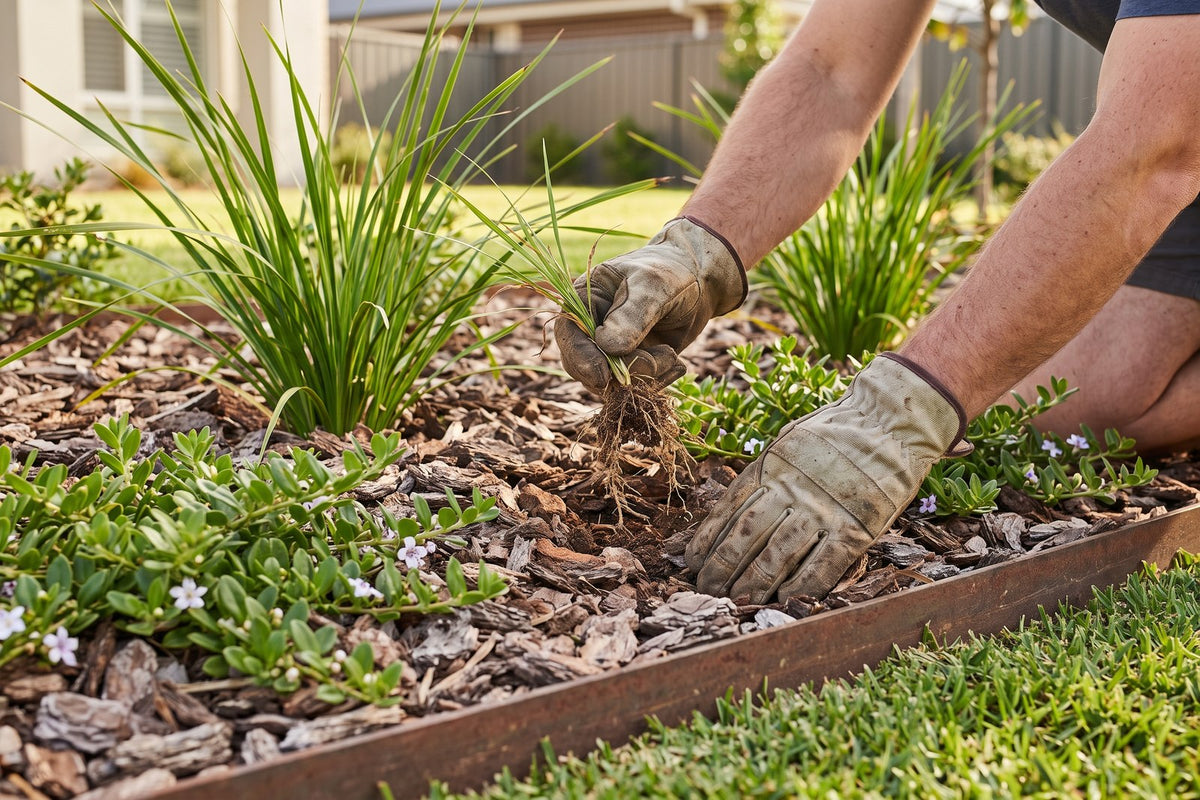
Water deeply once or twice a week through the first summer, less in the second, and after that most local natives live on rainfall. Weed every few weeks in the first year while there is still bare mulch for seed to land in. Once the plants meet, there is very little left to do: trim shrubs lightly after flowering, and cut lomandra and native grasses back hard every two or three years to freshen them.
What you get for it
- No mowing, edging or lawn food on the replaced area.
- Far less water once established.
- Less grass pollen, which is the main trigger of hay fever in Australia.
- Nectar, seed and shelter for birds, lizards and native bees.
Common questions
What is the best native lawn alternative you can walk on?
Native violet in shade and kidney weed in part shade both take light foot traffic. For a path that is used every day, lay stepping stones through the planting.
Do I need to kill the lawn first?
Yes. Planting into living turf fails, because couch and kikuyu outgrow the new plants. Smother it with cardboard and mulch for three to six months.
How much does it cost to replace a lawn with natives?
Tubestock, cardboard and mulch keep it low. The plants are the main cost, and small plants at close spacing are both cheaper and quicker to establish than a few large ones.
Ready to plant?
Browse our Australian native plants to choose the mix.
If you have the room for a tree that feeds more than the eye, our guide to koala food trees to plant lists twelve species by region, with the Forest Red Gum and Swamp Mahogany among the ones we keep in stock.
For a garden that has to sit in a bushfire zone, the bushfire-wise planting guide explains the design rules the fire agencies publish and which plants appear on their lists.


