

Diamonds in the Dark is a range of crepe myrtles bred for near black foliage and a compact size of about three metres. The flowers come in white, pink, purple and red through summer, against leaves that stay dark from spring to autumn. This guide covers where they grow in Australia, why full sun matters, how to prune them, and how to keep mildew away.
What the Diamonds in the Dark range is
They are crepe myrtles (Lagerstroemia), deciduous small trees that flower on the current season's growth. The new leaves open deep burgundy and darken to near black in sun. Flower colour depends on the variety: we stock Crimson Red and Purely Purple, each growing to about 3 metres tall and 2 to 2.5 metres wide. As crepe myrtles they share their habits with the rest of the family, and our crepe myrtle care guide covers planting and the other varieties. For a pale flower on green leaves, see our guide to the white crepe myrtle.
Where Diamonds in the Dark grows in Australia
| Location | How they perform |
|---|---|
| Melbourne, Adelaide, Canberra | Very well. Warm, dry summers suit them and frost does not trouble them |
| Sydney and coastal NSW | Very good, flowering heavily through summer |
| Perth | Very well. Dry summers keep mildew down |
| Brisbane and south east Queensland | Good; in humidity, mildew resistance and airflow matter more |
| Tasmania | Does well in warm, sheltered positions |
| Tropical north | Grows, but leaf colour and flowering are less reliable |
Full sun is not optional
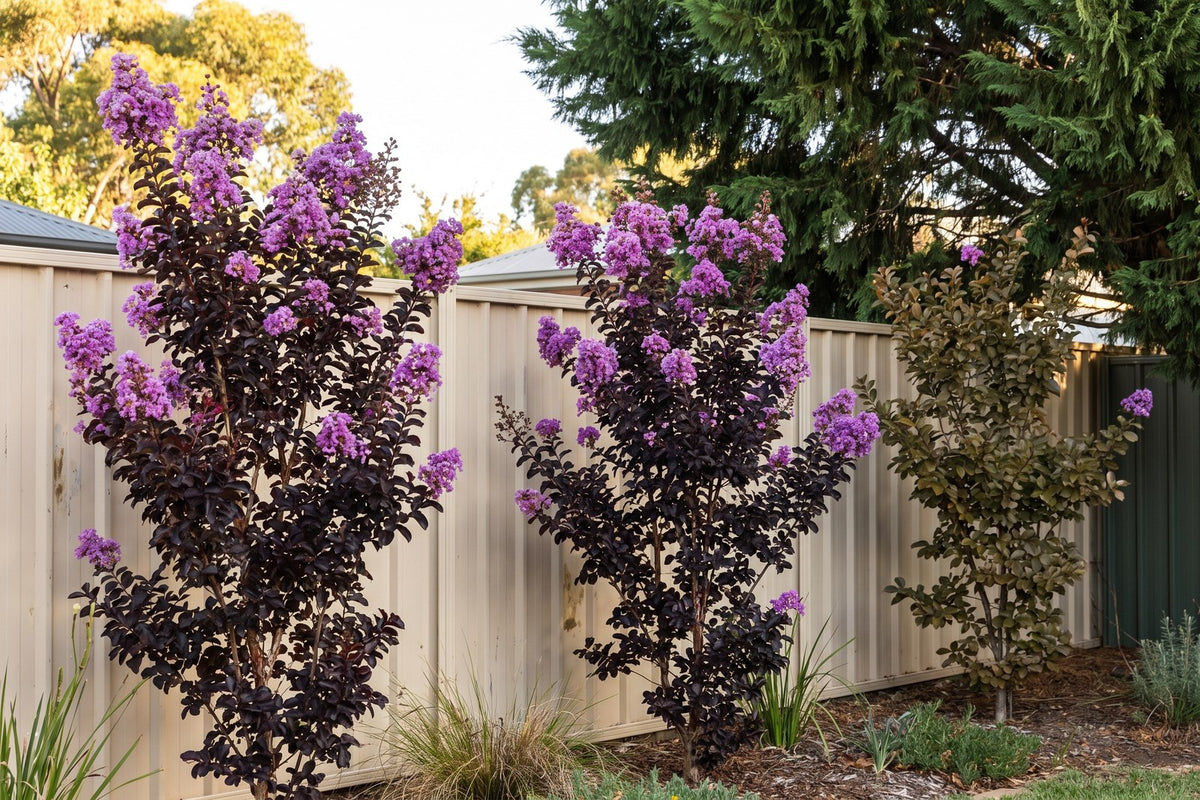
The dark foliage is the reason to plant these, and it depends on light. In full sun the leaves hold deep burgundy black. In part shade they drift towards green, the plant flowers less, and powdery mildew increases. Give them at least six hours of direct sun, and more is better.
Soil and planting
- Soil. Any soil that drains. Crepe myrtles are not fussy about pH; a slightly acid to neutral soil suits them, and our guide on how to lower soil pH covers what to do with very alkaline ground.
- Planting. Plant at the same depth as in the pot, water in, and mulch 75 mm deep, kept clear of the trunk.
- Spacing. Set plants 2 metres apart for a row along a driveway or fence, where the dark leaves show well against a pale wall.
- Pots. At three metres they suit a large pot in a sunny courtyard.
Prune in late winter, and prune properly

Crepe myrtles flower on new growth, so a prune in late winter, before growth starts, brings both flowers and a flush of new dark leaves. What they do not need is every branch cut back to the same knobbly stubs each year. That gives weak, whippy shoots, heavy flower heads that flop, and a disfigured frame. Shorten last season's growth, remove crossing and inward growing branches, thin crowded growth to open the canopy, and leave the main structure alone.
Mildew, and why the breeding matters
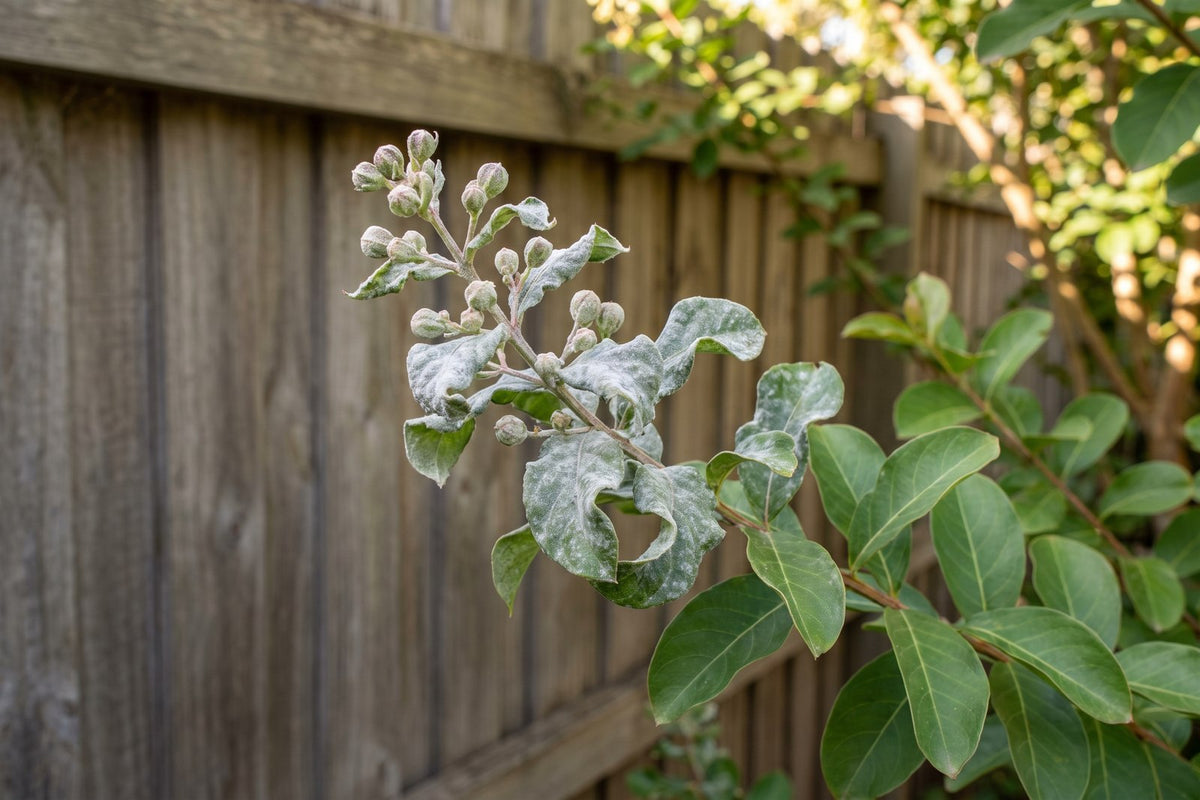
Powdery mildew coats crepe myrtle leaves and buds in a grey white film and can spoil the display in a humid summer. Older varieties are very prone to it; the modern bred varieties, including this range, resist it far better. In Brisbane and coastal Queensland, help further by planting in full sun with good airflow, watering at the base and not over the leaves, and keeping the plant clear of fences and walls.
Care through the year
- Water deeply through the first two summers, then only in long dry spells. Established plants are quite drought tolerant.
- Feed in early spring with a slow release fertiliser. Avoid high nitrogen feeds, which push leaves at the expense of flowers.
- Remove suckers from the base to keep a clean frame.
- Trim spent flower heads in midsummer if you can reach them. It often brings a second flush.
- Expect bare branches in winter. The plant is deciduous, which lets winter sun through. Our guide answering do crepe myrtles lose their leaves explains what is normal.
Propagation
Crepe myrtles in general strike from cuttings, as our guide on how to propagate explains. The Diamonds in the Dark varieties are protected by Plant Breeder's Rights, so they may not be propagated for sale.
Common questions
How big does Diamonds in the Dark grow?
About 3 metres tall and 2 to 2.5 metres wide, against 6 to 8 metres for the older tree sized crepe myrtles.
Why are the leaves on my Diamonds in the Dark turning green?
Too little sun. The dark colour needs at least six hours of direct sun a day.
When should I prune a Diamonds in the Dark crepe myrtle?
In late winter, before new growth starts.
Is Diamonds in the Dark deciduous?
Yes. It is bare through winter and leafs out in spring.
Ready to plant?
Diamonds in the Dark gives dark foliage all season and months of flower on a plant small enough for a suburban block. Browse our crepe myrtle collection to compare colours and mature sizes, delivered Australia wide.


