

A white hydrangea lights up a shaded corner, shows at dusk when coloured flowers fade from view, and needs no soil management for colour. What it does need is cool roots, steady moisture and shelter from hot afternoon sun, so climate and position decide how well it does. This guide compares the white types, sets out where they grow in Australia, and explains when to prune each one.
The three kinds of white hydrangea
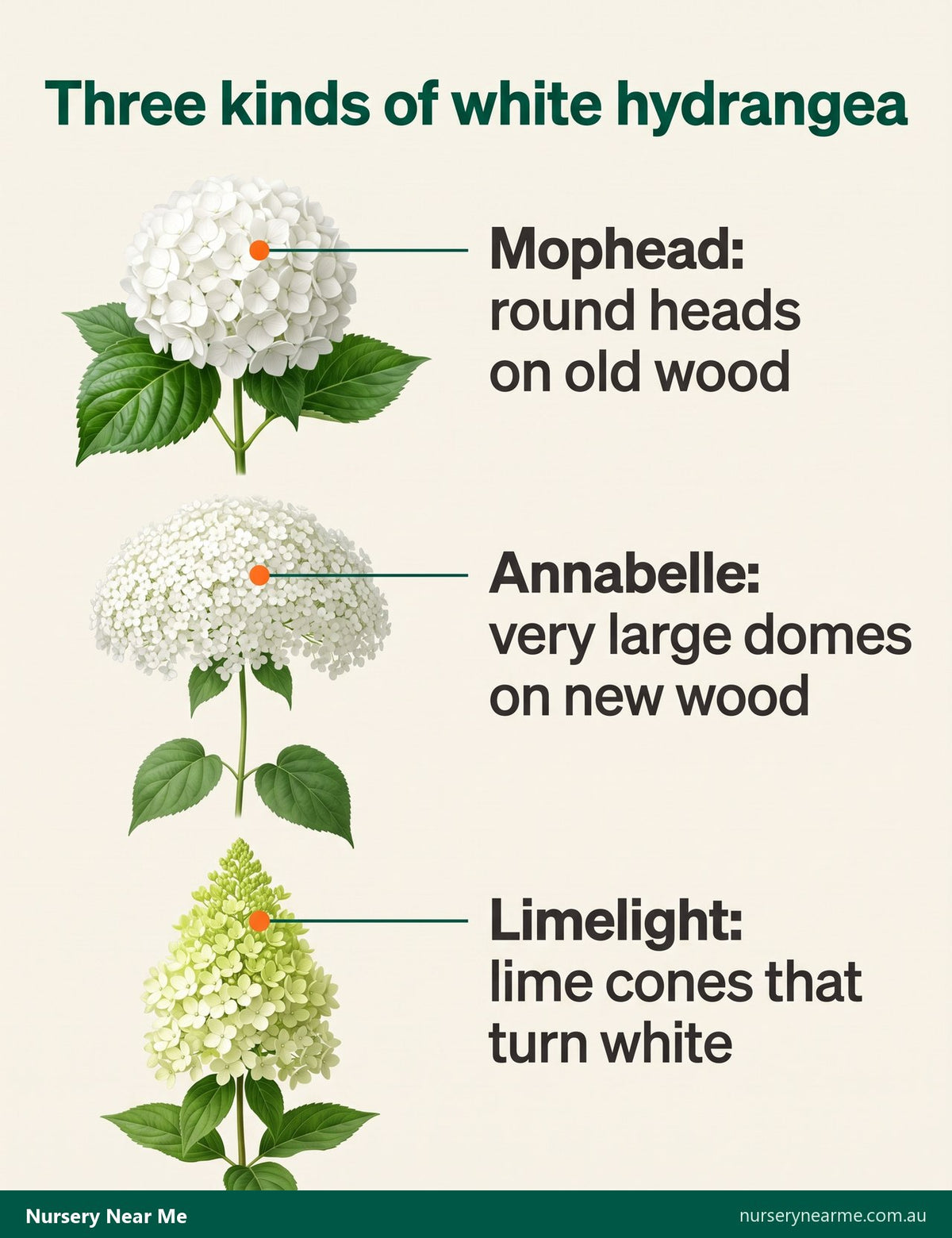
| Type | Example | Flowers on | Notes |
|---|---|---|---|
| Mophead (Hydrangea macrophylla) | White Knight, about 1.5 m by 1.5 m | Old wood | The classic round heads. Needs the most shade and water |
| Smooth hydrangea (Hydrangea arborescens) | Annabelle, about 1.4 m, and the stronger stemmed Incrediball | New wood | Very large white domes; hardy to cold, and can be cut back hard in winter |
| Panicle hydrangea (Hydrangea paniculata) | Limelight | New wood | Cone shaped heads that open lime and turn white. Takes more sun than the others, which makes it the better choice in warmer gardens |
White hydrangeas in Australian conditions
The broad, thin leaves lose water fast and scorch in summer sun.
| Location | How they perform |
|---|---|
| Melbourne, Adelaide Hills, Tasmania | Ideal. Cool, moist conditions suit them closely |
| Sydney and the Blue Mountains | Very good in shaded, sheltered positions |
| Canberra | Good, with protection from hard frost on new growth |
| Brisbane and south east Queensland | Deep shade and reliable water needed; heat is the limit |
| Perth | Difficult. Dry heat and alkaline sand both work against them |
| Tropical north | Not suited |
Morning sun with full afternoon shade is the target everywhere. In Brisbane or Perth that becomes shade for most of the day, which is why hydrangeas are a mainstay of our guide to shade gardening.
White does not change colour
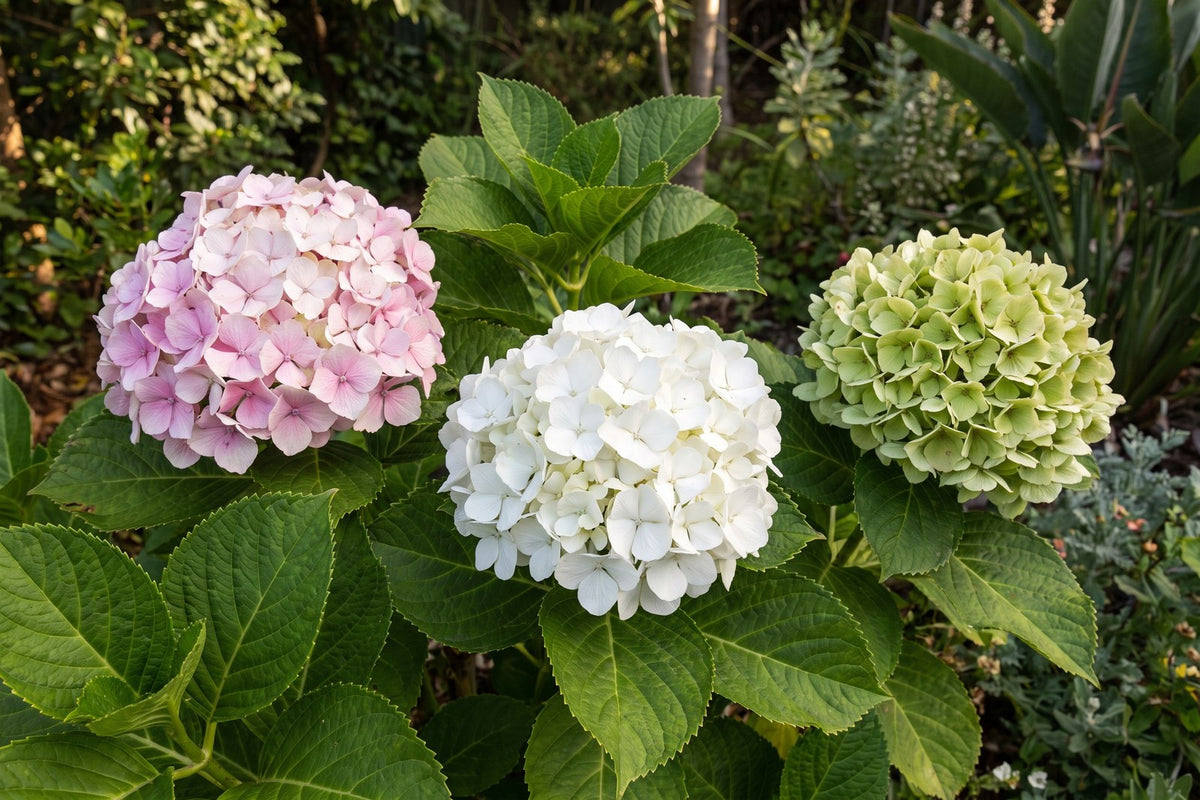
This is the most common misunderstanding. The shift between blue and pink works only on coloured mophead and lacecap hydrangeas, and it depends on the aluminium that soil pH makes available. White hydrangeas have no pigment to shift, so no amount of aluminium sulphate or lime will turn one blue or pink. Some white varieties age to soft pink or green as the flowers mature, but that is the flower ageing and not the soil. Our guides to lowering soil pH and to hydrangea colour and growth cover the coloured kinds.
Planting
- Choose a spot with morning sun or bright shade, out of hot wind.
- Dig compost through the bed. Hydrangeas want soil that holds moisture and still drains.
- Space plants about a metre apart for a massed planting.
- Plant at the same depth as in the pot, water in, and mulch 75 mm deep.
- In pots, use a large container and a premium mix, and expect to water daily in summer.
Water and feeding
The name comes from the Greek for water vessel, and it fits. Water deeply and keep the mulch topped up. In Perth, Adelaide and inland districts this is not a low water plant. A hydrangea that wilts in the afternoon while the soil is moist is suffering from heat, not thirst: more water will not help and may rot the roots. Shade is the answer. Feed in spring and again in midsummer with a fertiliser for flowering plants.
Pruning depends on the type
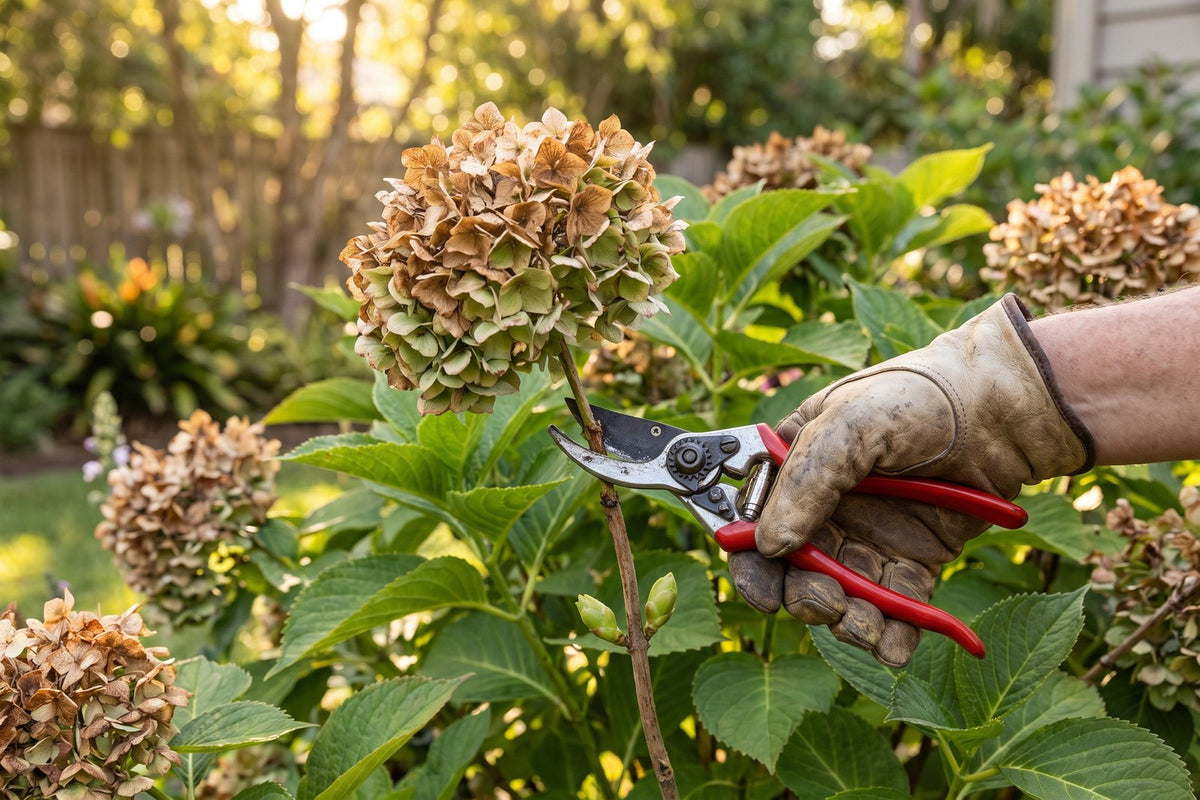
- White mopheads and lacecaps flower on old wood. Prune straight after flowering, cutting spent heads back to the first strong pair of buds. Hard pruning in winter removes next summer's flowers, which is the most common reason a healthy hydrangea does not flower.
- Annabelle types and Limelight flower on new wood, so prune in late winter. They can be cut back by a third or more.
In cold districts, leave the spent heads on over winter to protect the buds beneath from frost, and remove them in early spring.
Pests and diseases
Powdery mildew in still, shaded air, leaf spots in wet weather, and aphids or mites on stressed plants are the usual troubles. Space plants for airflow and water at the base. Our guide to identifying and treating common plant pests and diseases helps confirm what you are dealing with.
Toxicity
All parts of a hydrangea are harmful if eaten, to people and to pets. The Queensland Poisons Information Centre lists it as potentially toxic.
Using white in the garden
Summer evenings are when most gardens get used, and white is the colour that shows at dusk. A white hydrangea in a shaded courtyard stands out in low light in a way coloured varieties do not. More plants for the same effect are in our guide to white flowering plants.
Common questions
Can I turn a white hydrangea blue?
No. White hydrangeas do not change colour with soil pH.
Why is my hydrangea not flowering?
A mophead pruned hard in winter loses its flower buds. Deep shade and late frost are the other causes.
Do white hydrangeas grow in full sun?
Limelight and other panicle hydrangeas take more sun in cool and temperate districts. Mopheads need afternoon shade everywhere in Australia.
When do I prune a white hydrangea?
Mopheads straight after flowering; Annabelle and Limelight in late winter.
Ready to plant?
Browse our hydrangea collection to compare varieties, and our plants for full shade for companions to plant around them.


