

Few shrubs work as hard for their space as a hibiscus. From spring until the cool of late autumn, sometimes year round in the tropics, they produce a rolling supply of big silky trumpets, each flower lasting only a day or two but replaced so constantly you never notice. In warm coastal gardens from Sydney north they are effortless; further south they simply ask for a hot wall, good sun and shelter from frost.
Beyond the familiar bright hybrids, the genus includes some outstanding tree hibiscus. Hibiscus tiliaceus, the sea hibiscus or cottonwood, is a spreading coastal native with heart shaped leaves and yellow flowers that age through orange to red, and it laughs at salt wind that would shred most flowering plants. Between the shrubby hybrids and the coastal trees, there is a hibiscus for nearly every warm Australian garden, and few plants do more to sell the look described in our guide to designing a tropical garden that looks lush year-round.
Quick facts
| Botanical name | Hibiscus species and hybrids |
| Type | Evergreen flowering shrub or small tree |
| Height | 1.5 m shrubs to 8 m coastal trees |
| Position | Full sun, sheltered from frost and cold wind |
| Soil | Rich, free draining, slightly acidic to neutral |
| Flowers | Spring to autumn; year round in the tropics |
| Climate | Tropical to warm temperate; frost tender |
Choosing a hibiscus

Compact colour for beds and pots
Lollipops Hibiscus from $10.95 is a neat, free flowering shrub form that suits garden beds and large pots, giving you the classic open trumpet flowers on a manageable plant that responds beautifully to an annual prune.
Coastal and tree hibiscus
For seaside gardens, Sea Hibiscus from $10.95 is the frontline choice: a fast, spreading native tree to around 6 to 8 metres with yellow maroon centred flowers and outstanding salt tolerance. Its burgundy leafed form, Red Hibiscus Rubra from $229.95 in advanced grades, carries rich plum coloured foliage that makes a dramatic feature or clipped screen in warm gardens.
Tropical companions
Hibiscus look best in company. Crotons carry the colour at knee height when the hibiscus pauses between flushes; Wilma Croton from $28.95 and Princess Mary Croton from $28.95 are not hibiscus, to be clear, but their painted foliage is the classic underplanting for exactly this style of garden.
Planting
Choose the sunniest spot you have, with at least six hours of direct sun; flowering drops off sharply in shade. In marginal climates a north facing wall adds the few degrees of winter warmth that keep plants happy, and our guide to hardy tropical plants that handle wind and heat covers the companions that will cope beside them. Soil should be rich and free draining: dig in compost and well rotted manure two weeks before planting, and in clay, mound the bed 20 cm.
Plant with the root ball level with the soil surface, water in with 10 litres, and mulch 50 mm deep clear of the stem. Space shrub hibiscus 1.2 to 1.5 metres apart for a flowering hedge, and give tree forms like sea hibiscus at least 4 metres. Spring planting is ideal everywhere; in frost free zones you can plant year round. Our guide to tropical gardening best practices covers the seasonal rhythm these plants follow.
Ongoing care
Watering: Deep water two to three times a week through the first summer, then once or twice weekly in hot weather. Hibiscus wilt dramatically when dry but recover fast; constant soggy soil is far more dangerous than an occasional dry afternoon.
Feeding: Hibiscus are hungry. Feed every six to eight weeks from spring to early autumn with a rose or hibiscus fertiliser rich in potassium, which drives flowering. Yellowing older leaves mid season usually just mean the plant is asking to be fed.
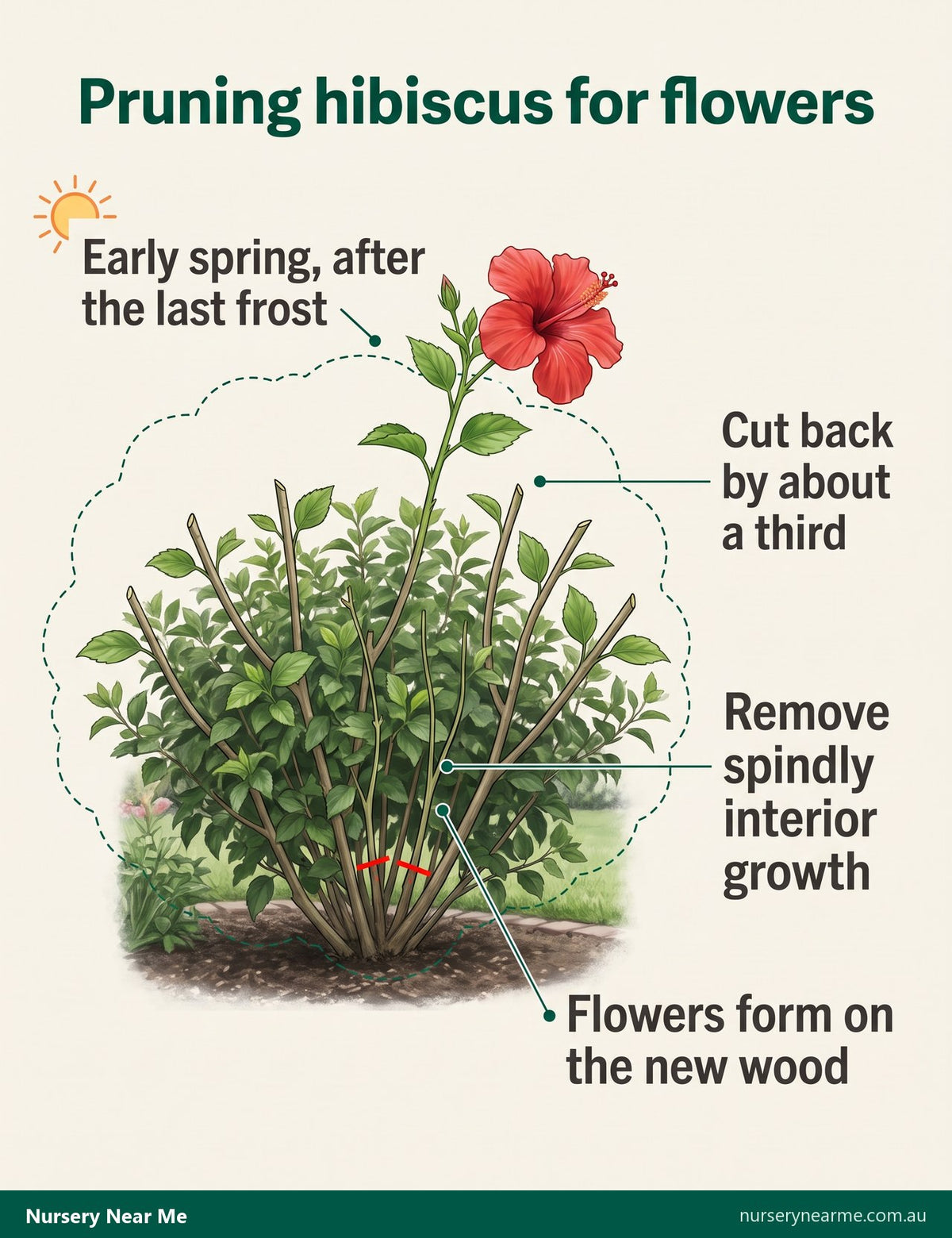
Pruning: Prune in early spring after the last frost, removing about a third of the bush and any spindly interior growth. Flowers form on new wood, so a spring cut directly buys you more summer flowers. Tip prune lightly again in midsummer if plants get leggy.
Common problems

Hibiscus beetle: Small black beetles that chew holes in petals and cause buds to drop. Set a white container of soapy water under the bush, as the beetles are drawn to white, and collect fallen buds regularly to break the cycle.
Bud drop: Buds forming then dropping unopened points to irregular watering, sudden cold nights or beetle grubs. Mulch, water on a steady rhythm and rule out beetles first.
Aphids on new growth: Clustered on soft tips in spring. Squash by hand or spray with horticultural soap; ladybirds usually finish the job.
Cold damage: Blackened soft growth after frost. Do not prune it off immediately; leave the damaged material as insulation until spring, then cut back to clean wood.
Where hibiscus grows in Australia
The tropical hibiscus is a defining plant of Queensland gardens, and it is the flower most people picture when they think of a Brisbane or Darwin backyard. It is genuinely tropical, though, and the further south you go the more work it becomes.
| Location | How it performs |
|---|---|
| Darwin and tropical Queensland | Ideal. Flowers almost continuously |
| Brisbane, Gold and Sunshine Coasts | Excellent, flowering from spring through autumn |
| Northern NSW | Very good in frost-free positions |
| Sydney | Good in a warm sheltered spot; slower and shorter flowering |
| Perth | Workable with summer water and shelter from the sea breeze |
| Melbourne, Adelaide, Canberra | Pots only, sheltered over winter |
Frost is the limit. Below about 2°C the growth is damaged and a hard frost can kill a plant outright. In southern cities, treat tropical hibiscus as a container plant that moves under cover, or grow the far hardier rose of Sharon (Hibiscus syriacus) instead, which is deciduous and frost tolerant.
Australia's native hibiscus
Worth knowing that Australia has its own. The Norfolk Island hibiscus and several native Hibiscus species grow here, and the cotton tree, Hibiscus tiliaceus, is a native of northern Australian coastlines - a tough salt-tolerant tree with yellow flowers that age to deep red through the day. The purple-leaved form is widely planted in Queensland gardens.
Pruning for flowers
Hibiscus flower on new growth, which makes pruning the main lever you have. Cut back by about a third in early spring as the weather warms, removing old woody stems entirely and shaping the rest. The plant responds with vigorous new growth that carries the season's flowers.
Do not prune in autumn or winter in any Australian climate - you remove the wood that would have flowered, and in cooler districts the fresh growth is then damaged by cold.
Common problems
Bud drop before opening is the classic complaint and is usually inconsistent watering, a sudden temperature change, or hibiscus beetle in Queensland and northern New South Wales. Yellowing leaves generally mean overwatering, poor drainage or a magnesium shortage. Sticky leaves with sooty mould follow aphids, mealybug or scale, and respond to horticultural oil. In Brisbane humidity, keep plants spaced for airflow rather than crowded against a fence.
Frequently asked questions
Can I grow hibiscus in Melbourne or other cool climates?
Yes, with siting. Plant against a warm north facing wall, ensure sharp drainage, keep plants slightly dry in winter and cover young plants on frosty nights. Container growing lets you move plants under eaves for winter.
Why is my hibiscus not flowering?
Almost always insufficient sun or insufficient food. Six hours of direct sun and regular potassium rich feeding through the warm months fix most non flowering hibiscus within a season. If that does not do it, our guide to the reasons a plant is not blooming works through the less obvious causes.
How long does a hibiscus flower last?
Each individual bloom lasts one to two days, but a healthy plant produces new flowers continuously for months, so the display never pauses for long.
Do hibiscus grow well in pots?
Very well. Use a pot 40 cm or wider, premium potting mix, full sun, and feed monthly through the growing season. Potted plants dry out faster, so summer watering is often daily, and our guide to choosing the right size pot explains how container size changes that.
Ready to plant?
If you want a garden that flowers from November to May without renegotiation, hibiscus are the shortcut. Browse our flowering plants, pair them with lush foliage from the palms and tropical collection, or find the right container in pots and planters. Delivery details for your postcode are on our delivery page.


