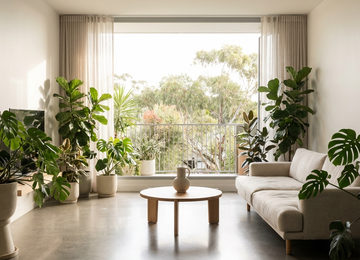
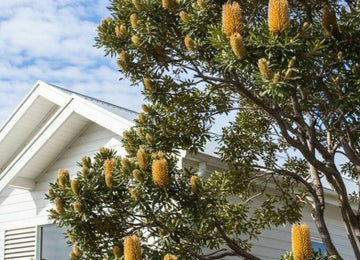


A calm garden comes from a restrained palette, and in Australia the palette has to suit our light. Colours that look soft in an English border bleach out here, while silver, green and the hot colours of our own flora hold. This guide covers how colour behaves in Australian light and how to use it for a restful garden.
Colour behaves differently in Australian light
Our light is harsher and higher in ultraviolet than northern Europe, and the same planting scheme reads quite differently here. Worth knowing before choosing a palette.
| Colour | How it behaves in Australian light |
|---|---|
| Pale pastels | Bleach out and look washed in full midday sun |
| Hot reds, oranges, golds | Hold up strongly; sit naturally with the landscape |
| White and cream | Can glare at midday, but come into their own at dusk |
| Deep purples and burgundies | Read as almost black at distance in bright sun |
| Silver and grey foliage | Excellent - reflects heat and softens harsh light |
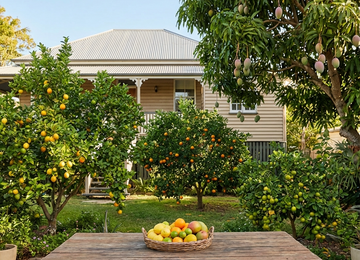
The soft English pastel palette works in Melbourne, Hobart and shaded gardens, and struggles in Brisbane or Perth. The colours that look right here are largely the ones our own flora produces - gold wattle, red bottlebrush, orange grevillea, purple hardenbergia, and a great deal of grey-green foliage.
Design for dusk, because that is when you are outside
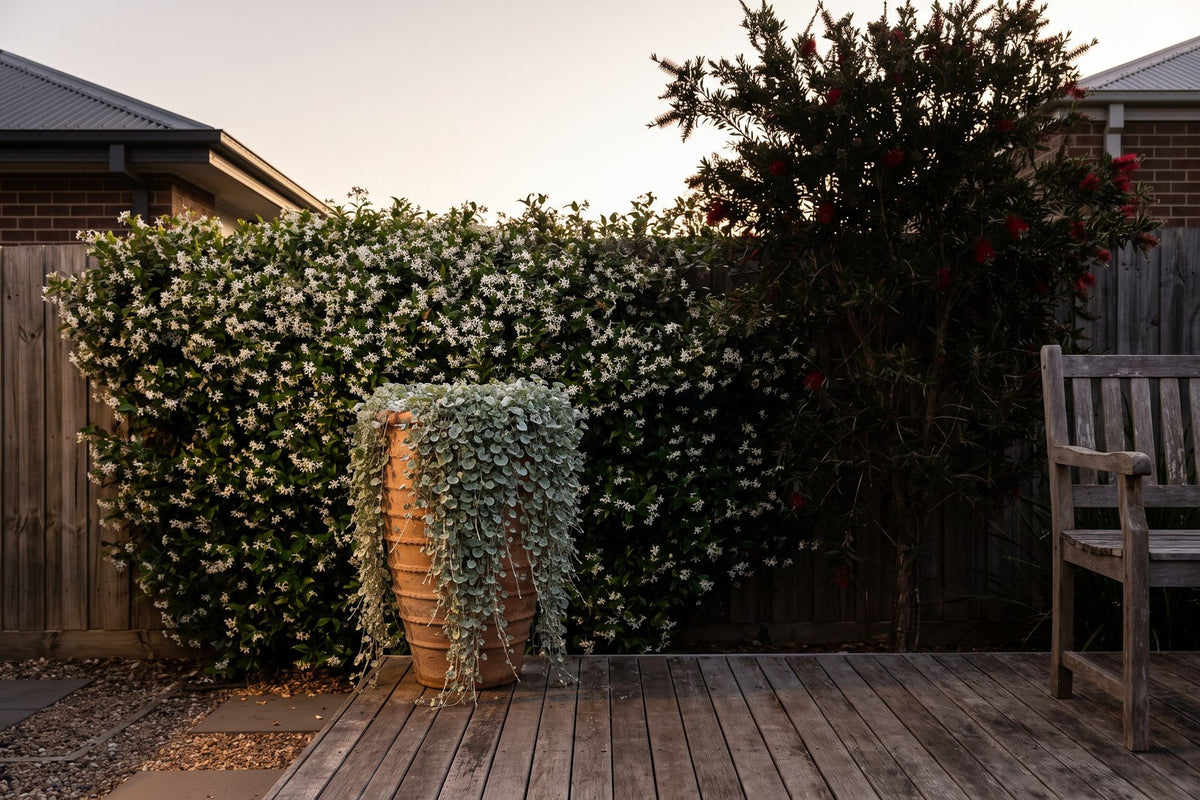
An Australian summer is often too hot to enjoy the garden until the sun drops. That has real consequences for a colour scheme:
- White and pale flowers glow at dusk while reds and purples disappear entirely.
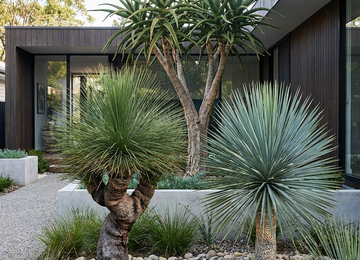
- Silver foliage - olive, westringia, Silver Falls, blue chalksticks - catches low light beautifully.
- Fragrance intensifies in the evening and carries further in warm humid air, so scented plants near seating earn their place twice.
- Uplighting a single feature plant does more for an evening garden than any daytime colour decision.
Green is the colour that creates calm
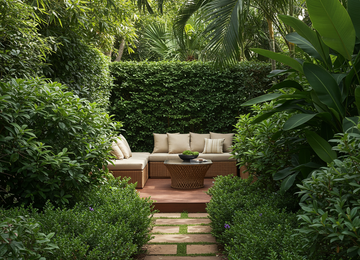
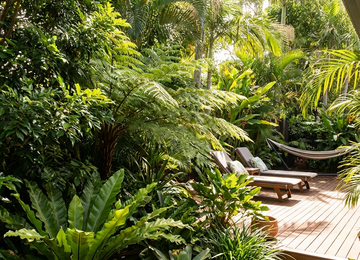
The most restful Australian gardens do it through foliage rather than flowers. Layered green - broad glossy leaves against fine ferny foliage against strappy lomandra - reads as cool and settled in a way a bed of bright annuals does not.
It is also far more practical. Flowers are seasonal and a heatwave can strip a display in an afternoon; foliage is there every day of the year.
Colour and heat
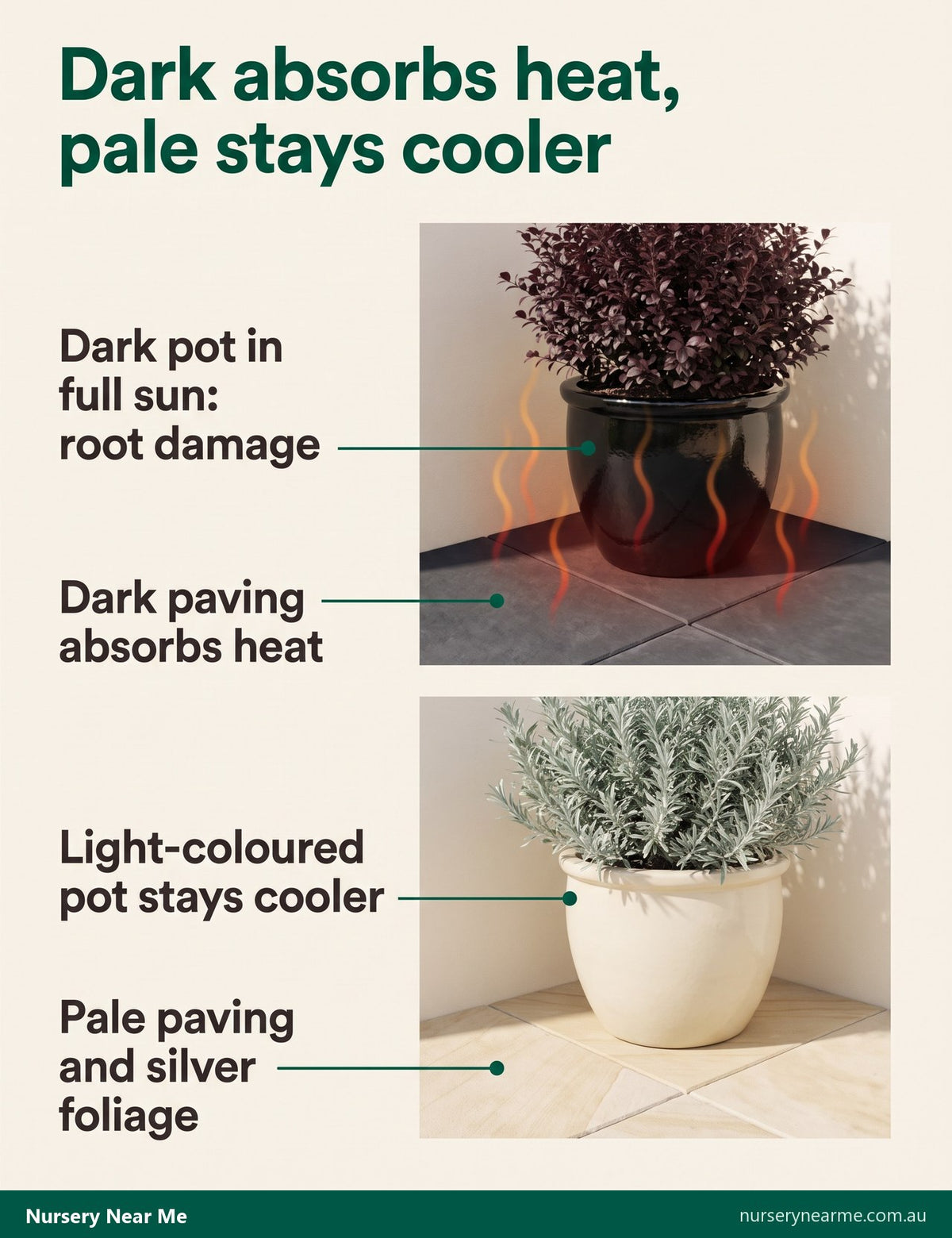
Not psychology but physics, and it matters in a small Australian courtyard. Dark foliage and dark hard surfaces absorb heat and raise the local temperature measurably. Pale paving, silver foliage and light-coloured pots keep a space genuinely cooler as well as looking cooler - and dark pots in full sun in Perth or Adelaide can reach temperatures that damage roots directly.
Restraint reads as calm

A limited palette repeated through the garden is more restful than many colours competing. Three or five of the same plant placed deliberately reads as design; one of everything reads as busy. In a small space this matters more, not less.
Related guides
Our guide to plants that change colour throughout the year is a useful starting point for the seasonal layer.
Clustering plants that share the same needs helps them thrive together, and our guide on how to layer plants like a professional landscaper covers the heights and spacings that make a grouped planting read as one composition.
A simple birdbath adds movement and sound, especially among the species listed in our guide to bird-attracting native plants.
Our guide to identifying and treating common plant pests and diseases covers what to do when a planting needs help.
For a warm accent, our guide to native plants with yellow flowers covers the wattles and hibbertias.
Ready to plant?
Colour in a garden is easiest to sustain when it comes from a mix of long-flowering shrubs and foliage that never needs a season off. Browse our flowering plants for colour to build the flowering layer, and our variegated range for the foliage that carries the scheme between flushes.


