

Heavy clay is the most common difficult soil in Australian gardens and the most misunderstood. It holds water and nutrients far better than sand, but it waterlogs after storms, sets like concrete through summer and suffocates roots that were never built for it. The answer is rarely to replace the soil. Choose plants that evolved on floodplains and creek flats, plant them so the crown sits above the wet, and a clay block becomes an easy garden.
Quick facts
| Plant | Mature size | Position | Soil | Water | Climate zones |
|---|---|---|---|---|---|
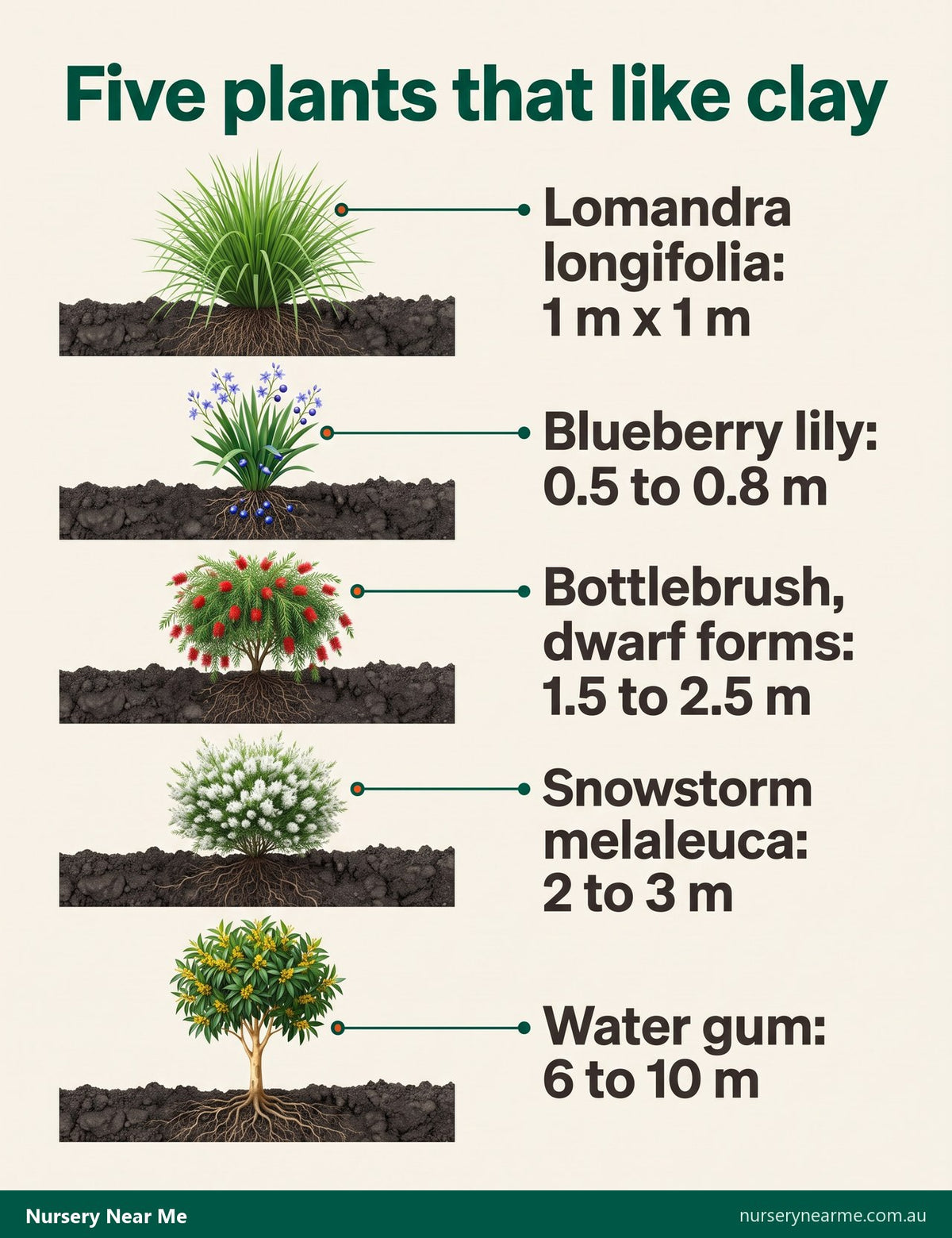
| Lomandra longifolia | 1 m x 1 m | Sun to part shade | Heavy clay, brief inundation | Low | Subtropical to cool temperate |
| Water gum (Tristaniopsis laurina) | 6-10 m x 4-6 m | Sun to part shade | Clay, tolerates wet feet | Moderate | Brisbane to Melbourne |
| Bottlebrush (Callistemon viminalis) | 1.5-2.5 m x 1.5-2 m dwarf forms | Full sun | Seasonally wet clay | Low | Subtropical to temperate |
| Snowstorm melaleuca | 2-3 m x 2 m | Full sun | Wet or dry clay | Low | Subtropical to temperate |
| Sweet viburnum | 4-5 m x 3 m, hedged 2-3 m | Sun to part shade | Clay with improved surface | Moderate | All mainland capitals |
| Blueberry lily (Dianella caerulea) | 0.5-0.8 m x 0.5 m | Sun to part shade | Clay and clay loam | Low | Most of mainland Australia |
Choosing the right plants for clay
Not all clay behaves the same way, so start with a five-minute test. Drop a dry, pea-sized crumb of soil into a glass of rainwater and leave it overnight. If the water stays clear and the crumb holds together, you have structured clay: dense but stable, and gypsum will do almost nothing for it. If the water turns cloudy and the crumb melts into a halo, the clay is dispersive, and gypsum at roughly 1 kg per square metre will genuinely improve it. Our guide to identifying soil types covers the rest of the checks.
The plants that succeed on clay almost all come from habitats that flood. Lomandra, dianella, water gum, bottlebrush and paperbark grow along creek lines and river flats where soil is heavy and periodically saturated, so their roots tolerate low oxygen for days. Lilly pillies, viburnum, photinia and crepe myrtle are not floodplain plants but are vigorous enough to push through dense soil once the top 200 mm drains.
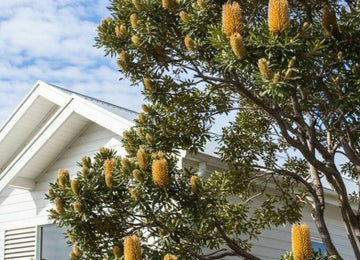
Be equally clear about what will fail. Grevilleas, banksias and most other Proteaceae come from sharply drained sandy country and are usually lost to Phytophthora root rot in the second wet season. Lavender, rosemary and olives sulk, and agaves rot at the base. If you want those, build a raised bed 300 mm deep, fork the clay below it first so the layers connect, and fill with quality garden soil rather than pure compost.
How to plant
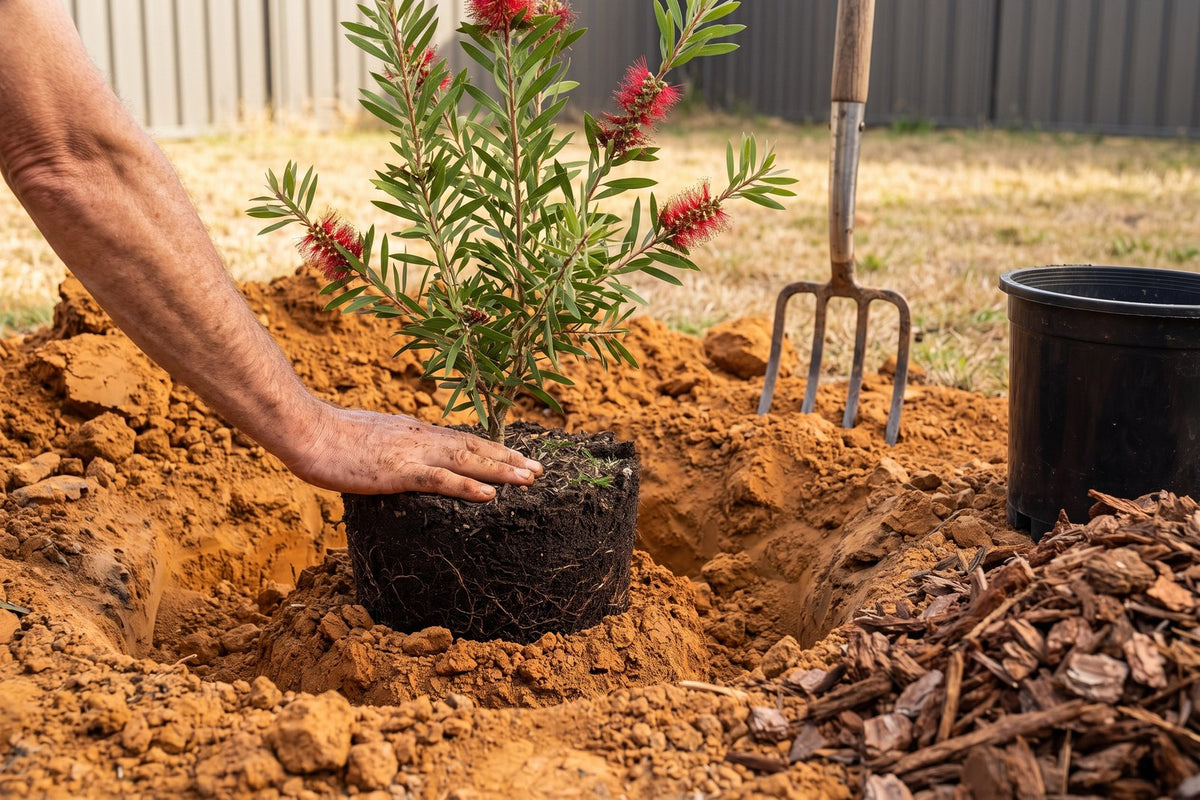
The biggest mistake on clay is digging a generous hole, filling it with rich compost and planting into that. It creates a sump: water runs through the loose mix, hits the clay wall and sits there, and the plant drowns in what looks like the best soil in the garden. Dig a hole no deeper than the root ball and two to three times as wide, and score the sides with a fork so the spade does not leave a glazed, impermeable face.
Set the plant high. On genuinely heavy ground, sit the top of the root ball 50-100 mm above the surrounding soil, or plant into a mound 300 mm high and a metre across. Backfill with the soil you dug out mixed with no more than about 20 per cent compost, so roots meet a gradual transition rather than a hard boundary. Water in with a full bucket, then mulch 75 mm deep with coarse bark, kept 100 mm clear of the trunk.
Timing matters more on clay than any other soil, because working it wet destroys its structure for years. Wait until it crumbles rather than smears, which in most of the country means early autumn or the tail of winter. Our notes on preparing soil before planting go further.
Ongoing care
Watering
Clay holds two to three times as much plant-available water as sand, so water less often and for longer. Push a screwdriver in beside the plant: if it slides easily to 100 mm the soil is still moist. New plantings need a deep soak twice a week through their first summer, then weekly, then rainfall alone for the tough species listed above. Frequent shallow watering keeps clay soggy at the surface and bone dry below.
Feeding
Clay is naturally nutrient-rich because its fine particles hold onto cations, so it needs less fertiliser than sand, not more. Feed once in early spring and again in early autumn with a complete controlled-release fertiliser, and top up mulch annually so earthworms keep drawing organic matter down. Grevilleas and banksias are phosphorus-sensitive, but bottlebrush, paperbark, lomandra and lilly pilly are not, so a standard garden fertiliser suits everything here.
Pruning
Tip prune bottlebrush and melaleuca straight after flowering, because cutting into bare old wood on these species recovers slowly. Trim viburnum hedges in early spring and again in late summer. Prune crepe myrtle only to remove crossing branches in winter, never back to knuckled stubs. Lomandra and dianella need nothing for three or four years, then a hard cut to 150 mm in early spring.
Common problems and fixes
Yellow leaves after a wet week. Waterlogged clay loses nitrogen quickly and roots stop working. Do not fertilise into wet soil; wait for it to drain, apply a light liquid feed, and add a shallow swale if the spot floods every year. Our guide to waterlogged gardens covers the drainage options.
Sudden collapse in warm, wet weather. Usually Phytophthora root rot, and nearly always fatal. Replant with a floodplain species on a mound rather than trying to rescue the position.
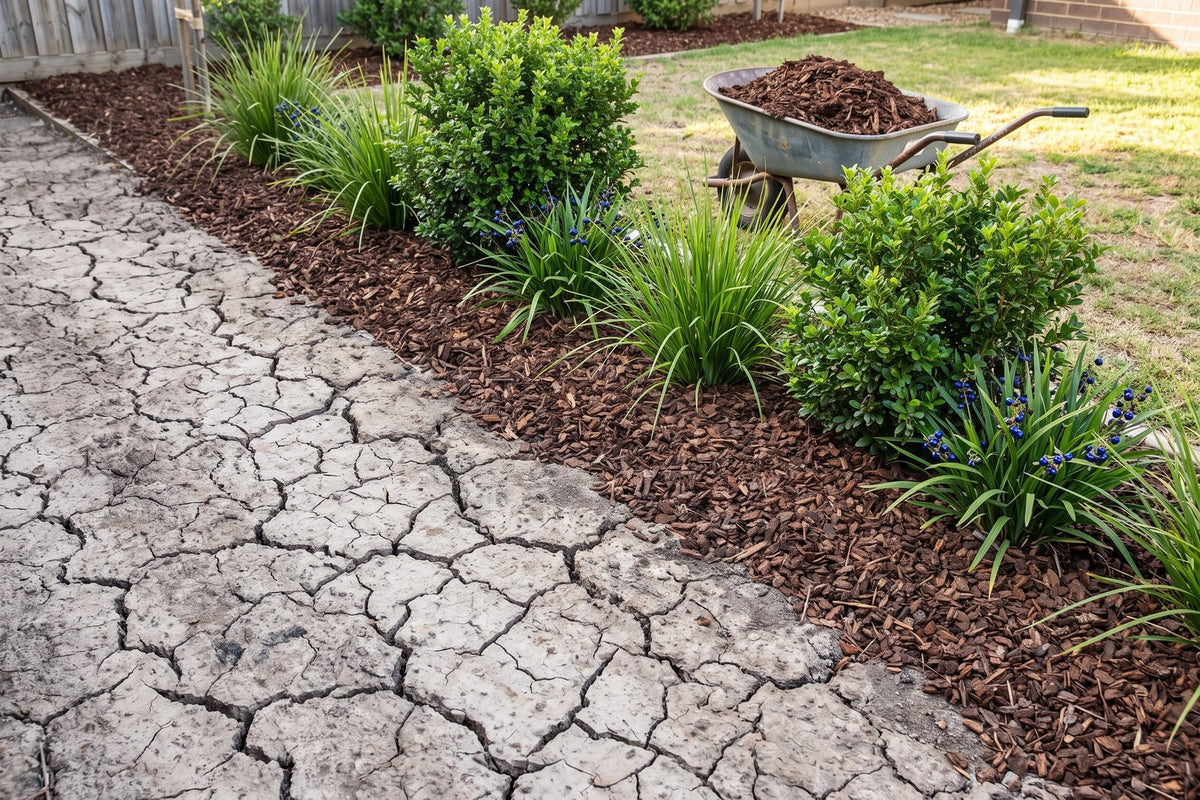
A hard crust and deep cracks in summer. Bare clay seals over and sheds water. Keep the surface permanently mulched and plant dianella or lomandra between shrubs so soil is never exposed.
Pale new growth with green veins. On alkaline clay this is iron deficiency. Treat with chelated iron and composted pine bark.
Frequently asked questions
Will adding sand fix heavy clay soil?
No, and small amounts make it worse, because fine clay particles simply fill the gaps between the sand grains. You would need to add more than half the soil volume as coarse sand to change the texture, which is impractical in a garden bed. Organic matter, gypsum on dispersive clay, permanent mulch and raised planting all deliver far more improvement for the effort involved.
How do I know if my soil is really clay?
Take a handful of moist soil and roll it into a ribbon between thumb and forefinger. Sand will not hold together at all, loam forms a short ribbon of 15-25 mm before breaking, and heavy clay forms a smooth, shiny ribbon 50 mm or longer. Clay also feels slippery rather than gritty, stains your fingers and holds a boot print for days after rain.
Do Australian native plants grow in clay?
Many do, provided you pick species from the right habitat. Lomandra, dianella, bottlebrush, paperbark, water gum, she-oak and lilly pilly all grow naturally on heavy soils along waterways. The natives that fail are the sandy heath and woodland group, particularly grevilleas, banksias, boronias and most Western Australian species, which need sharp drainage and rot readily in dense soil. Our list of plants for poor soil overlaps usefully.
When is the best time to plant into clay?
Early autumn is the best window across most of Australia. Soil is still warm enough for roots to grow, evaporation has dropped, and plants get a full cool season to establish before their first summer. Late winter into early spring is second best. Avoid mid-winter planting in cool temperate areas, when clay is saturated and digging wrecks its structure.
Ready to plant?
Clay is a starting point, not a life sentence. Pick from the floodplain group, plant high, keep the surface mulched, and the soil that drowns a grevillea will grow a water gum faster than any sandy block could. Browse our hardy plants for tough spots, or start with a long leaf lomandra for the edges, a water gum for shade and a Captain Cook bottlebrush for flowers. The full Australian natives range has more options for heavy ground.


