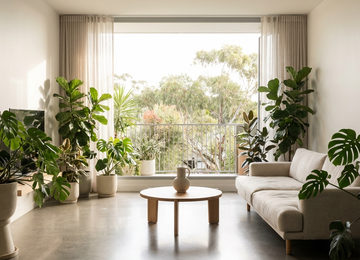
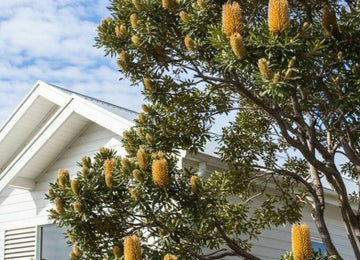


Colour in a garden comes from a short list of decisions: which colours suit the light, what flowers in each season, and how the plants are layered so the display reads from the house. This guide covers how to plan year round colour in an Australian backyard, with the plants that carry it.
Start with colours that suit Australian light
Our light is strong, and it changes how colour reads. Hot reds, oranges and golds hold up in full sun and sit naturally with the landscape. Pale pastels bleach out at midday and belong in shade or in cool climate gardens. White comes into its own at dusk, which is when most people use the garden in summer. Pick two or three colours and repeat them; one of everything reads as clutter.
Native plants supply the strong colours without effort: grevilleas, kangaroo paws and bottlebrushes, covered in all about callistemon. For the boldest accent, pick from our guide to native plants with red flowers.
Layer by height
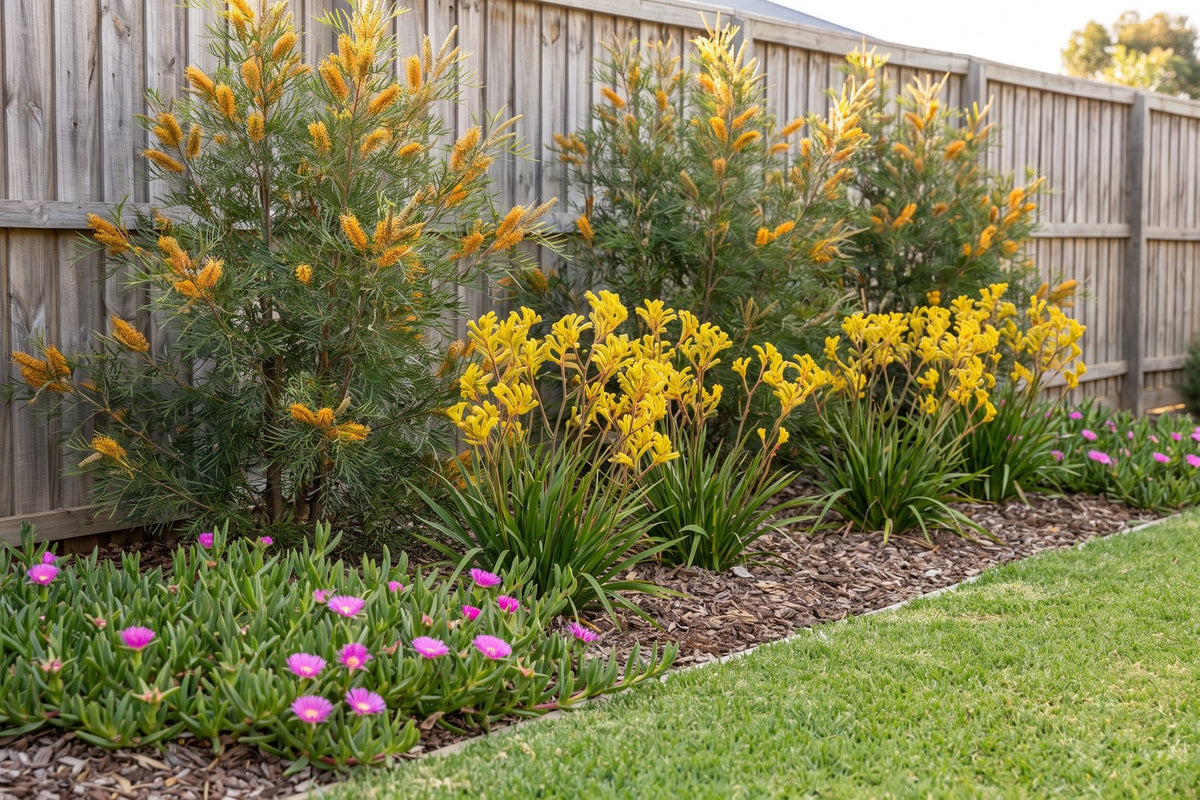
A bed shows the most colour when every plant can be seen. Put the tall plants at the back, the mid height shrubs in the middle and the low growers at the front.
| Layer | Plants |
|---|---|
| Back | Banksias, grass trees, tall grevilleas and small flowering trees |
| Middle | Waratahs, kangaroo paws, compact callistemons, camellias |
| Front | Pigface, native violet, native daisies, lomandra and coastal rosemary for edging |
| Vertical | Hardenbergia and other climbers on a fence or trellis, with cascading plants over walls |
Plant in groups of three or five of the same thing. A drift of one colour carries across a yard where a single plant disappears.
Stagger the flowering through the year
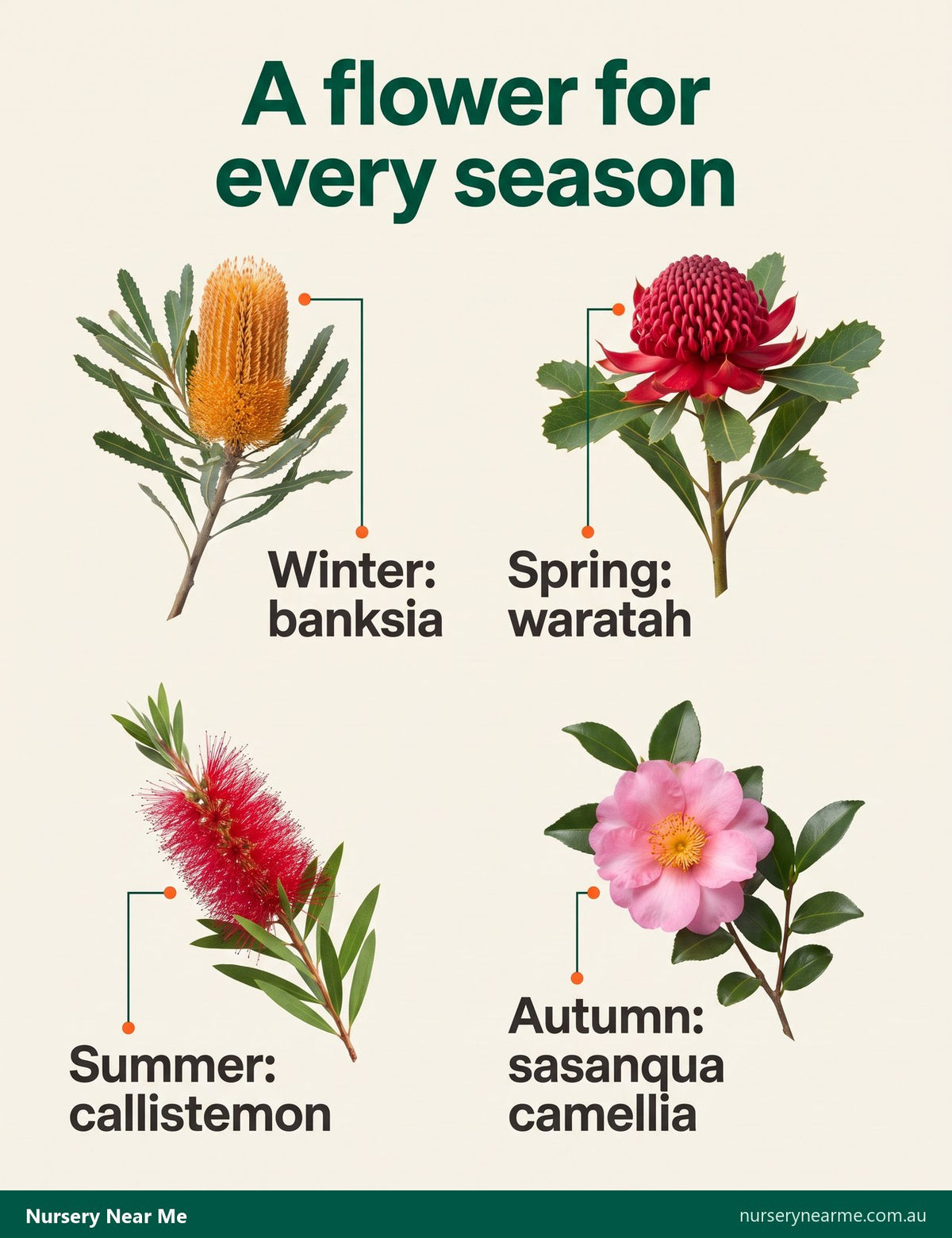
- Winter. Banksias, correas, wattles and hardenbergia flower when little else does, and they feed the birds through the lean months.
- Spring. Waratahs, kangaroo paws, native daisies and most grevilleas are at their peak.
- Summer. Callistemons, crepe myrtles, hibiscus and frangipani take the heat.
- Autumn. Sasanqua camellias, tibouchinas and the autumn leaves of crepe myrtles and ornamental pears.
Choose at least one plant for each season before buying anything else, and the garden will not have a dull month.
Use foliage for the colour that never stops
Flowers come and go; leaves are there every day. Silver westringia, lime and blue strappy plants, burgundy cordylines and the new red growth on lilly pillies give colour through every season, and they make the flowers beside them look brighter. Ornamental grasses add movement and catch the low light.
Two easy plants to start with
The Big Red Kangaroo Paw gives tall red flower spikes for months in full sun, and the Little John Bottlebrush gives compact crimson brushes at the front of a bed. Both bring honeyeaters in.
Keeping the colour coming
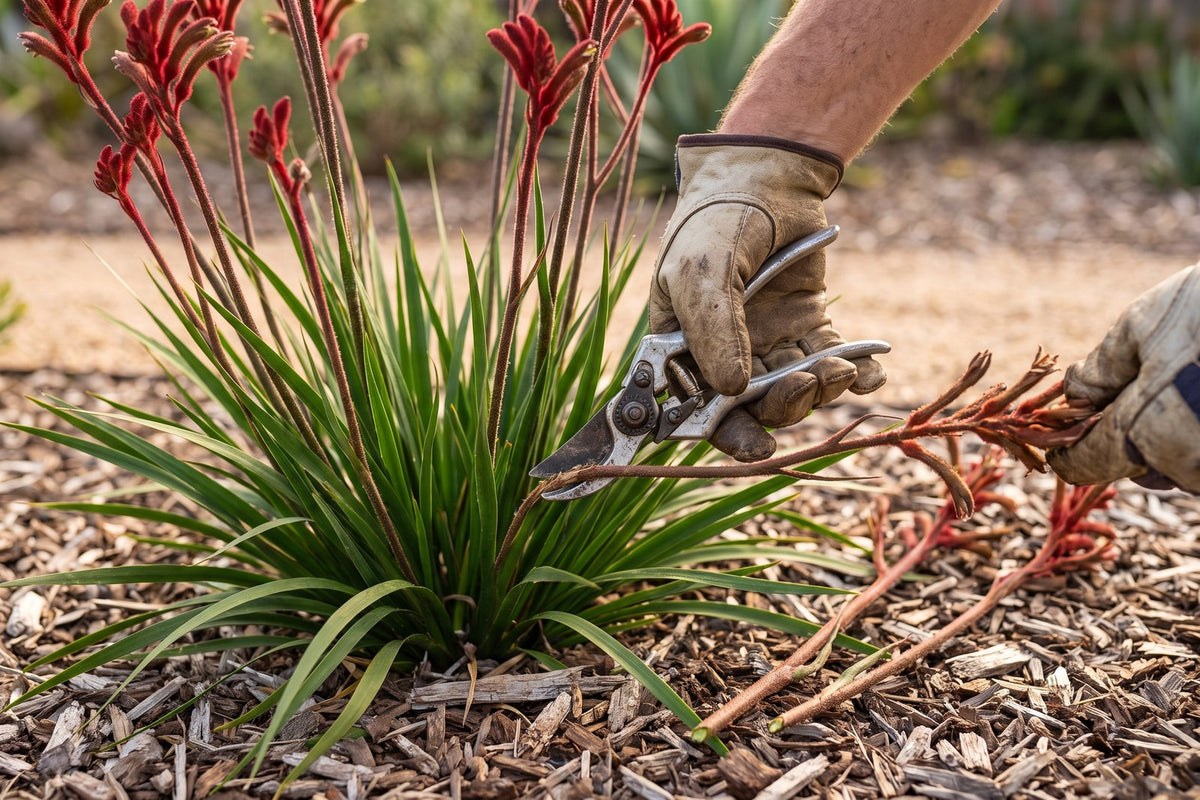
- Trim shrubs lightly after each flush of flowers. It keeps them dense and brings the next flush sooner.
- Cut spent kangaroo paw stems to the base.
- Feed natives with a low phosphorus fertiliser in spring, or not at all.
- Mulch 75 mm deep to keep the soil cool and the weeds down.
- In hot, dry gardens, work from our list of drought tolerant plants, so the colour does not depend on the hose.
Common questions
What are the best plants for strong colour?
Grevilleas, kangaroo paws and bottlebrushes for red, orange and gold in full sun, and camellias and azaleas for colour in part shade.
How do I get colour all year?
Choose at least one plant that flowers in each season, and add coloured foliage to carry the gaps.
How do I make a small backyard look colourful?
Limit the palette to two or three colours, repeat them, and use the fence: a climber adds colour without taking up ground.
Ready to plant?
Fill the beds from our flowering plants for colour, add structure with something from Australian native shrubs, and finish the edges with a groundcover.


