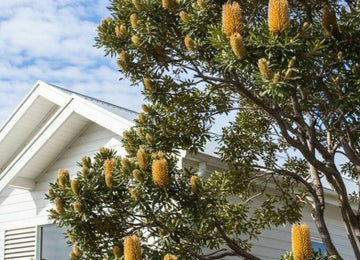
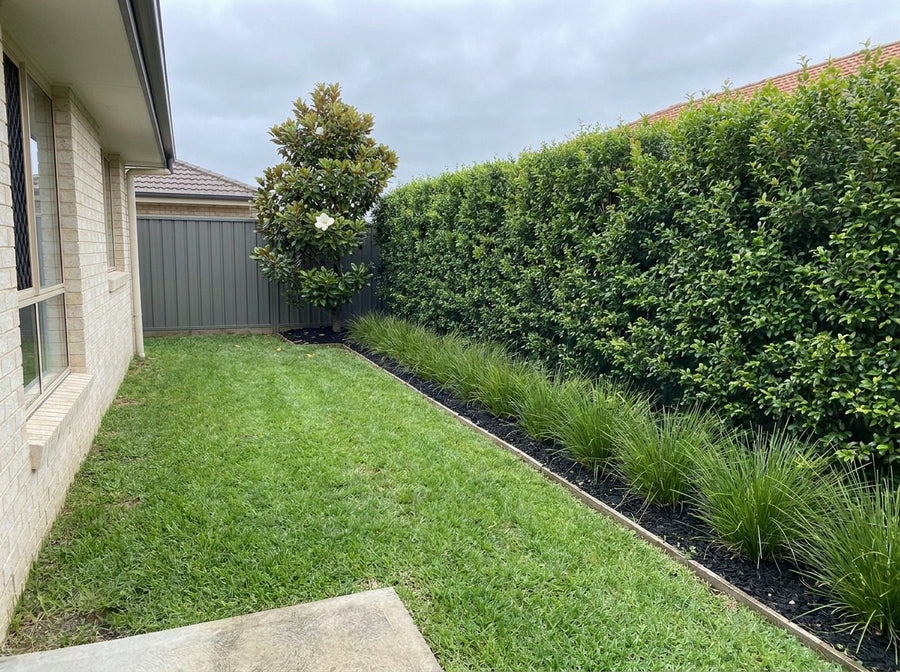
Callistemon Pink Champagne (Callistemon 'Pink Champagne') is the bottlebrush for gardeners who want the birds without the hard red. Soft pink brushes open along the stems and age to creamy white, so a single shrub carries two tones at once. It settles at about 2.5m tall and 2m wide, which is small enough for a suburban side boundary and large enough to screen a fence.
Why you'll love it
-
Two flower colours on one plant. New brushes open soft pink and fade to cream as they age, giving a longer, softer display than a standard red bottlebrush.
-
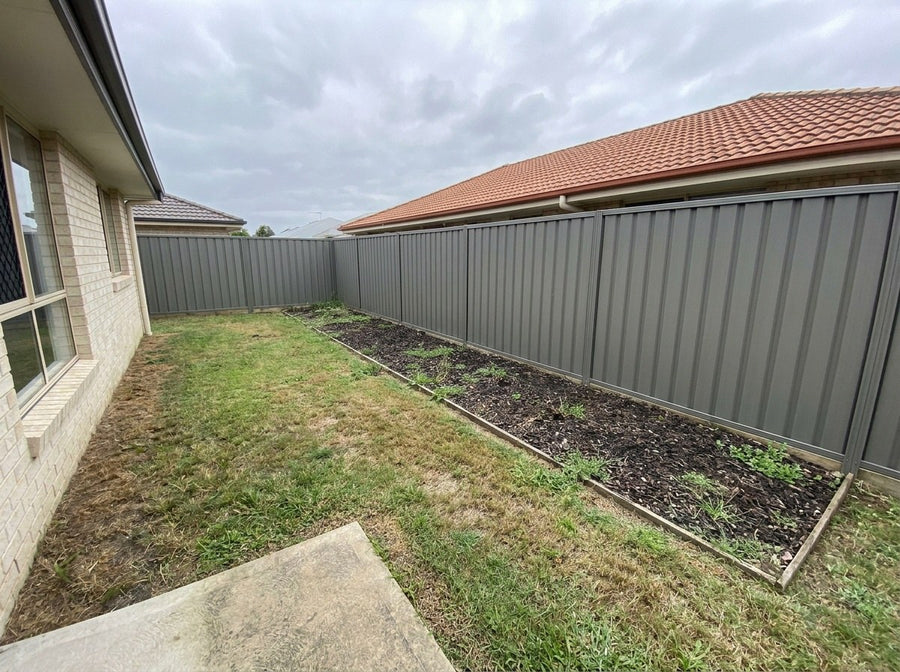
A screen that fits a small block. At 2.5m by 2m it fills a boundary without taking the whole garden bed.
-
Honeyeaters find it fast. The nectar rich brushes bring in wattlebirds and lorikeets, and bees work them steadily through the flush.
-
Genuinely tough. Frost hardy, drought tolerant once established, salt tolerant on coastal blocks, and unbothered by soil that stays wet in winter.
Where it works best
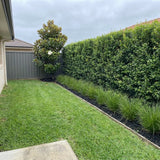
Screening and hedging. Plant 1.2m apart for a dense screen. At that spacing the canopies knit within two to three seasons while each plant keeps enough light at the base to stay furnished.
Small gardens. It is one of the few flowering natives that gives a bird attracting shrub, a screen and a feature plant in a footprint of about two square metres.
Feature planting. Left unclipped it takes a loose arching shape that suits a mixed native bed or a driveway corner.
Growing Callistemon Pink Champagne in Australia
Position and climate. Full sun for the heaviest flowering; part shade works but you will get fewer brushes and a looser habit. It is comfortable in subtropical, warm temperate, cool temperate and Mediterranean gardens, and it is frost hardy once established, so cold southern districts and the tablelands are fine.
Soil. Not fussy. It takes clay, sand and ground that holds water through winter, which is unusual in a shrub this drought tolerant. Mulch 75mm deep and keep it off the stem.
Water and feed. Water deeply twice a week through the first summer, then only in long dry spells. Use a low phosphorus native fertiliser in early spring, and skip general garden fertilisers.
Pruning. Trim straight after each flush, cutting back into the spent brushes rather than past them. It reshoots from old wood, so a leggy plant can be cut hard in spring and will recover.
What to expect when it arrives
This one is grown as tube stock. Tubes are young single stemmed plants, usually around 20 to 30cm tall, and they are the sensible choice for a long boundary because the cost per metre is low and small plants establish quickly. Expect two to three seasons to a working screen rather than instant privacy.
Tubes travel well, packed upright with the root plug intact. Pot them on or plant them out within a few days of arrival and keep the water up for the first month. Delivered Australia wide, delivery from $29.95, and every plant carries our 30 day healthy plant guarantee.
Plant care guides and related reading
Common questions
How far apart do I plant it for a hedge?
1.2m apart in a single row. Closer planting does not close the gap faster and only makes the lower branches shade each other out.
When does it flower?
The main flush is spring, with lighter repeat flowering through the warmer months in most gardens. Pruning immediately after each flush is what drives the next one.
Will it handle frost?
Yes. It is frost hardy once established and grows well in cool temperate gardens. Protect first year plants through their first winter with a light cover on the coldest nights.