
Air-Purifying Plants
Live plants delivered Australia wide. 30 day healthy plant guarantee.

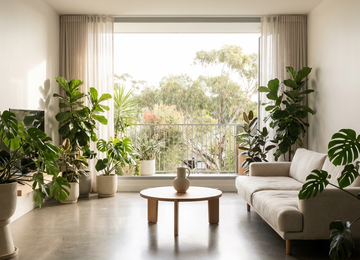
These are the classic air purifying plants: snake plants, peace lilies, palms, figs and pothos, over 200 easy care indoor varieties in all. One honest note first. A few pots will not filter a room the way the old laboratory studies implied, but a healthy indoor collection does lift humidity, soften a hard room and make a home feel better to live in. Choose on what actually matters: your light, your space, and whether pets share the house.
Which size? How many?
Size ladder: what each pot looks like on arrivalHeights on arrival sit under every size on the product page. Freight is quoted with multiple freight companies and passed on at cost.

Peacock Plant Calathea Calathea roseopicta 'Illustris'
19% off$29.39$36.29per plant, packs of 10Unit price /Unavailable-
Dwarf Jade Plant Crassula ovata 'Compacta' / Portulacaria afra
5 sizes, 140mm to 500mm
48% offFrom $214.95$413.95Unit price /Unavailable 
Elegant Fan Palm Licuala elegans
3 sizes, 300mm to 100L
32% offFrom $247.95$364.95Unit price /Unavailable-
Cascade Palm Chamaedorea atrovirens
4 sizes, 140mm to 400mm
13% offFrom $132.95$151.95Unit price /Unavailable -
Assorted Anthurium Anthurium spp.
4 sizes, 100mm to 250mm
85% offFrom $551.79$3,625.49per plant, packs of 10Unit price /Unavailable -
Japanese Birds Nest Fern Asplenium nidus Osaka
2 sizes, 140mm to 200mm
42% offFrom $34.79$59.99per plant, packs of 10Unit price /Unavailable -
Chocolate Queen Cordyline Cordyline fruticosa 'Chocolate Queen'
3 sizes, Tube to 200mm
44% offFrom $23.29$41.69per plant, packs of 10Unit price /Unavailable -
New Guinea Shield Plant Aglaonema 'New Guinea Shield'
34% off$52.99$80.32per plant, packs of 6On backorderUnit price /Unavailable -
Song of India Dracaena reflexa
8 sizes, 100mm to 300L
17% offFrom $115.95$138.95Unit price /Unavailable -
Chinese evergreen Aglaonema Dang Mongkol
2 sizes, Tube to 100mm
34% offFrom $22.95$34.95Unit price /Unavailable -
Chinese Money Plant Pilea peperomioides
2 sizes, Tube to 140mm
47% offFrom $19.95$37.95On backorderUnit price /Unavailable -
Mother in Law's Tongue Sansevieria trifasciata
3 sizes, 140mm to 300mm
30% offFrom $247.95$354.95Unit price /Unavailable -
Baby Rubber Plant Peperomia obtusifolia
4 sizes, 100mm to 250mm
23% offFrom $18.79$24.39per plant, packs of 10Unit price /Unavailable -
Emerald Gem Homalomena Homalomena 'Emerald Gem'
4 sizes, Tube to 250mm
47% offFrom $17.95$33.95Unit price /Unavailable -
Birkin Philodendron Philodendron 'Birkin'
4 sizes, Tube to 300mm
37% offFrom $21.95$34.95Unit price /Unavailable -
Baby Panda Bamboo Pogonatherum paniceum
5 sizes, Tube to 250mm
39% offFrom $15.95$25.95Unit price /Unavailable -
Sold out
Crocodile Fern Microsorum musifolium 'Lady Crocodyllus'
33% off$19.95$29.95On backorderUnit price /Unavailable -
Brasil Philodendron Philodendron hederaceum 'Brasil'
2 sizes, 140mm to 200mm
43% offFrom $21.79$38.29per plant, packs of 10Unit price /Unavailable -
Kiwi Pride Cordyline Cordyline fruticosa 'Kiwi Pride'
41% off$29.15$49.49per plant, packs of 6On backorderUnit price /Unavailable -
Caruba Black Cordyline Cordyline fruticosa 'Caruba Black'
3 sizes, Tube to 200mm
44% offFrom $17.95$31.95Unit price /Unavailable -
Corn Plant Dracaena fragrans Massangeana
5 sizes, 140mm to 500mm
20% offFrom $225.95$280.95Unit price /Unavailable -
Colorama Dragon Tree Dracaena marginata 'Colorama'
3 sizes, 100mm to 300mm
19% offFrom $115.95$142.95Unit price /Unavailable -
Imperial Red Philodendron Philodendron 'Imperial Red'
2 sizes, 200mm to 300mm
26% offFrom $66.95$89.95Unit price /Unavailable -
Fat Boy Philodendron Philodendron martianum
4 sizes, Tube to 300mm
21% offFrom $22.95$28.95Unit price /Unavailable -
Coral Cactus Rhipsalis cereuscula
2 sizes, Tube to 200mm
49% offFrom $16.95$32.95Unit price /Unavailable -
Purple Prince Ti Plant Cordyline fruticosa ‘Purple Prince’
3 sizes, Tube to 250mm
31% offFrom $33.49$48.82per plant, packs of 6Unit price /Unavailable -
Multi Planted Corn Plant Dracaena fragrans 'Massangeana'
5 sizes, 140mm to 500mm
21% offFrom $225.95$284.95Unit price /Unavailable -
Madagascar Palm Pachypodium baronii
45% off$30.95$55.95Unit price /Unavailable -
String of Pearls Senecio rowleyanus
5 sizes, Tube to 250mm
47% offFrom $58.15$109.82per plant, packs of 6Unit price /Unavailable -
Hope Philodendron Philodendron selloum x ‘Hope’
4 sizes, Tube to 300mm
23% offFrom $19.95$25.95Unit price /Unavailable -
Blushing Philodendron Philodendron erubescens
4 sizes, 100mm to 300mm
45% offFrom $80.95$145.95Unit price /Unavailable -
Alpine Junior Umbrella Tree Schefflera arboricola 'Alpine Junior'
2 sizes, 200mm to 300mm
50% offFrom $181.95$363.95Unit price /Unavailable


More information
What air purifying really means
The claim traces back to a 1989 NASA experiment in small sealed chambers. Research in real homes later found the effect tiny at normal plant densities; an open window does more for air quality than a shelf of pots. What healthy plants genuinely deliver is higher humidity, less echo and a space people consistently rate as calmer. Buy them for that, and treat cleaner air as a bonus.
How to choose: light first, then size, then pets
Light is the constraint most people ignore. In a bright room away from direct glass, the Fiddle Leaf Fig (Ficus lyrata) makes a 3m indoor tree, and Monstera deliciosa fills a corner as quickly. For dim rooms, the Cast Iron Plant (Aspidistra elatior) holds glossy 70cm foliage in deep shade and the Lady Palm (Rhapis excelsa) reaches 2.5m in the same low light; our low light indoor plants collection gathers the rest. If you forget to water, start with the Snake Plant, a 1m upright grower that tolerates drought, heat and neglect.
If cats or dogs chew foliage, choose plants carrying our Pet Friendly flag: Kentia Palm, Bamboo Palm, Lady Palm, Cast Iron Plant and Baby Rubber Plant. Peace lilies, pothos, philodendrons and figs do not, so start at the pet friendly indoor plants collection if that matters in your house.
Pots, position and repotting
A 200mm to 250mm pot suits benchtop plants; floor plants like palms and figs want 300mm to 400mm. Every pot needs a drainage hole and a saucer, no exceptions. Repot in spring every two to three years into a pot about 50mm wider, using a quality indoor mix. Keep plants clear of heaters and air conditioning vents and out of hot afternoon sun through glass, and give each a quarter turn every few weeks so growth stays even.
Care that keeps them alive
Overwatering kills more indoor plants than everything else combined. Push a finger into the mix and water only when the top 2cm to 3cm is dry, then water thoroughly and let the excess drain. Feed half strength liquid fertiliser monthly from spring to autumn, none in winter. Wipe dust off the leaves every month or two, since a dusty leaf catches noticeably less light. Everything in the wider indoor plant range follows the same basic rhythm.
Common questions
Which air purifying plant is best?
Snake plants and peace lilies top the famous lists, and both are genuinely hard to kill. In practice the best choice is whichever plant suits your light and your watering habits, because a thriving plant beats a struggling one from a list.
How many plants do I need to clean a room?
Honestly, more than any home could hold: researchers estimate dozens per square metre to shift measured air quality. Three to five well grown plants will change how a room feels, which is the outcome most people actually want.
Which indoor plants are safe for pets?
The Kentia Palm, Bamboo Palm, Lady Palm, Cast Iron Plant and Baby Rubber Plant are all listed as non toxic to cats and dogs. Our guide to pet safe indoor plants covers more options.
Why are the leaves turning yellow?
Usually overwatering, occasionally a dark corner the plant cannot tolerate. Check the mix first: if it is wet a week after watering, let it dry right out and water less often.
How does delivery work?
Delivered Australia wide, with delivery from $29.95 and no minimum order. Every plant carries our 30 day healthy plant guarantee.
