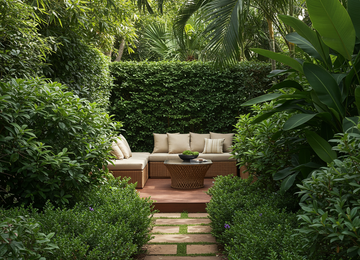
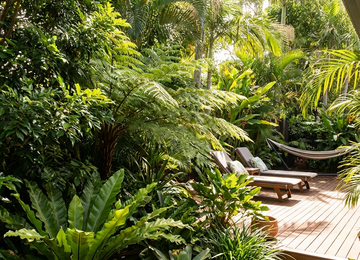
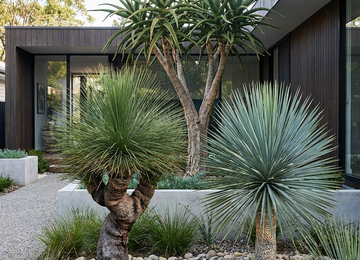
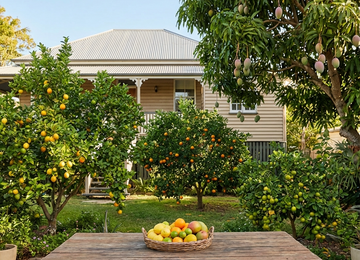


Most garden failures are planning failures: the wrong plant for the aspect, a tree over a sewer, or planting before the drainage is fixed. This guide sets out the order to plan a garden in Australian conditions, from the site survey to the last pot.
Start with the Australian constraints
Most garden planning guides are written for temperate northern hemisphere conditions and skip the things that actually determine success here. Work through these before choosing a single plant.
| Factor | Why it matters here |
|---|---|
| Aspect | North is sunniest, south is shadiest - the reverse of overseas advice |
| Afternoon sun | West-facing areas are the hardest position on most properties |
| Soil type | Sand in Perth, clay in Brisbane and Melbourne - different problems entirely |
| Soil pH | Alkaline limestone sands vs acidic high-rainfall soils |
| Water access | Restrictions apply periodically in most capitals |
| Frost | Determines whether half the plant list is even possible |
| Bushfire risk | In BAL-rated areas, planting near the house is regulated |
Do the site survey first
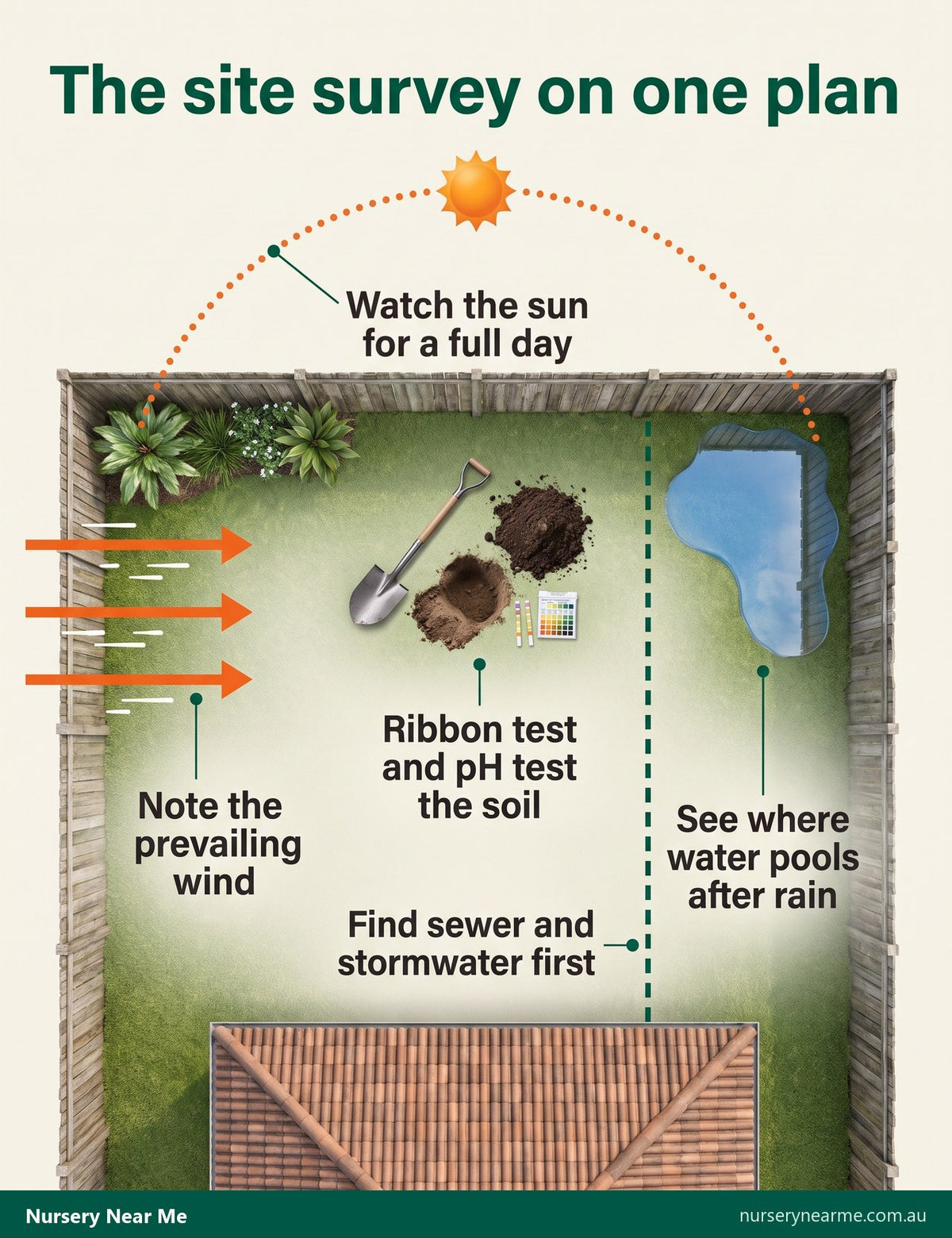
- Watch the sun for a full day, ideally in both summer and winter. Where it falls in July is very different to January.
- Do the ribbon test on your soil - moisten a handful from 150 mm down and press it into a ribbon. No ribbon means sand; over 50 mm means clay.
- Test the pH. Five minutes, and it explains a surprising number of future problems.
- Note the prevailing wind - hot northerlies inland, onshore wind at the coast.
- Find the services. Call Before You Dig, and note where sewer and stormwater run before planting anything with vigorous roots.
- Check where water pools after heavy rain, and where it never reaches at all.
Rules and approvals worth checking
- Tree protection. Most Australian councils protect trees above a certain height or trunk circumference, and removing one without a permit carries substantial fines.
- Pool barriers. Planting inside the non-climbable zone around a pool fence can affect compliance.
- Nature strips and verges. Council land in most of Australia, with rules on height and species.
- Bushfire-prone areas. BAL ratings affect what can be planted close to the house.
- Declared weeds. Some plants are legally required to be controlled, and requirements vary by state and council.
Plan in the right order
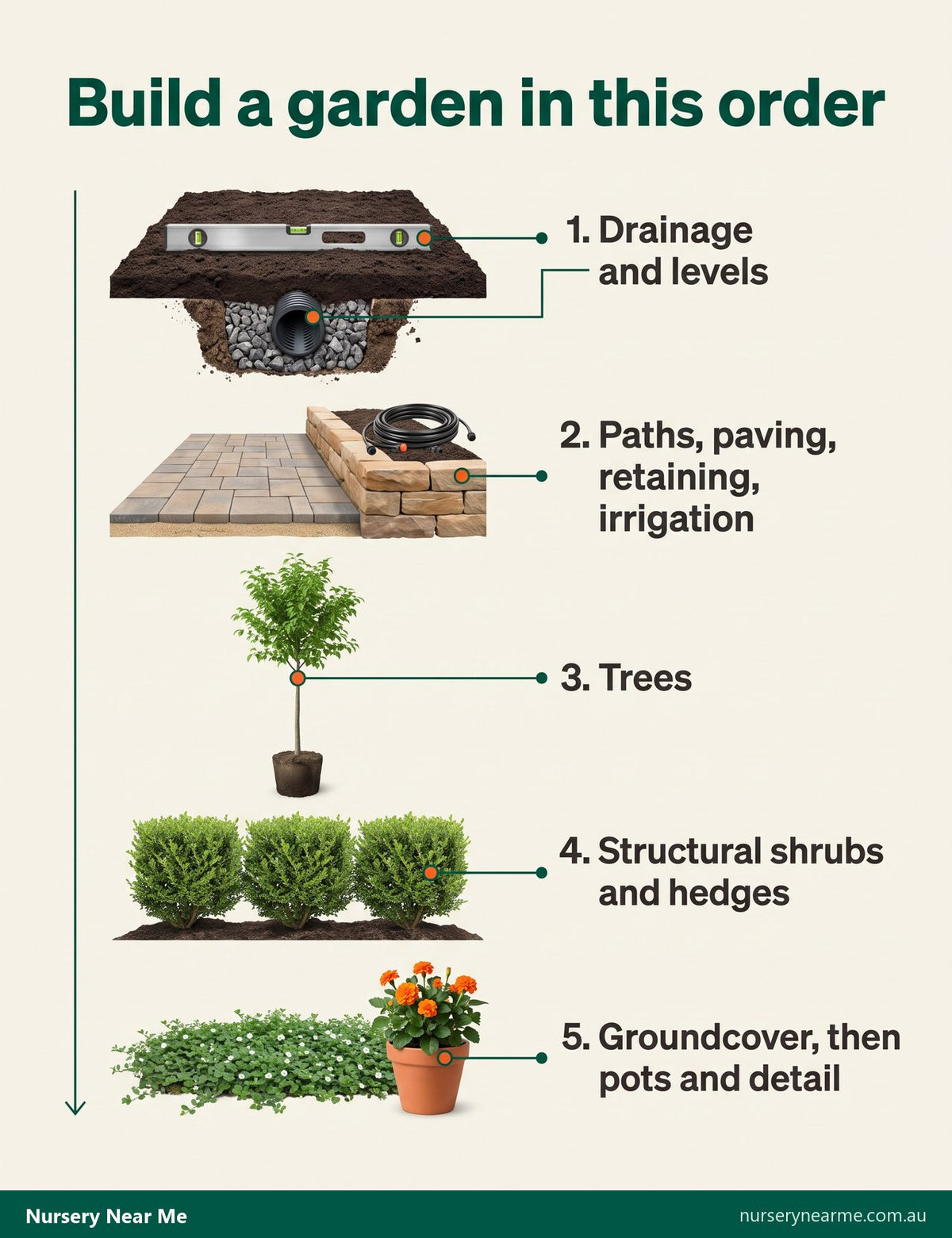
Most garden failures are sequencing failures rather than plant failures.
- Drainage and levels first. Fixing these after planting means starting again.
- Hard landscaping next - paths, paving, retaining, irrigation lines.
- Trees third. They take longest and everything else works around them.
- Structural shrubs and hedges.
- Groundcover and mass planting.
- Pots and detail last, once the bones are in.
It helps to turn this sequence into a written checklist with a budget beside each step, materials and any trade work included; HomeTask, an Australian planning tool for home projects, is one way to keep the tasks and estimates in one place.
Design decisions that reduce work permanently
Group plants by water need rather than scattering thirsty plants through a dry garden. Reduce lawn to the area genuinely used and mulch or plant the rest. Repeat a limited palette of species rather than collecting one of everything - it reads as deliberate design and gives you fewer different care requirements to remember. And match plants to the conditions rather than trying to change the conditions, which is cheaper and lasts.
Plan for the mature size
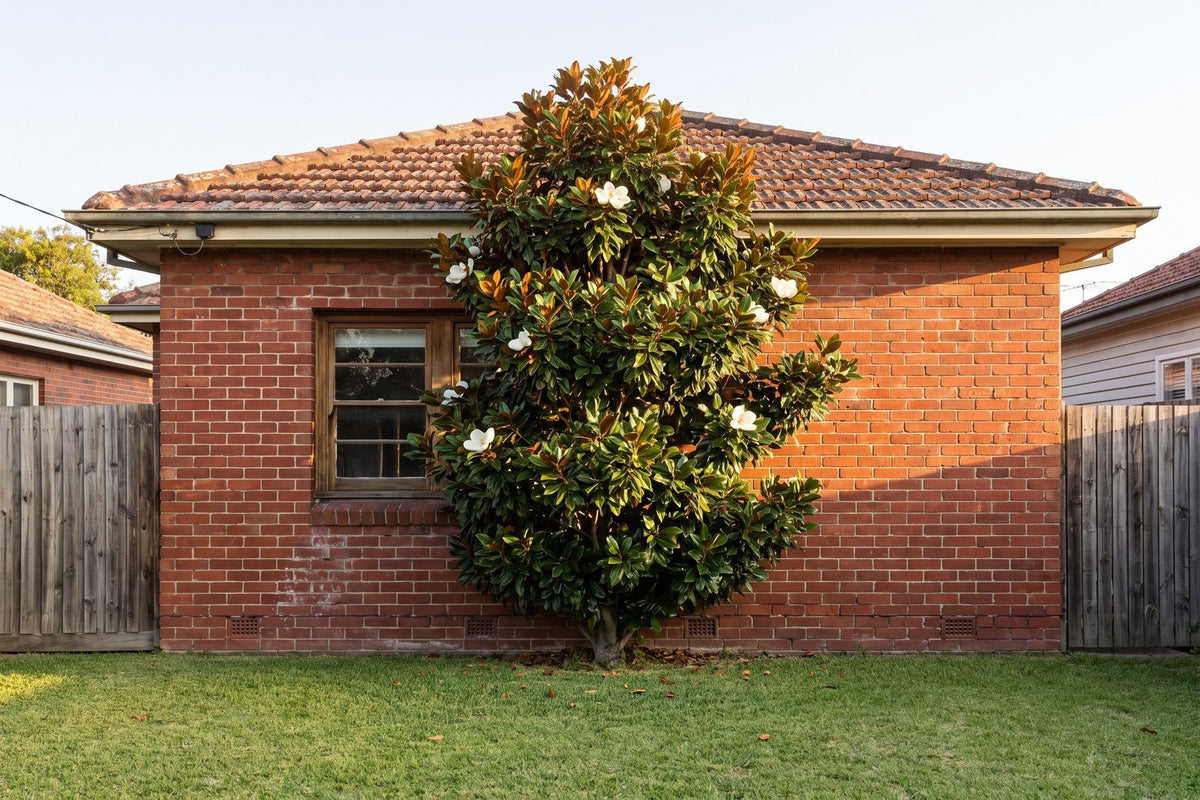
The single most expensive planning mistake in Australian gardens is planting for how things look in year one. Check mature height and width for everything, allow half the canopy width from buildings, and accept that a new garden looks sparse for two or three years. Overplanting to fill the space immediately means removing plants later - and the ones you remove are usually the ones you paid most for.
Related guides
If the block has drainage problems, awkward levels or a layout you cannot settle, Urban GreenSpace's guide to when to hire a landscape designer explains when it is worth bringing in a professional.
Once the layout is settled, how to plant a new garden bed covers the physical work in order, including spacing, hole preparation and planting windows by climate zone.


