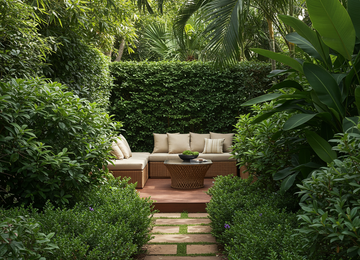
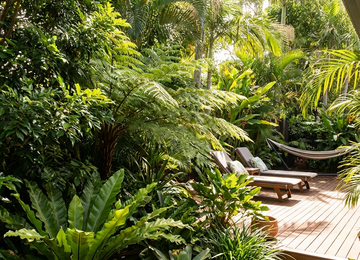
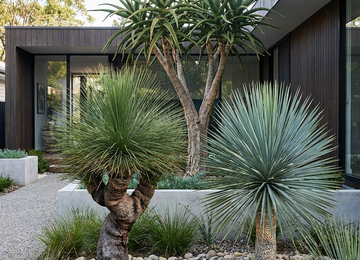
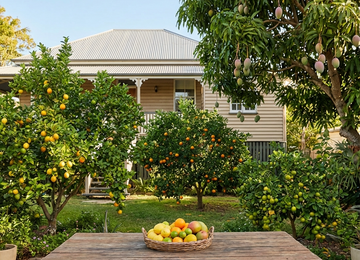


The front garden is the hardest position on most Australian properties: full sun, heat off the driveway and everyone looking at it. This guide covers what works in each aspect, the five changes that lift a front yard most, and the safety and council points to check.
The Australian front garden problem
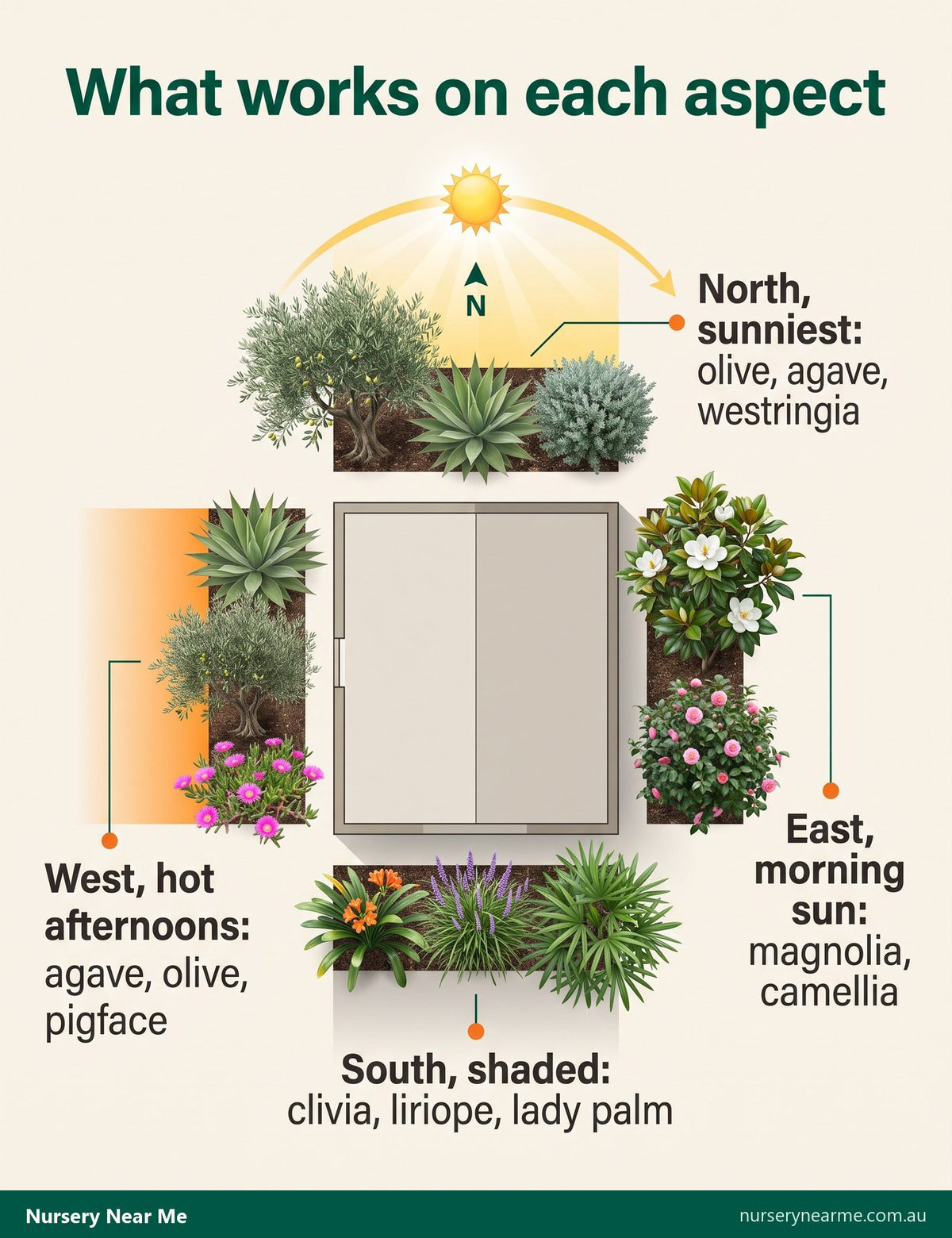
A large share of front gardens in this country face north or west and take full sun plus heat radiating off the driveway, the path and the house wall. It is the hardest position on most properties, and it is where soft-leaved planting dies repeatedly.
| Aspect | Conditions | What genuinely works |
|---|---|---|
| North-facing | Sunniest and hottest | Olive, agave, westringia, dietes, crepe myrtle |
| West-facing | Brutal afternoon sun, radiated heat | Agave, olive, dragon tree, pigface, red yucca |
| East-facing | Morning sun, afternoon shade | Magnolia, camellia, gardenia, tibouchina |
| South-facing | Shaded, bright indirect | Clivia, liriope, xanadu, lady palm |
These are the reverse of northern hemisphere advice - north is the sunny aspect here.
Five things that lift a front garden most
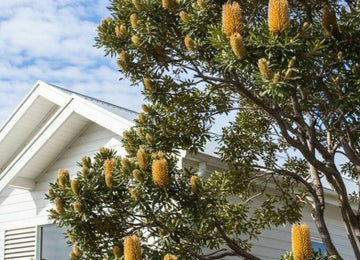
- One well-placed feature tree. A single crepe myrtle, olive or magnolia does more than a dozen shrubs, and mature trees measurably contribute to property value.
- Repetition. Three or five of the same plant reads as design; one of everything reads as clutter.
- Defined edges. A crisp line between bed and lawn or path makes ordinary planting look deliberate.
- Fresh mulch - the cheapest visual improvement available, at 75 mm.
- Evergreen structure so it looks the same in July as in January.
Plant for the conditions, honestly
A front garden that looks like ongoing work is a poor result. In a hot exposed position, agave, olive, westringia, lomandra, dianella and pigface with gravel mulch will look good permanently with no irrigation. Trying to keep hydrangeas or ferns alive there is an ongoing expense, and it will show.
Watch the lime near paths and walls
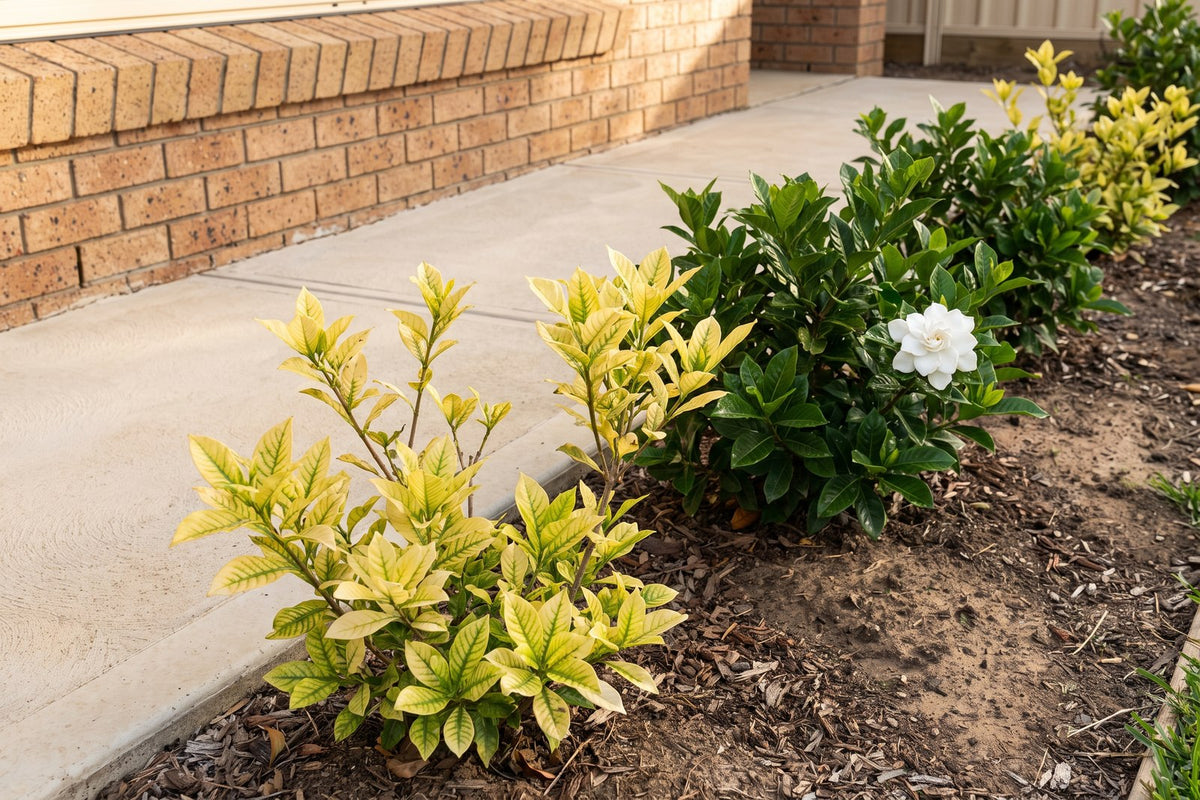
Mortar, concrete and paving leach lime into surrounding soil for years, raising pH sharply within about a metre. Gardenias, camellias and azaleas beside a masonry path will yellow persistently no matter how they are fed. Test at the actual planting spot and choose tolerant plants there - or use pots.
Safety and sight lines
- Nothing spiny beside the path or letterbox. Agave and spined yucca belong in open beds well back from where people walk.
- Keep growth low near the driveway so you can see the footpath when reversing out.
- Avoid slippery litter over paving - fruiting plants and heavy flower drop are a hazard when wet.
Check the verge rules
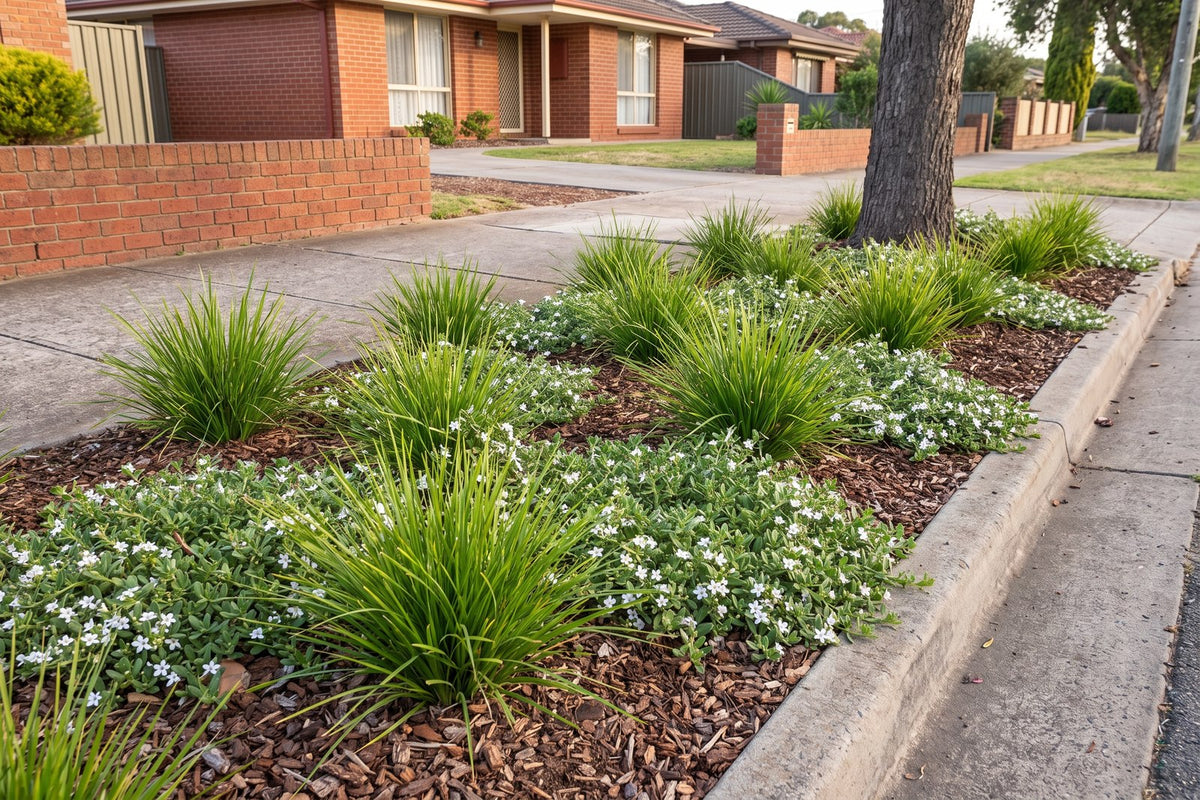
The nature strip is council land in most of Australia, with rules on height near driveways and intersections. Many councils now actively encourage verge planting and some provide free plants or subsidies - worth asking before you buy anything.
By city
- Brisbane and the Gold Coast - subtropical warmth suits lilly pilly, murraya and golden penda out front; drainage matters in wet summers.
- Sydney - westringia, lomandra and dianella handle coastal exposure and reflected heat.
- Melbourne and Canberra - frost hardiness matters. Ornamental pear, crepe myrtle, photinia and olive all cope.
- Perth and Adelaide - alkaline sandy soil plus dry heat. Olive, agave, dietes and pigface are the reliable performers.
- Darwin and tropical Queensland - palms, pandanus and cordyline suit; avoid anything needing winter chill.
Related guides
For the view from the street, our front yard kerb appeal planting guide works through hedges, feature trees and groundcovers that make a house look finished from the footpath.


