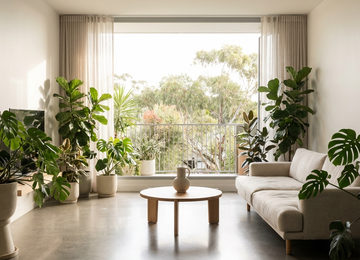


A room with plants in it feels calmer, and there is reasonable research behind that. The plants have to stay healthy to do it, though, and Australian homes are harder on them than most houseplant advice assumes. This guide covers what the evidence supports, which plants cope, where to put them and how to keep them alive.
What the evidence supports
There is good research linking greenery, indoors and out, with lower stress and better mood, and it is solid enough that many workplaces plan around it. Looking after a plant is also a small, regular task that many people find settling.
The claim that indoor plants clean household air is much weaker. The often quoted NASA research was done in sealed chambers, and later analysis found that a home would need an impractical number of plants in every room to match the effect of opening a window. Grow indoor plants because they are pleasant to live with, not as an air filter.
Light in Australian homes
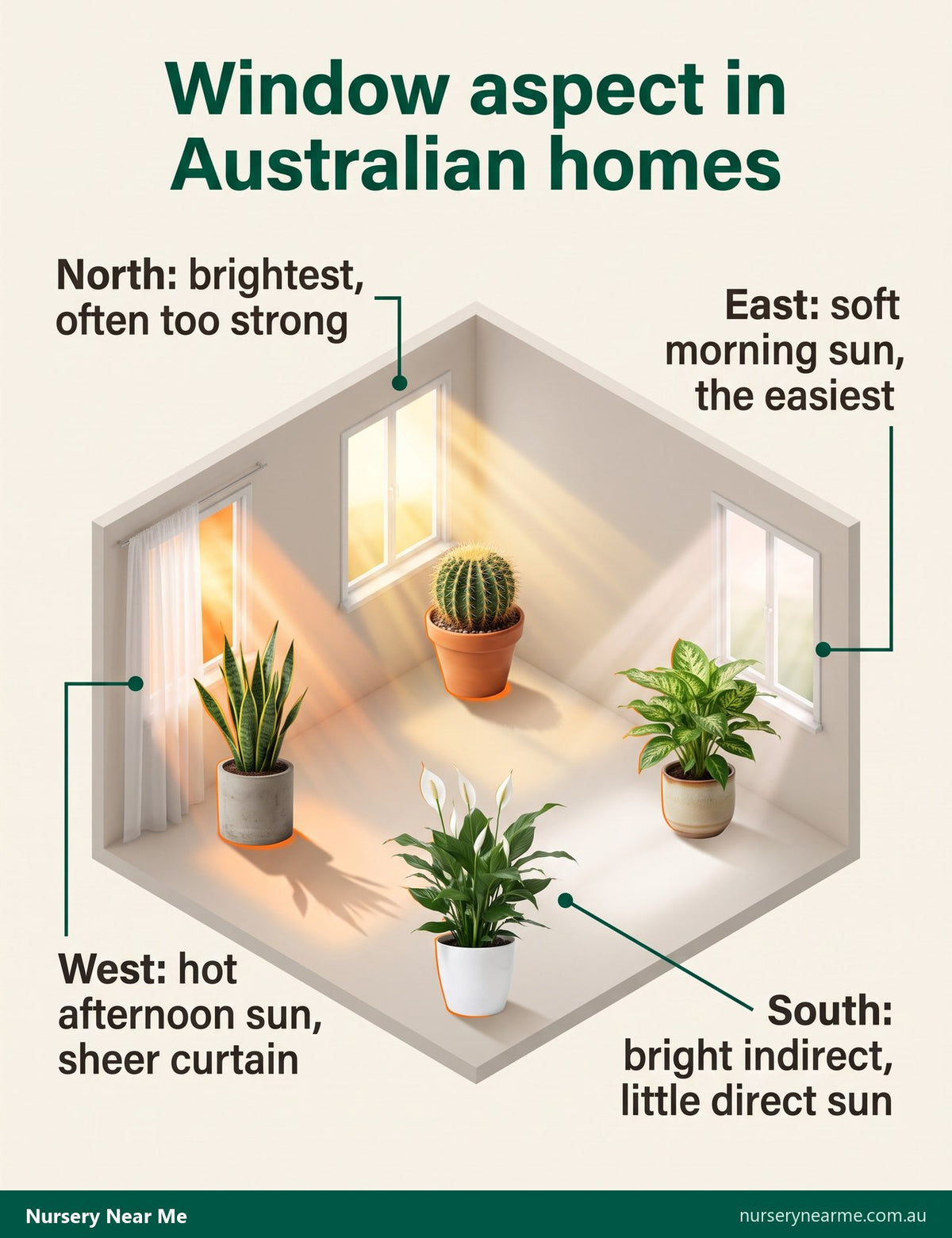
| Window aspect | Light here | Suits |
|---|---|---|
| North facing | Brightest, often too strong beside the glass | Succulents and cacti; filter it for others |
| East facing | Soft morning sun, the easiest to work with | Most indoor plants |
| West facing | Hot afternoon sun | Tough plants, behind a sheer curtain |
| South facing | Bright indirect light, little direct sun | Plants from our low light range |
This is the reverse of overseas advice. If you have read that south facing windows are the bright ones, that was written for the northern hemisphere.
Plants that cope
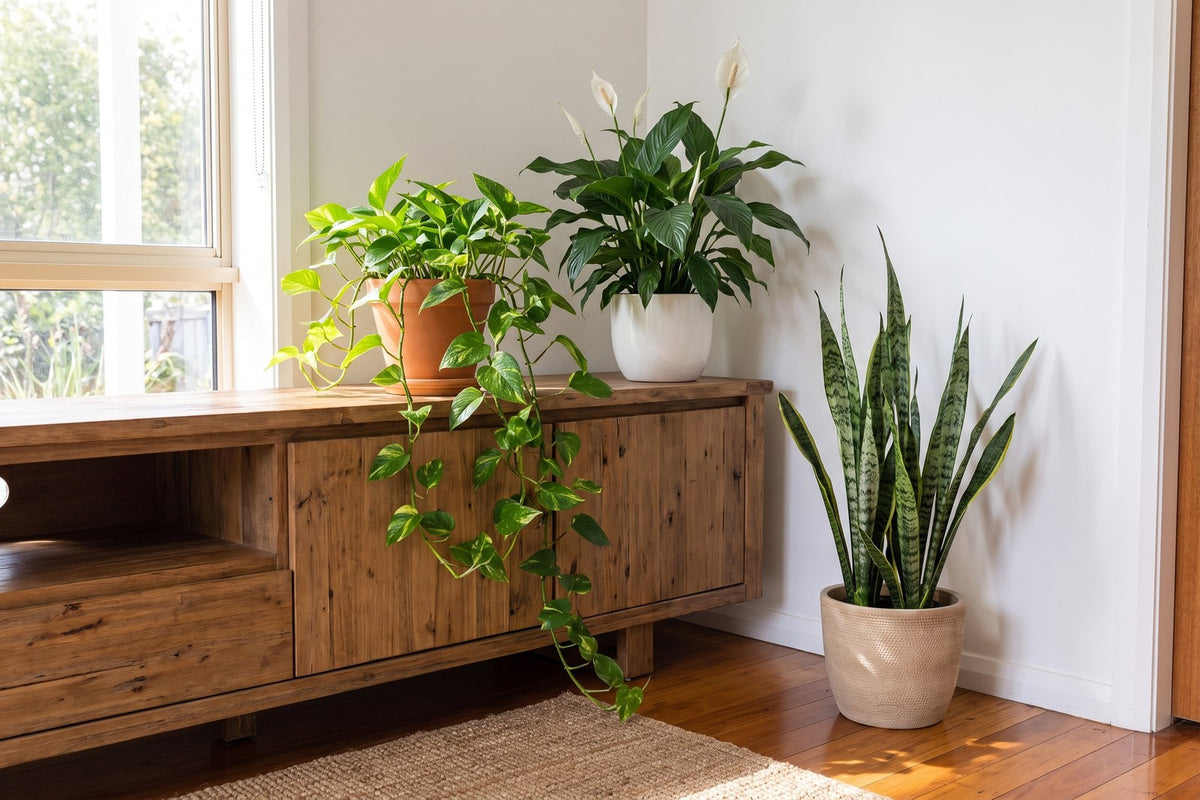
- Devil's ivy. Fast, forgiving and happy almost anywhere indoors. The rest of the pothos range behaves the same way.
- Snake plant and Zanzibar gem. The toughest options, tolerating low light and weeks without water.
- Peace lily. Flowers in low light and droops to show when it needs water.
- Philodendron. Heartleaf kinds trail from a shelf, and Xanadu makes a dense floor plant.
- Lady palm. One of the best palms for a shaded room.
- Bird's nest fern. The most forgiving fern indoors.
- Monstera. Bold leaves for a bright position out of direct sun.
- Spider plant. Very forgiving, and easy to share from its plantlets.
Scent
Scent does a lot for the mood of a room, but the plants best known for it are not indoor plants. Lavender needs full sun and open air and fails within weeks inside; grow it in a pot outside a door or window you open often. Indoors, a flowering peace lily or a pot of jasmine on a bright sill is more reliable.
Air conditioning is the hidden problem
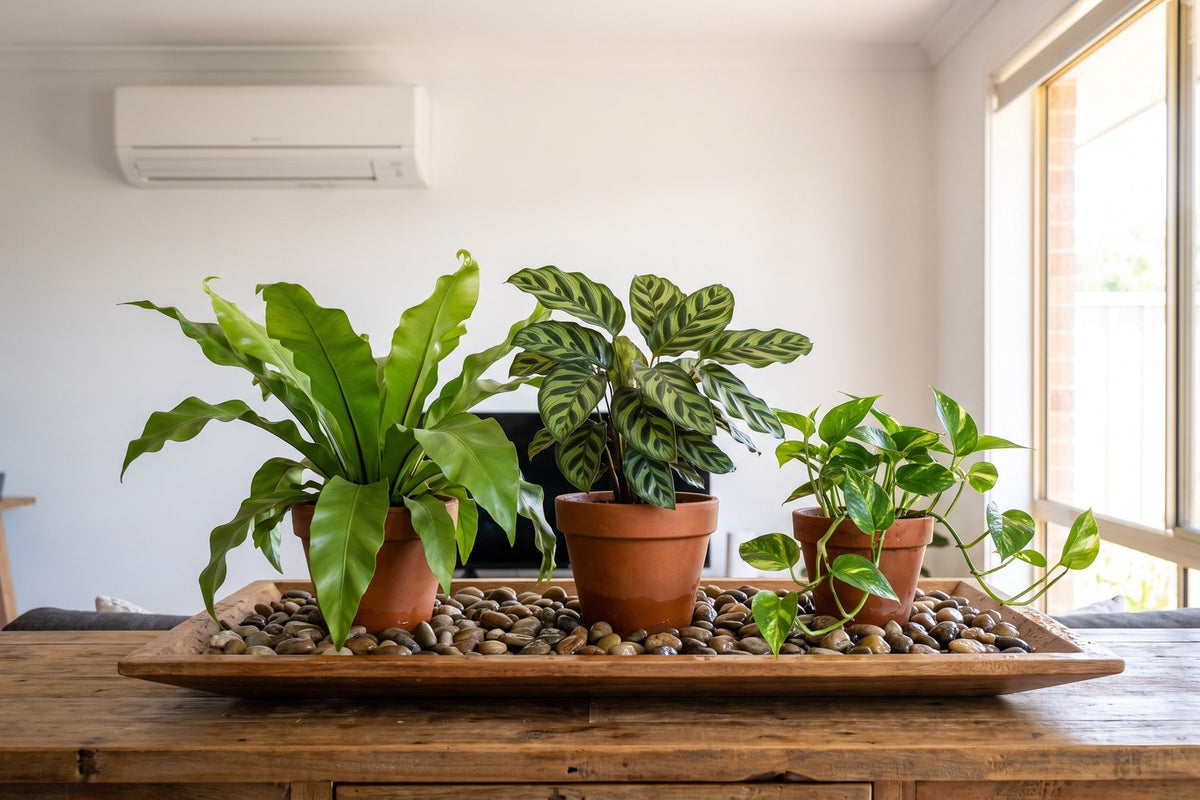
After overwatering, dry air is the main cause of trouble. A plant in the airflow from a split system through a Queensland summer, or near a ducted heating vent through a Melbourne winter, dries at the leaf edges all day. Move plants out of the airstream, group them so they raise the humidity around each other, and stand pots on a tray of wet pebbles. This fixes more brown edges than any change to watering.
Watering
Overwatering kills far more indoor plants than neglect, and it is worse in low light, where a plant uses very little water. Let the top few centimetres of mix dry, water until it drains, empty the saucer, and water much less in winter.
Potting mix can carry Legionella bacteria, and there are Australian cases every year. Dampen the mix, wear a mask and gloves when repotting, and wash your hands afterwards.
Where to put them
- Living room. One large plant, such as a lady palm or monstera, calms a room more than a dozen small pots.
- Bedroom. A snake plant or peace lily, since both cope with low light.
- Desk. Devil's ivy or a small fern within your line of sight.
- Bathroom. Ferns and calatheas enjoy the humidity if there is a window.
For the small flowering plants that share this light, see our guide to African violets and other gesneriads.
If you have pets
Peace lily, devil's ivy, philodendron and monstera contain calcium oxalate crystals that irritate the mouth and throat if chewed, and the ASPCA lists them as toxic to cats and dogs. It lists spider plant, lady palm, bird's nest fern and calathea as non-toxic. Our pet friendly indoor plants range and our guide to pet friendly plants for the home cover the safer choices.
Common questions
Do indoor plants reduce stress?
Research links greenery with lower stress and better mood. The effect is modest, and it comes from seeing and tending the plants.
Do indoor plants purify the air?
Not in any amount that matters in a home. Opening a window does far more.
What is the easiest indoor plant?
Devil's ivy for most rooms, and a snake plant for a dim corner or a forgetful waterer.
Ready to plant?
Browse our indoor plants to choose plants for each room.


