


A hanging basket is the hardest place a plant can be asked to live. The root space is small, the air moves on every side, and on a hot day a basket can dry out between breakfast and lunch. Choose plants that suit those conditions and the position you have, and a basket becomes the easiest way to add colour and greenery at eye level on a veranda, a balcony or beside a bright window. Choose the wrong ones and you are watering twice a day to keep something alive. This guide sorts the best basket plants by where the basket will hang: sun and wind, sheltered shade, or indoors.
Quick facts
| Position | Best choices | Watering in summer |
|---|---|---|
| Full sun, exposed | Silver Falls dichondra, trailing sedums, pelargoniums | Every one to two days |
| Morning sun, bright shade | Burro's tail, string of pearls, hoya, mistletoe cactus | Weekly, when dry |
| Cool, sheltered shade | Fuchsias, begonias, Boston fern, ivy | Daily in hot weather |
| Indoors, bright indirect light | Pothos, heartleaf philodendron, spider plant, lipstick plant, string of hearts | Weekly, when the top of the mix is dry |
| Basket size | 30 cm across at least; 35 to 40 cm for sun | Bigger baskets dry more slowly |
| Potting mix | Premium mix with water crystals and controlled-release fertiliser | Never garden soil |
Full sun and wind
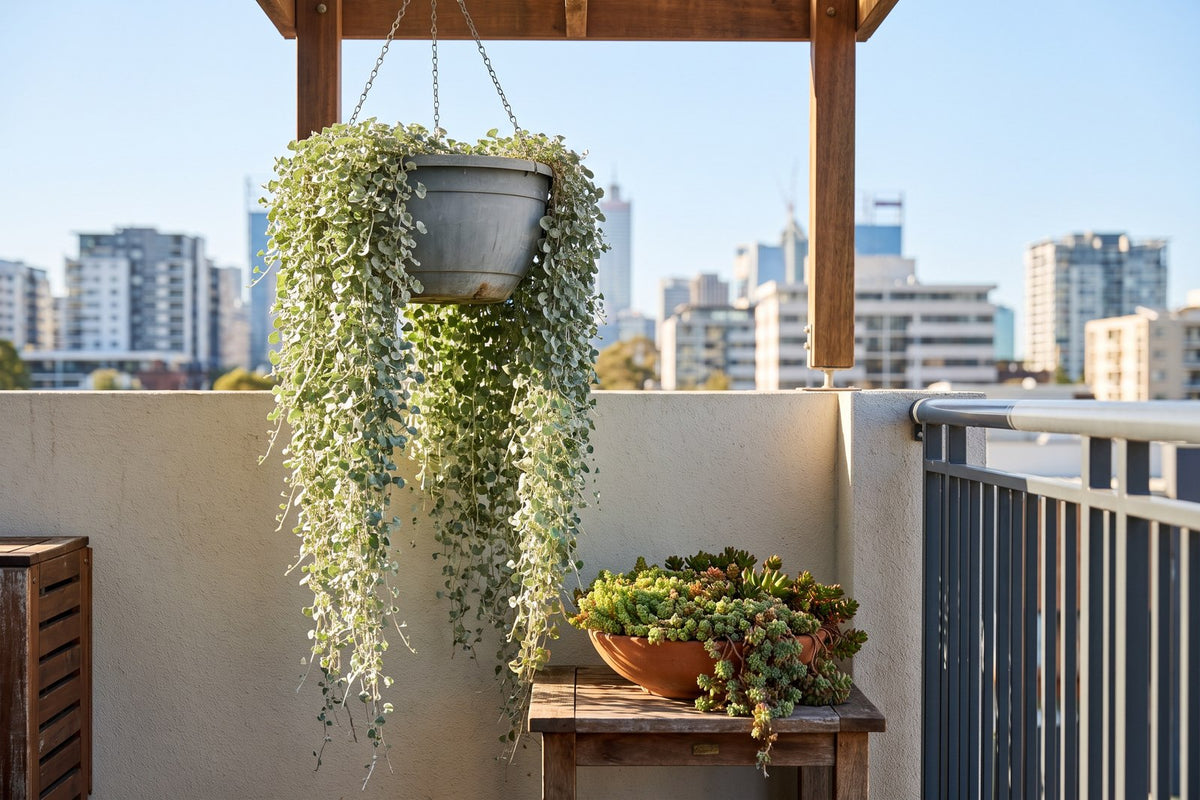
An exposed basket on a north or west-facing balcony needs plants that hold water in their leaves or shrug off heat. Soft, large-leaved plants shred and scorch here.
Silver Falls dichondra. Silver Falls hangs in a metallic curtain a metre or more long, takes full sun and reflected heat, and recovers from a missed watering. It is the most reliable trailing plant for a hot position, and our Silver Falls care guide covers trimming and feeding.
Trailing sedums and stonecrops. The low, mat-forming sedums spill over a rim and need very little water. They suit shallow bowls and wall baskets where little else survives, and many colour up red or bronze in sun and cold.
Burro's tail and string of pearls, with some shelter. Burro's tail makes thick ropes of blue-green leaves, and string of pearls hangs in beaded threads. Both want bright light and morning sun but burn in hot afternoon sun, and both are brittle, so hang them out of the wind and out of the way of shoulders and doors. Let them dry out between waterings.
Pelargoniums. The plants most people call geraniums are sun lovers that flower for months in a basket and prefer to be on the dry side. See the geraniums and pelargoniums collection for trailing and mounding forms.
Cool, sheltered shade outdoors

A covered veranda, a south-facing porch or a spot under a tree is where the classic flowering baskets belong. Shade means out of direct sun, not dark: these plants still need bright, open light.
Fuchsias. Nothing suits a basket better, because the flowers hang and are seen from below. The compact, free-flowering Bella fuchsias fill a basket and flower from spring to autumn, and the New Zealand creeping fuchsia trails fine stems with small upturned flowers followed by red berries. Fuchsias are cool-climate plants. They are at their best in Melbourne, Adelaide, Tasmania, Canberra and the highlands; in Sydney they need full shade and regular water in summer; and in Brisbane and the tropics they struggle through the humid months and are better treated as cool-season colour. Browse the fuchsia collection for the full range.
Begonias. The foliage begonias give colour without flowers: silver, burgundy, pink and near-black leaves that glow in shade. They suit a sheltered basket or a hanging bowl in the warm half of the country, where fuchsias fail. Water the mix, not the leaves, and keep them out of wind.
Boston fern. The traditional veranda basket. Blue Bell Boston fern makes a full, arching dome and thrives in humidity. It must not dry out: once the fronds turn crisp they do not recover, although the plant reshoots when cut back.
Ivy, in a basket and nowhere else. Ivy trails well in cold, shady positions where little else will, and the variegated forms brighten a dark corner. A basket is also the responsible way to grow it. English ivy is an environmental weed in parts of southern Australia when it escapes into bushland, so keep it contained, trim the trails before they reach the ground and put the clippings in the bin, not the compost.
Indoors
Hang indoor baskets within a metre or two of a bright window, out of direct afternoon sun, and somewhere you can reach to water without a ladder.
Pothos and heartleaf philodendron. The two easiest trailers for a home. Golden pothos comes ready-grown in a hanging basket, and the heartleaf philodendron tolerates lower light than almost any other trailing plant. Trim the ends to keep them full at the top.
Spider plant. A variegated spider plant throws arching runners with baby plants at the tips, which is exactly the habit a basket shows off. It is also one of the few basket plants regarded as safe around cats and dogs, as our spider plant guide explains.
Lipstick plant, hoya and string of hearts. For flowers indoors, the lipstick plant carries red tubular blooms along trailing stems, and a hoya produces scented, waxy clusters once it is settled and slightly pot-bound. String of hearts hangs in fine threads up to two metres long and needs very little water.
Syngoniums. Young arrowhead vines are bushy, then trail as they mature, in pink, lime, white and bronze. They like the same light and watering as pothos.
Setting up a basket that lasts

Go bigger than you think. A 30 cm basket is the minimum, and 35 to 40 cm is better in sun. The extra potting mix is the difference between daily and twice-daily watering in January.
Line it well. Wire baskets with a coir liner look good and drain freely but dry fast. Tuck a circle of plastic with a few holes in it inside the base of the liner to slow the loss, or choose a plastic basket with a built-in saucer for sun and for indoors.
Use premium potting mix. Choose one with water-holding crystals and controlled-release fertiliser, and a cactus and succulent mix for the succulents. Garden soil is too heavy and sets hard.
Plant generously. Three to five small plants in a 35 cm basket fill out in a season. Keep to one kind of plant per basket, or to plants with the same needs, so that one watering routine suits everything in it.
Water until it runs through. A dry basket repels water. If water runs straight off the top, take the basket down and soak it in a tub for half an hour. Feed with a liquid fertiliser every two to four weeks in the growing season, because frequent watering washes nutrients out quickly.
Hang it safely. A watered 40 cm basket can weigh more than 10 kg. Fix the hook into a beam or a joist, not into lining board or plaster, and use a swivel so the basket can be turned for even growth. For more small-space planting, see our guides to balcony plants and trailing plants.
Common problems and fixes
Wilting by mid-afternoon. The basket is too small or too exposed. Move it to morning sun only, repot into a larger basket, or switch to succulents.
Water runs straight through. The mix has dried out and shrunk from the sides. Soak the whole basket in a tub, then apply a soil wetter.
Bare on top, long and thin below. Trailing plants put their energy into the ends. Trim the trails by a third in spring and pin a few cuttings back into the top of the basket.
Fuchsia dropping buds and leaves. Heat or dry roots. Move it into deeper shade, water daily in hot weather and wait for cooler nights.
Mushy, translucent leaves on succulents. Too much water or not enough light. Let the basket dry out completely and move it somewhere brighter.
Pale leaves and slow growth after a few months. Hunger. Start liquid feeding and top up the controlled-release fertiliser each spring.
Frequently asked questions
What is the best hanging basket plant for full sun?
Silver Falls dichondra is the most reliable trailing plant for a hot, sunny basket, followed by trailing sedums and pelargoniums. Use a large basket and expect to water every day or two in summer.
What is the best hanging basket plant for shade?
In cool climates, fuchsias. In warm and humid climates, Boston fern and foliage begonias. All of them need bright shade, shelter from wind and regular water.
How often should I water a hanging basket?
Outdoors in summer, daily for most flowering and fern baskets and twice a day in heatwaves. Succulent baskets need water about once a week. Indoors, water when the top few centimetres of mix are dry, usually weekly.
Which hanging basket plants are safe for pets?
Spider plant and Boston fern are regarded as non-toxic to cats and dogs. Pothos, philodendron, syngonium, ivy, begonia and string of pearls can all cause irritation or stomach upset if chewed, so hang them out of reach.
Can I leave hanging baskets out in winter?
Ivy, fuchsias in mild districts and the hardy sedums stay out all year. Move tropical baskets such as pothos, lipstick plant and hoya indoors or under cover before the nights drop below about 10 degrees, and protect all succulents from frost.
Ready to plant?
Start with the fuchsias, begonias and sedums for outdoor baskets, pothos for indoors, and plants for balconies for everything else that suits a small space. Every plant is sourced from partner nurseries around Australia and delivered Australia wide.
Sources
Weed status of English ivy: Weeds Australia. Pet safety: RSPCA Knowledgebase.


