




Storm preparation in a garden is mostly done weeks before the first warning: trees checked, drainage cleared, and the right plants in the exposed spots. This guide covers what to do before the season, on the day a storm is forecast, and in the fortnight after, by region.
Storm season across Australia
Storm risk here is regional and seasonal, and preparation should match what your area gets, not a generic checklist.
| Region | Season | Main risk |
|---|---|---|
| Southeast Queensland and northern NSW | October to March | Severe thunderstorms, hail, damaging wind |
| Tropical Queensland and the Northern Territory | November to April | Cyclones and the wet season |
| Sydney and coastal NSW | All year, peaking in spring and summer | East coast lows, sustained heavy rain |
| Melbourne and Adelaide | Spring and summer | Damaging wind fronts, hail |
| Perth | Winter | Cold fronts with strong wind |
Before the season: trees
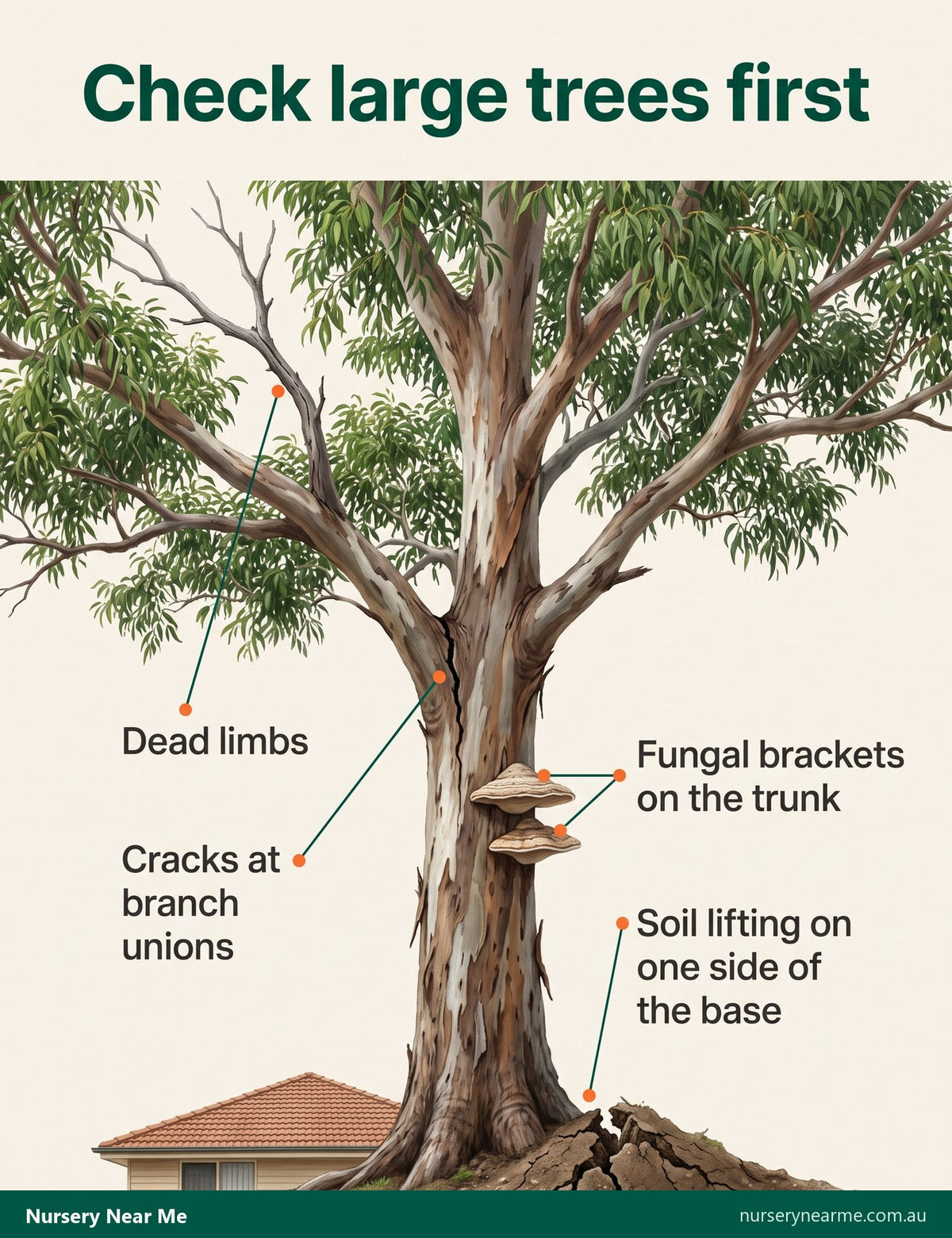
This is where the real risk sits. A failing limb over a house or a car is a different order of problem to a flattened garden bed.
- Inspect large trees before the season starts. Look for dead limbs, cracks at branch unions, fungal brackets on the trunk, and lifting soil on one side of the base.
- Get an arborist for anything over the house. Do not do this work yourself at height.
- Check council rules first. Across Australia, trees above a certain size are protected, and pruning or removing one without a permit can carry substantial fines, even for storm preparation.
- Thin, do not top. Thinning lets wind pass through the canopy, while topping produces weak regrowth that fails more readily in the next storm. The same goes for dense shrubs in exposed spots.
- Remove dead palm fronds. They are heavy and become projectiles.
Species that fail in Australian storms
- Bradford pear: narrow branch angles from a single point, prone to splitting.
- Poinciana: a broad canopy on relatively brittle timber.
- Frangipani and tibouchina: brittle wood, branches snap readily.
- Fast growing trees generally: quick growth means weaker timber.
- Anything with a heavy canopy and shallow roots in saturated soil, which is when most whole tree failures happen.
Trees fail most often when heavy rain has saturated the soil and then wind arrives, because the root plate loses its grip. That is exactly the sequence in a subtropical summer storm.
Before the season: drainage
Most plants lost to storms die of wet feet afterwards, so find the wet spots now. Dig a test hole, fill it with water and time how long it takes to empty; a hole still holding water the next day marks a bed that needs raising, gypsum and organic matter, or a drain. Clear gutters, pits and surface drains so water goes where it should. Our guide to troubleshooting waterlogged gardens covers the fixes worth making before the wet season arrives.
When a storm is forecast
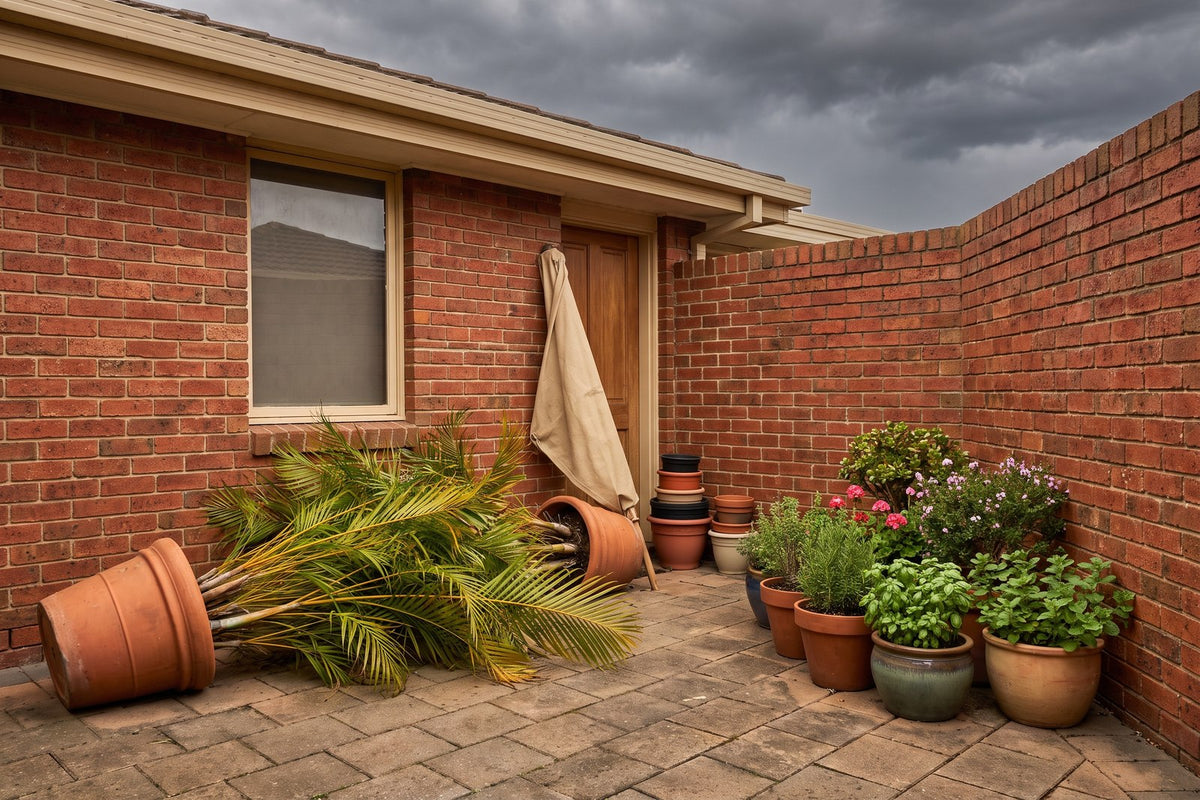
- Move pots to shelter or lay them down. A blown pot is both a loss and a hazard.
- Secure or store shade sails. They act as a sail and can take the structure with them.
- Bring in loose items: stakes, tools, empty pots, hanging ornaments and wind chimes.
- Check the stakes on newly planted trees. They should hold the tree low and loosely, not rigidly.
- Cover seedlings with cloches or row covers pegged down firmly.
- Harvest fruit that is close to ready.
After the storm
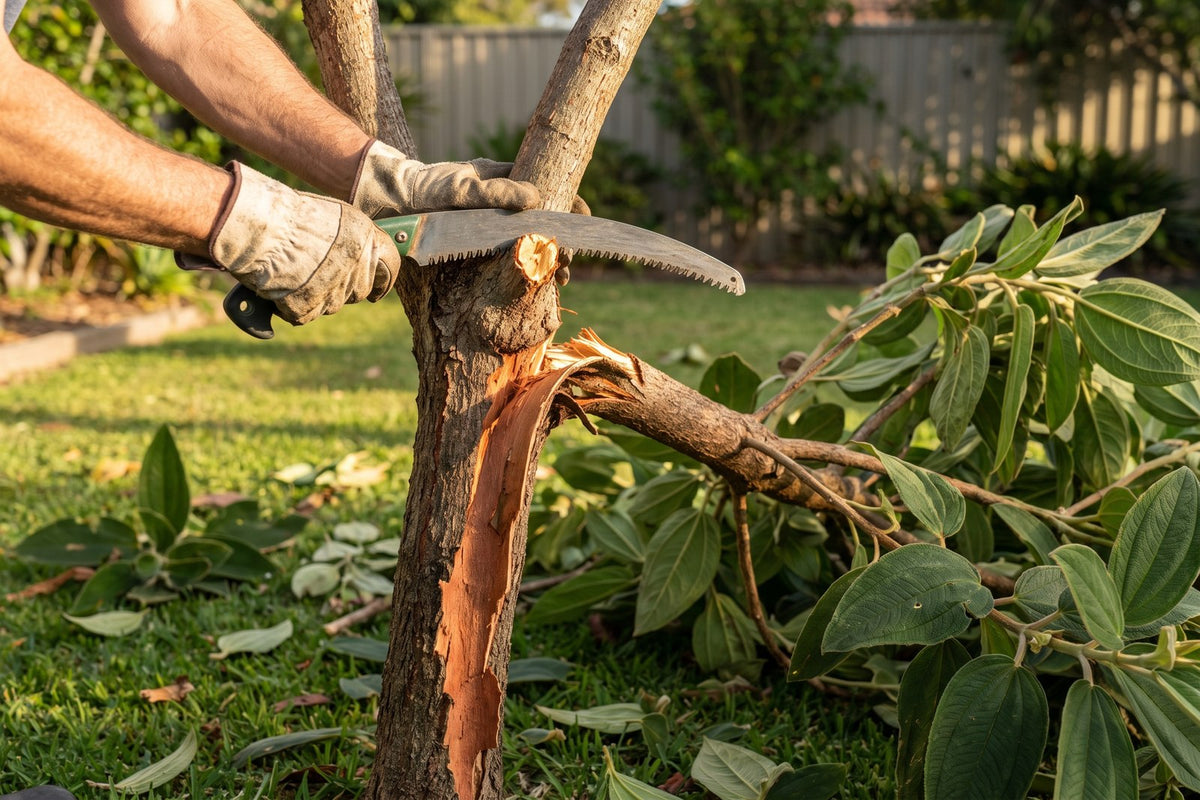
- Stay away from damaged trees and fallen powerlines. Report lines to your electricity distributor and never approach them.
- Clear debris from plant crowns and lift foliage out of standing water.
- Do not fertilise damaged plants straight away. Stressed roots burn.
- Prune cleanly back to a branch collar, not to torn stubs, which invite decay.
- Wait before writing plants off. Many stripped and battered plants reshoot within weeks, particularly natives.
- Deal with waterlogging quickly. Most plant deaths after an Australian storm are root rot in the following fortnight, not the storm itself.
Brown, crisped foliage that shows up a few days later is usually windburn, not disease. A plant that has been rocked loose can often be saved, and our guide to transplanting trees and shrubs explains how to reset it properly.
Designing for it
A permeable windbreak of tough planting on the exposed side slows wind across a much larger area than a solid fence, which speeds air over the top and drops it as turbulence behind. Choosing flexible species such as lomandra, dianella, casuarina and westringia over brittle ones in exposed positions is the cheapest storm insurance available.
Our shortlist of plants for windy conditions and our guide to hardy tropicals that handle wind and heat are both good starting points.
Common questions
Should I prune trees before storm season?
Yes, by thinning dead and crossing branches so wind passes through, and well before the season so cuts have time to seal. Never top a tree, and use an arborist for anything large or near a building.
What should I do with pot plants in a storm?
Move them against a sheltered wall or under cover, or lay tall ones on their side. Group them together so they support each other.
Why did my plant die a week after the storm?
Usually root rot from soil that stayed saturated. Improving drainage quickly after heavy rain saves more plants than anything done on the day.
Ready to plant?
If the storm season has left gaps, refill them from our plants for windbreaks or the tough performers in hardy plants for tough spots.


