

Melaleuca is a captivating botanical wonder that is native to Australia. Their hallmark feature, the peeling bark that mimics delicate paper layers, lends them an enchanting allure. Beyond their aesthetic charm, these trees boast remarkable resilience, thriving in various climates and soil conditions. Their adaptability makes them a prized choice for gardeners seeking both beauty and durability in their landscapes. Whether as a focal point in a garden or a backdrop for native plantings, paperbark trees exude timeless elegance, adding a touch of natural splendour to any environment they grace. Melaleuca plants are popularly known as Paperback trees.
Identifying Paperbark Trees
A paperbark tree is easily recognisable by its white or greyish bark that peels off in thin, paper-like layers. These trees often have a rugged, somewhat shaggy appearance because of their flaky bark. The leaves are generally evergreen, narrow, and pointed, varying slightly between species but typically remaining small. In spring and summer, paperbark trees produce small, fluffy, white or cream flowers that attract various pollinators, adding to their ornamental value. If that bottlebrush shaped bloom looks familiar, it is because melaleucas are close relatives of the callistemon.
Choosing Paperbark Trees for Your Garden
When considering adding a paperbark tree to your garden, think about the following:
- Space: Paperbark trees can vary in size, but many grow to become quite large. Ensure you have enough space in your garden for the tree to grow both upwards and outwards.
- Soil Type: These trees are not particularly fussy about soil type, but they do best in well-drained soil, which makes them a natural fit for a low-maintenance native garden. If your garden tends to be soggy or waterlogged, you might need to improve drainage or consider a different tree.
- Climate: Paperbark trees are very resilient and can tolerate a range of climates. However, they thrive in environments that mimic their native Australian conditions, typically warm and not too frosty.
- Maintenance: These trees are generally low-maintenance. The most you'll need to do is occasional pruning to remove dead or overgrown branches and ensure the tree maintains a healthy shape and size.
Benefits of Paperbark Trees
Aesthetic Appeal: Paperbark trees offer year-round visual interest. Their peeling bark, attractive foliage, and fluffy flowers make them standout features in any garden.
Wildlife Friendly: The blossoms of the paperbark tree are a magnet for bees, butterflies, and other pollinating insects, which play a crucial role in the health of your garden. They also provide shelter for various species of birds, so a paperbark belongs on any shortlist of bird-attracting native plants.
Shade and Windbreak: Larger paperbark species can provide substantial shade, making them excellent for planting in sunny areas where you want to create a cooler microclimate, and they hold their own against the best canopy trees for shade. Their robust nature also makes them good windbreaks, protecting more sensitive plants.
Low Water Requirement: Once established, paperbark trees are quite drought-tolerant and require minimal watering. This makes them ideal for xeriscaping and eco-friendly gardening practices aimed at conserving water.
Paperbark care at a glance
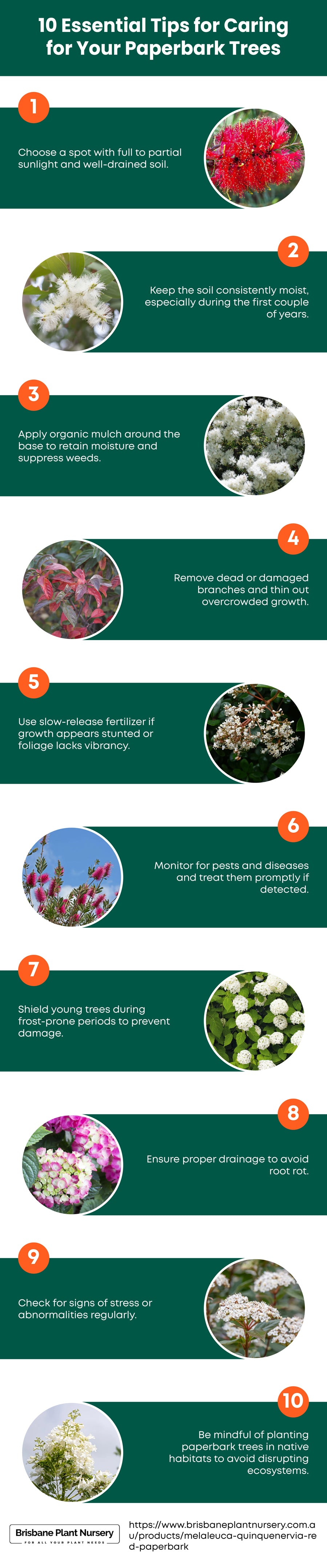
Once a melaleuca is in the ground, the whole job comes down to a short list of habits repeated each year.
- Plant in full sun: paperbarks flower and colour best with at least six hours of direct light a day.
- Water deeply while establishing: one or two good soaks a week through the first summer beat a daily sprinkle.
- Mulch, but keep it off the trunk: 75mm of coarse mulch holds moisture and keeps the root zone cool.
- Feed lightly in spring: a native slow-release blend low in phosphorus is all a melaleuca ever needs.
- Prune after flowering: tip prune young trees to build structure, then lift the canopy gradually as they mature.
- Remove dead and crossing wood: better airflow through the crown means fewer fungal problems in humid summers.
- Leave the peeling bark alone: the papery layers are the whole point, and stripping them exposes raw tissue underneath.
- Watch for scale and sooty mould: treat with horticultural oil if a black film appears on the foliage.
- Check drainage in wet spots: most melaleucas cope with periodic wet feet but not permanent bog.
- Give them room: keep large species well clear of paths, pipes and paving so surface roots have somewhere to go.
Incorporating Paperbark Trees into Your Garden
When planting a paperbark tree, consider its position in relation to other plants. Its size and the shade it casts can impact the growth of nearby plants. Integrating it into a mixed border or using it as a focal point in a lawn can enhance your garden's overall aesthetics. Also, consider the tree's mature height and spread when planting; it should have room to grow without crowding other plants.
Summing up
Paperbark trees are not only beautiful and unique but also practical additions to many gardens. They are relatively easy to care for, provide ecological benefits, and offer year-round aesthetic appeal with their distinctive bark and attractive foliage. Whether you are an experienced gardener or just starting out, a paperbark tree could be a wonderful addition to your outdoor space, adding both beauty and biodiversity.
Paperbarks across Australia
Melaleuca is a large and almost entirely Australian genus - around 300 species, nearly all native here. Paperbarks grow naturally in swamps, along creek lines and on coastal flats across the continent, which is why they handle conditions that defeat most trees.
| Species | Size | Where it suits |
|---|---|---|
| Broad-leaved paperbark (M. quinquenervia) | 10-20 m | Wet ground, coastal QLD and NSW |
| Weeping paperbark (M. leucadendra) | 15-25 m | Tropical north, large blocks |
| Snow in Summer (M. linariifolia) | 6-10 m | Suburban gardens, street planting |
| Tea tree (M. alternifolia) | 5-8 m | Coastal NSW and QLD; the tea tree oil species |
| Honey myrtle (M. armillaris) | 4-6 m | Screening, coastal exposure |
What paperbarks do that other trees cannot
- Tolerate waterlogged soil. Very few trees survive periodically saturated ground; melaleucas evolved in it. This makes them the answer for a low spot, a drainage line or a boggy corner.
- Handle salt - both coastal spray and saline soils, which is unusual in a tree of this size.
- Also tolerate drought once established, which is a rare combination with wet tolerance.
- Feed wildlife heavily. The nectar-rich bottlebrush flowers draw honeyeaters, lorikeets and native bees, and the fibrous bark is used as nesting material.
The bark
The papery layered bark that gives the group its name is the ornamental feature and is genuinely distinctive - white, cream and tan sheets that peel and build up over time. It is best displayed on a multi-trunked specimen with the lower branches lifted, and it lights beautifully at night.
Aboriginal peoples across northern Australia used paperbark extensively - as roofing and shelter material, for wrapping food for cooking, as bandaging, and for making containers and canoes. It is one of the more useful plants in the traditional Australian toolkit.
Where they should not go
Paperbarks have vigorous root systems and the larger species are genuinely big trees. Keep M. quinquenervia and M. leucadendra well away from sewer lines, stormwater, paving and house slabs, and allow real room - these are park and acreage trees rather than suburban front-garden trees.
For a normal block, Snow in Summer or honey myrtle give the same bark and flowers at a manageable size.
Care
Full sun, and almost any soil including clay and periodically wet ground. Water through the first two summers, after which they are largely self-sufficient across most of Australia. Use a low-phosphorus native fertiliser - melaleucas are Myrtaceae rather than Proteaceae so they are less sensitive than grevilleas, but a native blend still suits them better than general garden fertiliser.
Watch for myrtle rust, a serious disease of the Myrtaceae affecting melaleucas, lilly pillies, eucalypts and callistemons across eastern Australia. It shows as yellow powdery pustules on new growth and is notifiable in some states, so report suspected cases rather than only treating them.
Ready to plant?
The White Paperbark is the classic if you want the full papery trunk, and there is more in our range of Australian native trees if you want the toughness without the height.


