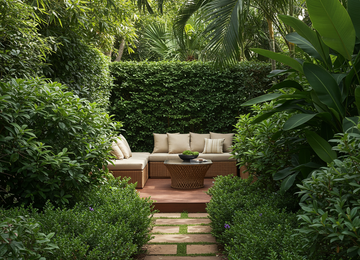
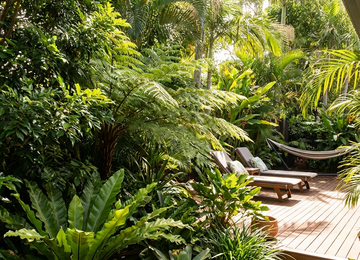
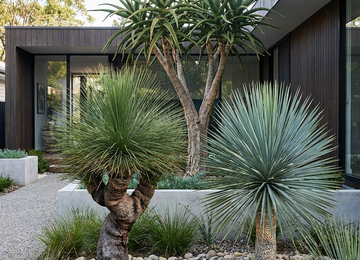
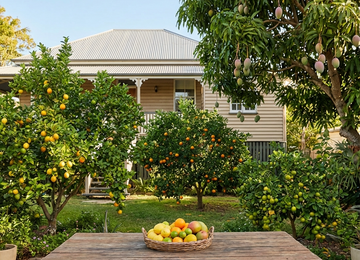


Hay fever does not have to mean a bare yard. Most garden plants with showy flowers shed very little pollen into the air, and the real triggers are a short list of wind pollinated grasses and trees. This guide covers which plants to choose, which to manage, and the garden habits that matter more than any plant list.
The rule that sorts low allergy plants from the rest
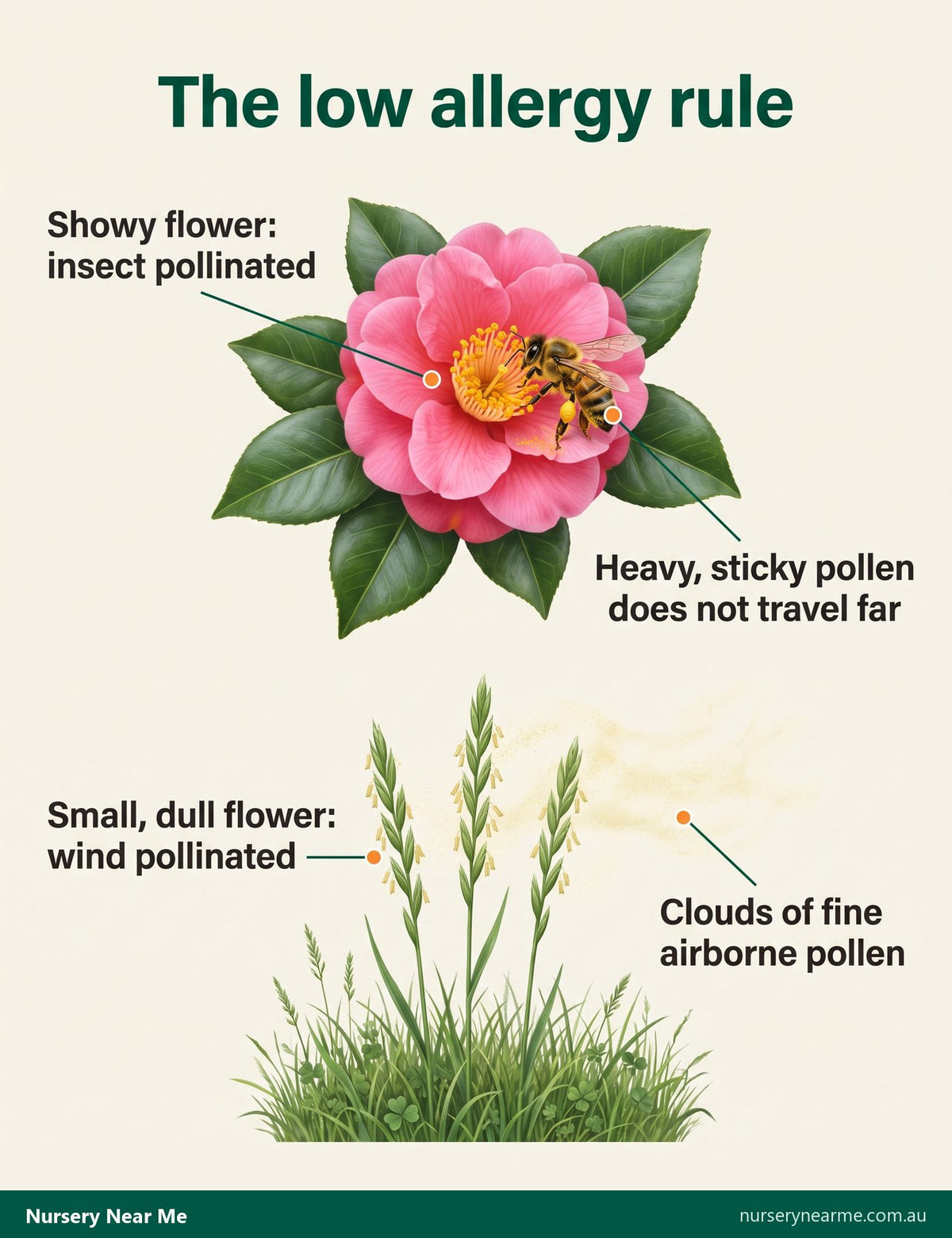
The rule of thumb is simple: insect pollinated plants with large, showy or heavy flowers release very little airborne pollen, while wind pollinated plants with small, dull flowers release a great deal. A camellia in full flower is a low allergy plant. A lawn left to seed is not.
Choosing natives over exotics does not automatically help, as our guide to native versus exotic plants explains. Some of the best choices are native and so are some of the worst.
What actually triggers hay fever in Australia
About one in four Australians has allergic rhinitis, and the main triggers here are not the flowering shrubs people usually blame. Bright showy flowers are generally insect pollinated, producing heavy sticky pollen that does not travel far. The problem is wind pollinated plants with inconspicuous flowers, which release enormous quantities of fine airborne pollen.
| Trigger | Season | Where it is worst |
|---|---|---|
| Ryegrass and other grass pollen | October to December | Melbourne, Canberra, Adelaide, inland |
| Subtropical grasses | A longer season, often September to May | Brisbane, northern NSW |
| Plane trees | Spring | Sydney and Melbourne streets |
| Olive and privet | Spring | Adelaide, Perth, Sydney |
| Cypress and conifers | Late winter to spring | Southern cities |
| Casuarina and birch | Spring | Coastal and southern gardens |
| Mould spores | After rain, and humid summers | Brisbane and the subtropics |
Thunderstorm asthma
Worth knowing about because Australia has seen the worst of it. During certain spring thunderstorms, grass pollen grains absorb moisture and rupture into far smaller particles that reach deep into the lungs. Melbourne's November 2016 event sent thousands of people to hospital and caused multiple deaths, and Victoria now runs a public forecasting service through the season.
The practical lesson for a garden is straightforward: grass pollen is the main driver, so keeping lawn mown before it flowers matters more for a hay fever household than any decision about ornamental plants.
Low allergy plants to choose
Shrubs and small trees
- Camellias. Big insect pollinated blooms through the coolest months. Our guide to camellia bushes covers the varieties, and the camellias range has them in stock.
- Evergreen magnolias. Large heavy flowers and dense foliage all year.
- Pittosporum, lilly pilly and gardenia. Reliable evergreen screens with insect pollinated flowers.
- Azaleas, hydrangeas and roses. Showy flowers that hold their pollen. Double flowered roses and mophead hydrangeas shed the least.
- Buddleja. Visited heavily by butterflies and bees, which carry the pollen away for you.
Natives
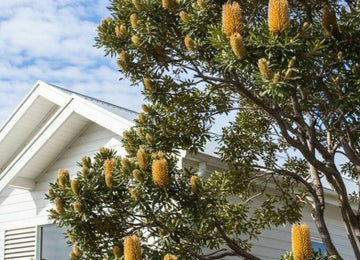
Grevillea, callistemon, banksia and melaleuca produce heavy pollen carried by birds and insects, not by wind. Strappy plants such as lomandra, dianella and liriope are easy company too when they are trimmed so they do not flower heavily.
Groundcovers in place of lawn
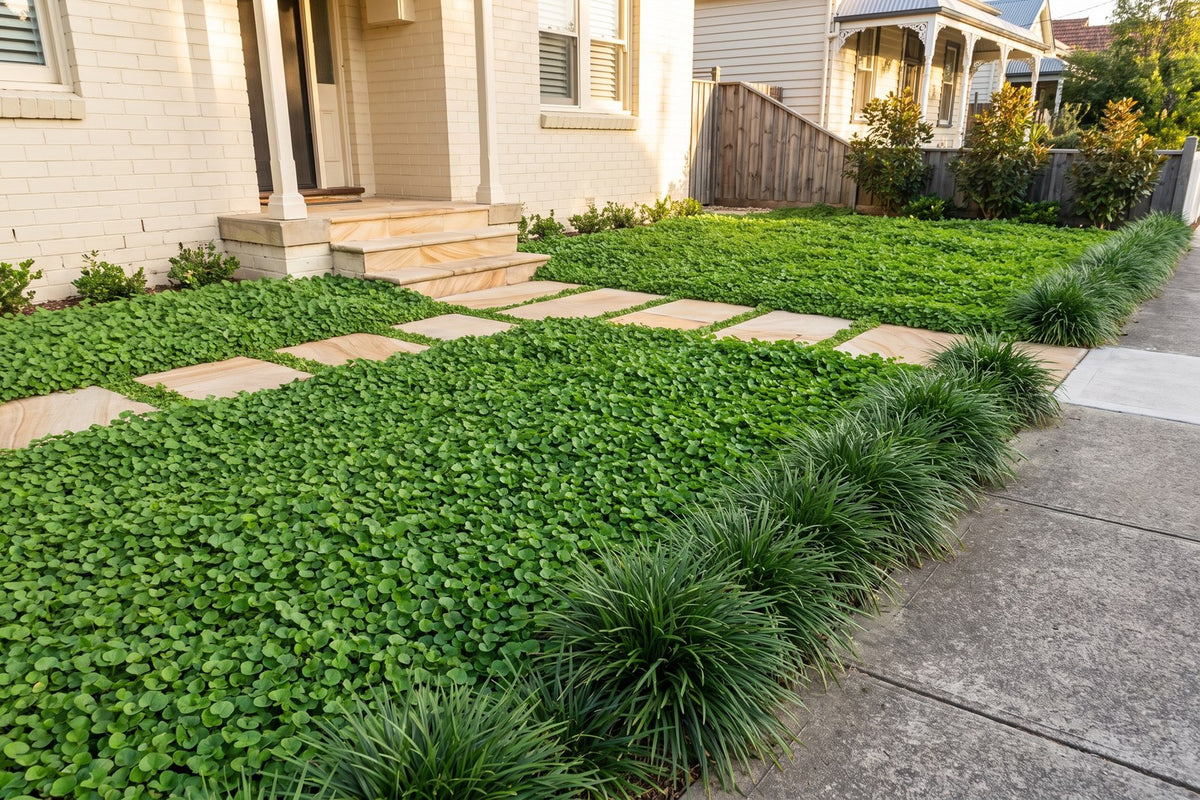
Lawn is often the biggest single pollen source on a suburban block. Replacing part of it with dichondra, native violet or mondo cuts the load, because none of them produces the grass pollen that drives most Australian hay fever. Our guide to the best ground cover plants for shade covers the options for the parts of the yard that never dry out.
Indoors
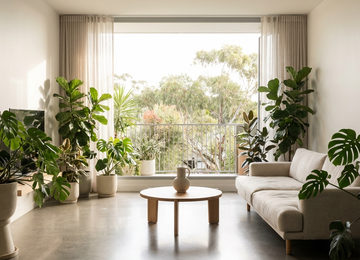
Foliage plants are rarely a pollen problem indoors. The snake plant seldom flowers inside, and a peace lily can have its flower spikes cut off as they open if the pollen bothers you. The thing to watch is mould on constantly wet potting mix, so let the surface dry between waterings. Our guide to choosing indoor plants that improve air quality covers the shortlist, and the air purifying plants range gathers them together.
Where a nursery offers a female or sterile cultivar of a plant, it is worth choosing, since it produces no pollen at all.
What to avoid or manage
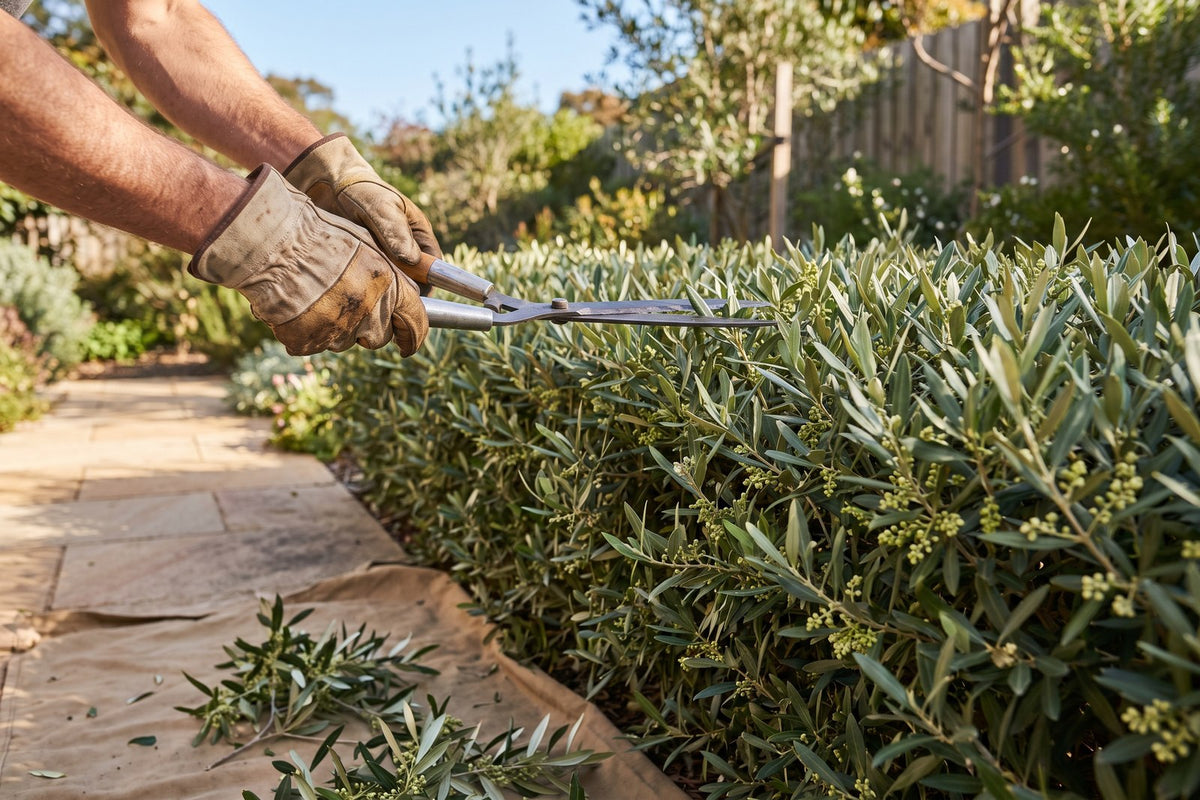
Wind pollinated species are the ones to reconsider near the house: olive, plane, birch, casuarina, cypress and ornamental grasses left to flower. Privet is insect pollinated, but it flowers so heavily that it is both a strong allergen and a serious environmental weed in New South Wales and Victoria, so removing it is usually a double win.
You do not have to remove every one of them. Distance helps, and so does clipping a hedge before it flowers.
Design decisions that help more than plant choice
- Mow before the grass flowers, and consider having someone else mow if you are the allergic one.
- Reduce the lawn area and replace it with groundcover or paving.
- Plant a windbreak on the prevailing wind side to intercept pollen drifting in from elsewhere. Most of the pollen you breathe did not come from your own garden.
- Manage mould. Clear damp leaf litter, improve drainage, and keep dense wet mulch away from doors and windows in humid climates.
- Garden in the afternoon. Pollen counts across Australia are typically highest in the morning.
Fewer plants that need constant cutting back also means less time spent stirring up pollen and mould spores, and the low maintenance shrubs range keeps the pruning down. Less spraying helps a sensitive household as well, which is where our guide to pest repelling plants comes in.
None of this is medical advice. If allergies are significant, an allergist can identify your specific triggers, which makes plant selection far more targeted than any general list.
Common questions
Which plants are worst for hay fever in Australia?
Grasses first, ryegrass above all, then wind pollinated trees: plane, birch, olive, cypress and casuarina, along with privet hedges in flower.
Do flowers cause hay fever?
Rarely. Showy flowers are built for insects and their pollen is heavy and sticky, so little of it reaches the air.
Are native plants better for hay fever?
Not as a rule. Bird and insect pollinated natives such as grevillea and callistemon are good choices, while casuarina and native grasses left to flower are not.
Ready to plant?
The single biggest gain is replacing wind pollinated trees and grasses on the boundary with dense, insect pollinated evergreens. Browse our evergreen shrubs to plan the swap.


