

Beach spider lily is a clumping bulb with glossy strap leaves and scented white flowers, each with a central cup and six long, narrow petals. It takes salt spray, sandy soil and reflected heat, which makes it one of the most useful flowering plants for coastal and poolside gardens in warm parts of Australia. This guide covers where it grows, how to plant it, how to get it to flower, and what to know about its toxicity.
Overview of beach spider lily
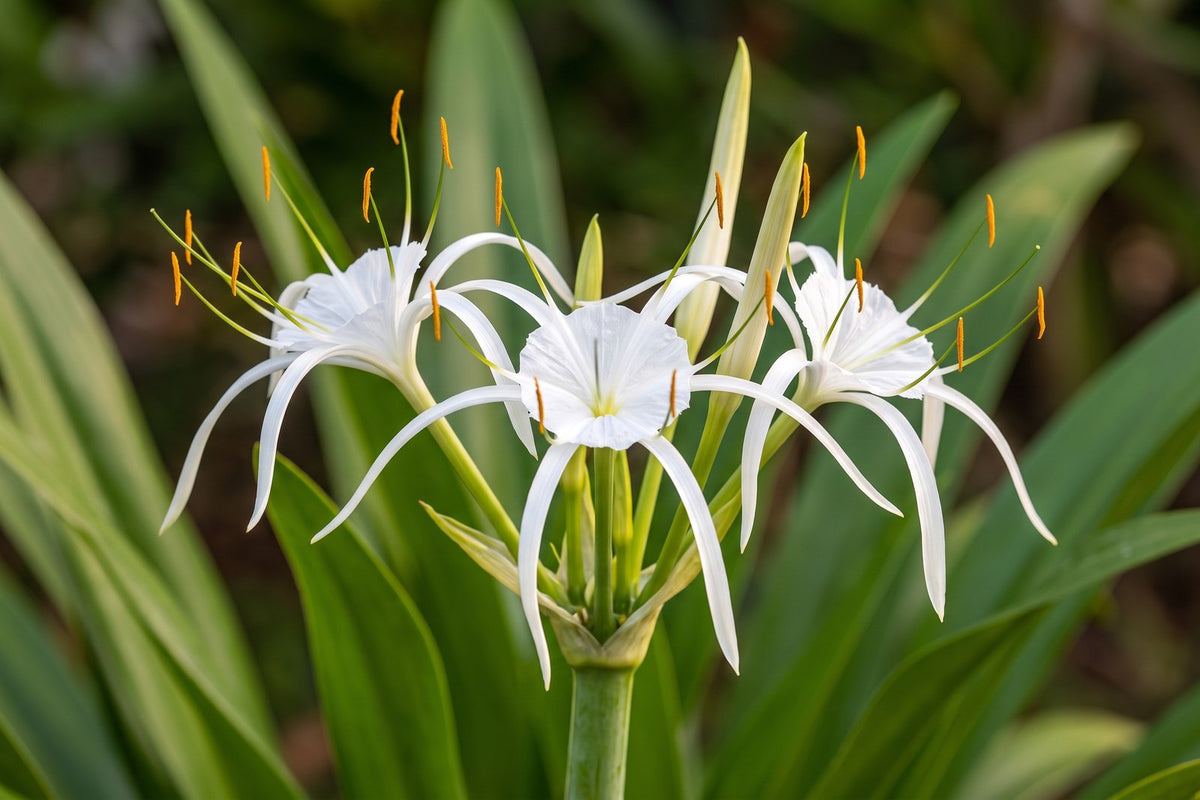
Beach spider lily (Hymenocallis littoralis) comes from the tropical coasts of the Americas. It forms a clump about 70 cm high and 80 cm wide and is evergreen in warm climates. The flowers open in clusters on stout stalks through the warm months and are most strongly scented in the evening.
Where beach spider lily grows in Australia
| Location | How it performs |
|---|---|
| Brisbane, Gold and Sunshine Coasts | Flowers repeatedly through the warm months |
| Darwin and tropical Queensland | Ideal, and closest to its natural conditions |
| Northern NSW | Very good in frost free coastal gardens |
| Sydney | Good in a warm, sheltered position; slower through winter |
| Perth | Workable in warm coastal gardens with summer water |
| Melbourne, Adelaide, Canberra | Too cold in the ground. Grow it in a pot that can be moved under shelter |
Frost is the limit, not heat. The foliage is damaged below about 2°C, and a hard frost can kill the bulbs in an open bed.
Ideal growing conditions
- Sun. Full sun to part shade, with at least four to six hours of sun for flowers.
- Soil. Any soil that drains, including sand. It also takes damp ground in the warm months, but cold, wet soil in winter rots the bulbs.
- Salt. Front line coastal positions are fine.
Planting beach spider lily
- Plant in spring or early summer, once the soil is warm.
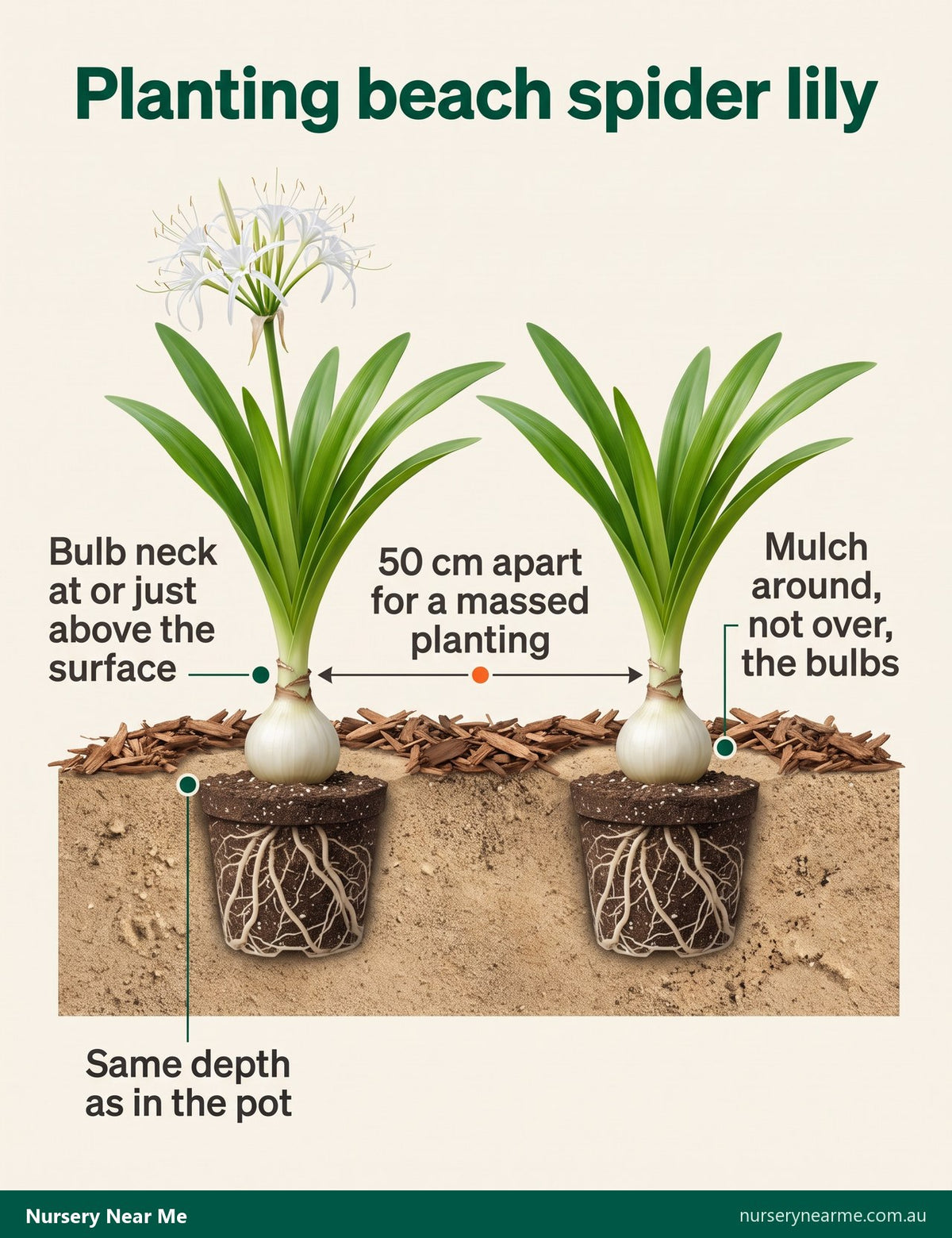
- Set potted plants at the same depth as in the pot, with the neck of the bulb at or just above the surface.
- Space plants 50 cm apart for a massed planting.
- Water in well and mulch around, not over, the bulbs.
Coastal gardens and pools
In a beachfront garden in Queensland or northern New South Wales, beach spider lily flowers where most perennials burn. More plants for the same conditions are in our coastal and salt tolerant plants range.
It is also good in the difficult strip beside a pool. It tolerates the occasional splash from a salt chlorinated pool better than most plants, and it drops large leaves that are easy to pick up, not fine litter that clogs a filter. Our guide to poolside plants for Australian gardens covers what to plant beside it.
Watering and fertilisation
Water regularly through spring and summer while the plant is growing and flowering. Reduce water in winter, when growth slows. Feed in early spring and again after the first flush of flowers, with a fertiliser higher in potassium than nitrogen.
Getting it to flower
The most common complaint is plenty of leaves and no flowers. It nearly always comes down to one of three things:
- Too much shade. Move the clump to a sunnier spot.
- Too much nitrogen. Lawn fertiliser drifting into the bed pushes leaves at the expense of flowers.
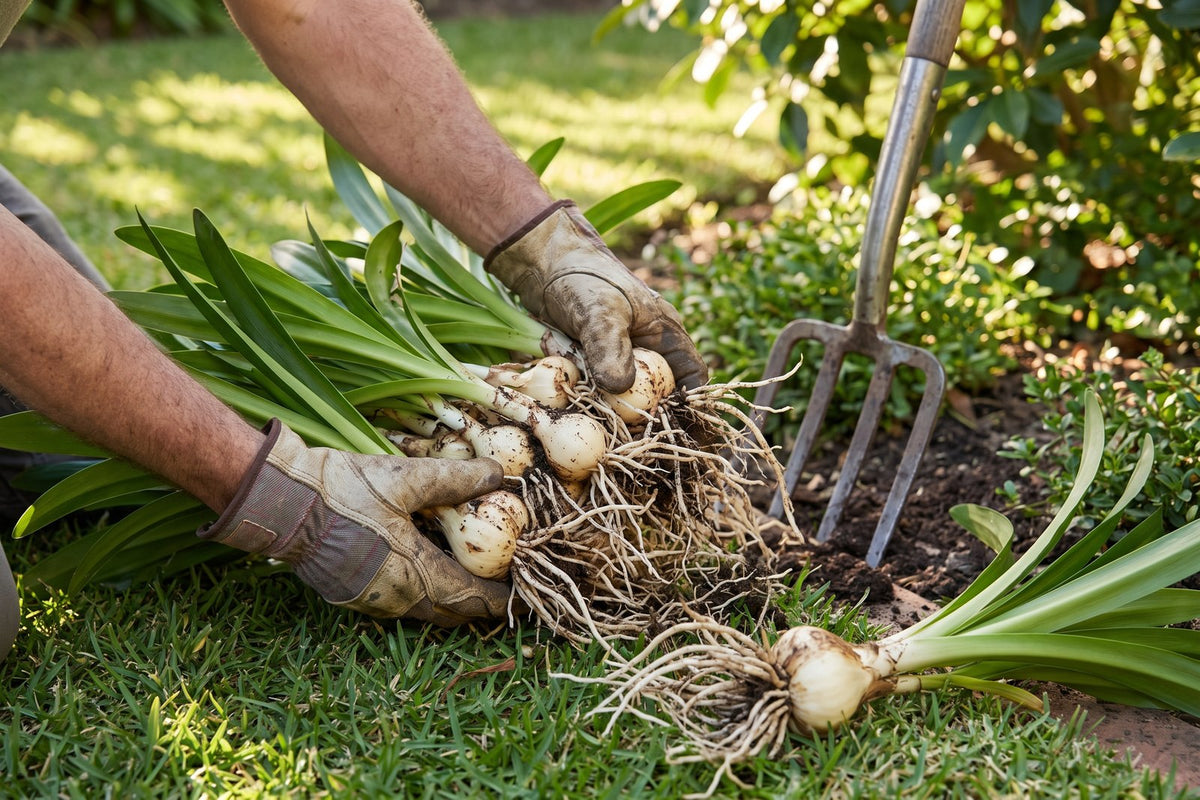
- A congested clump. This is normal after several years. Lift and divide in spring, replant the offsets, and flowering returns.
Pruning and maintenance
- Cut spent flower stalks at the base and pull away yellow leaves.
- Check for snails, which shelter in the clumps.
- In Queensland and northern NSW, watch for the lily caterpillar, a black and white striped grub that strips the leaves and bores into the bulb. Pick them off as soon as they appear.
- Divide every few years in spring. It is also the cheapest way to extend a planting.
Toxicity
Like other plants in the amaryllis family, beach spider lily contains alkaloids, and the bulbs are poisonous if eaten, to people and to pets. The bulbs sit near the surface and are large enough to interest a digging dog, so choose the position with that in mind.
Common questions
Why is my spider lily not flowering?
Too much shade, too much nitrogen or a crowded clump. Give it more sun, change the fertiliser, or divide it in spring.
Can beach spider lily grow in full sun?
Yes. It flowers best in full sun, including hot coastal positions.
Is beach spider lily poisonous to dogs?
The bulbs are poisonous if eaten. Keep dogs that dig away from it, and call your vet if a bulb is chewed.
When does beach spider lily flower in Australia?
Through the warm months, from late spring to autumn, in flushes.


